Harees: Two Ingredients, Four Hours, and a Texture You Cannot Rush
Wheat and meat, cooked until neither is distinguishable from the other. The Gulf's most patient dish is also its least forgiving of shortcuts, and the beating at the end is the whole technique.
Saturday, August 8, 2026/4 min read
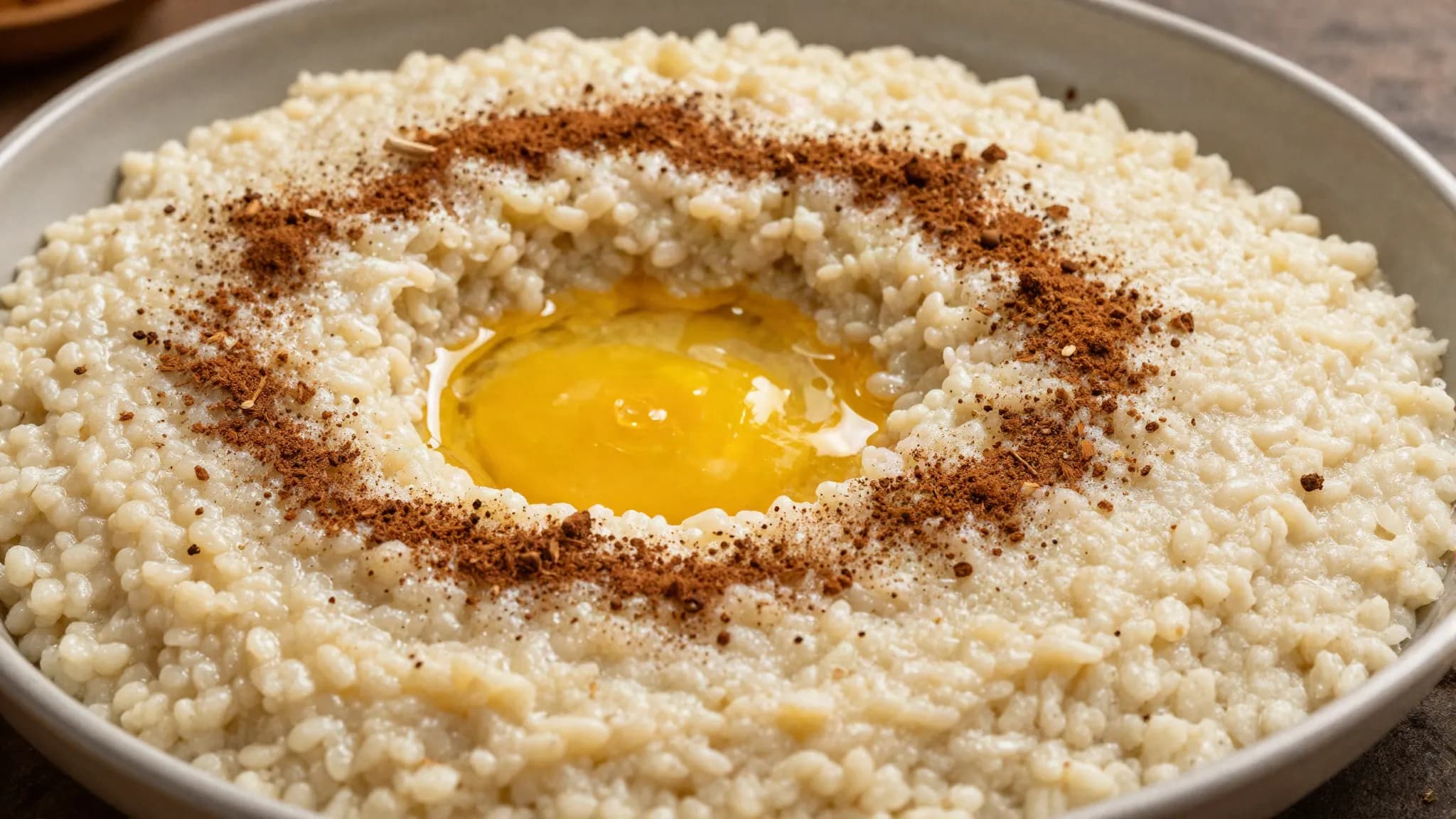
Harees is what happens when a cuisine decides that two ingredients are enough, provided you are willing to spend the afternoon.
Cracked wheat and meat, simmered until the grain collapses and the meat shreds into it, then beaten until the whole thing becomes one smooth, pale, savoury mass. Served with ghee poured over the top and, depending on the household, a dusting of cinnamon or sugar.
It appears across the Gulf and well beyond it, in Yemen and the Levant and as far as parts of South Asia, under a family of related names. In the Emirates it is Ramadan food, wedding food and funeral food: the dish that shows up when a large number of people need feeding and nobody wants to be clever about it.
Ingredients
Serves six generously.
- 500 g whole or coarsely cracked wheat, ideally the pale hard wheat sold specifically for harees
- 800 g lamb on the bone, shoulder or neck, cut into large pieces. Chicken thighs also work
- 2 litres water, plus more as needed
- 1 cinnamon stick
- 3 cardamom pods, lightly crushed
- 1 dried lime, pierced, optional but characteristic
- 2 teaspoons salt, plus more to taste
- 80 g ghee, for finishing
- Ground cinnamon or a little sugar, to serve
Method
1. Soak the wheat
Rinse the wheat in several changes of water until it runs clear, then cover generously with cold water and leave overnight, or for at least six hours.
This is not optional. Unsoaked wheat will take hours longer and will never quite give up its structure, which is the one thing harees requires.
2. The long simmer
Drain the wheat and put it in a heavy, deep pot with the lamb, the water, the cinnamon stick, cardamom, dried lime and salt.
Bring to a boil, skim off the grey foam that rises in the first ten minutes, then reduce to the lowest simmer your hob will hold. Cover, leaving the lid slightly ajar.
Cook for three to four hours. Stir every half hour or so, scraping the base, and top up with hot water whenever it looks like it is tightening into a paste rather than a loose porridge. It should stay soupy for most of the cooking time.
A pressure cooker will get you there in about forty-five minutes and the result is good. It is not quite the same, because some of the character comes from long slow evaporation, but on a weeknight the difference is not worth the four hours.
3. Take the bones out
When the meat is falling apart and the wheat grains have swollen and softened to the point of collapse, fish out the bones, the cinnamon stick, cardamom pods and dried lime.
Check carefully for small bones. This is the step people rush and regret.
4. The beating
This is the technique the dish is named for, and it is where harees is made or lost.
Using a sturdy wooden spoon, a mihras or the flat end of a rolling pin, beat and mash the mixture against the sides of the pot. Not stir. Beat. You are breaking down the wheat and shredding the meat fibres until neither is identifiable.
Work at it for ten to fifteen minutes over very low heat. The mixture will change: first lumpy, then thick and ropy, finally smooth and slightly elastic, pulling away from the sides in a mass.
Some cooks use an electric mixer with a paddle, and it works. Purists object. The one thing to avoid is a blender, which produces a gluey paste rather than a fibrous one.
5. Finish and serve
Taste and correct the salt, which almost always needs more than expected. Spread into a wide shallow dish, make a hollow in the centre, and pour melted ghee into it so it pools and runs over the surface.
Dust with cinnamon or a little sugar. Serve hot, with pickles or a bowl of laban alongside to cut the richness.
Notes
The consistency should be thick enough to hold the shape of a spoon and loose enough to spread slowly when spooned onto a plate. If it stiffens on standing, and it will, beat in a little hot water before reheating.
Harees keeps for three days refrigerated and reheats well with added water and a fresh spoonful of ghee. It also freezes better than most wheat dishes.
For a lighter version, chicken thighs and half the ghee produce something considerably less heavy and still recognisably harees. It sits in the same family as madrouba, the rice-based Gulf porridge that gets the same beating treatment, and both belong to a tradition of dishes built around patience rather than ingredients. For the wider context of Gulf grain cookery, see our guide to Emirati thareed.
Published in The Outspoken Digest
Editorial desk
Outspoken Digest Food DeskCooking, ingredients, restaurants and the economics of what ends up on the table.
Newsletter
The Digest, in your inbox
One edition, sent when it is ready. No noise, and your address is never passed on.
Read Next
More Recipes →
Swangy Tamarind Glazed Chicken Wings for the Flavour Replacing Swicy on Fast Food Menus
Sep 29, 2026/3 min read

Baked Apple Cider Doughnuts for a Cider Season That Peaked Earlier Than the Calendar Says
Sep 29, 2026/3 min read

An Obatzda Bavarian Beer Cheese Dip for the Final Stretch of Oktoberfest 2026
Sep 29, 2026/3 min read