Houseplants Do Not Purify Your Air, and the Real Reason to Keep Them Is Better Than the Myth
A 1989 NASA experiment in sealed chambers became the most repeated claim in interior décor. In an actual room, ventilation removes pollutants far faster than plants can, and you would need an implausible indoor forest to compete.
Outspoken Digest Lifestyle Desk
Friday, August 21, 2026/3 min read
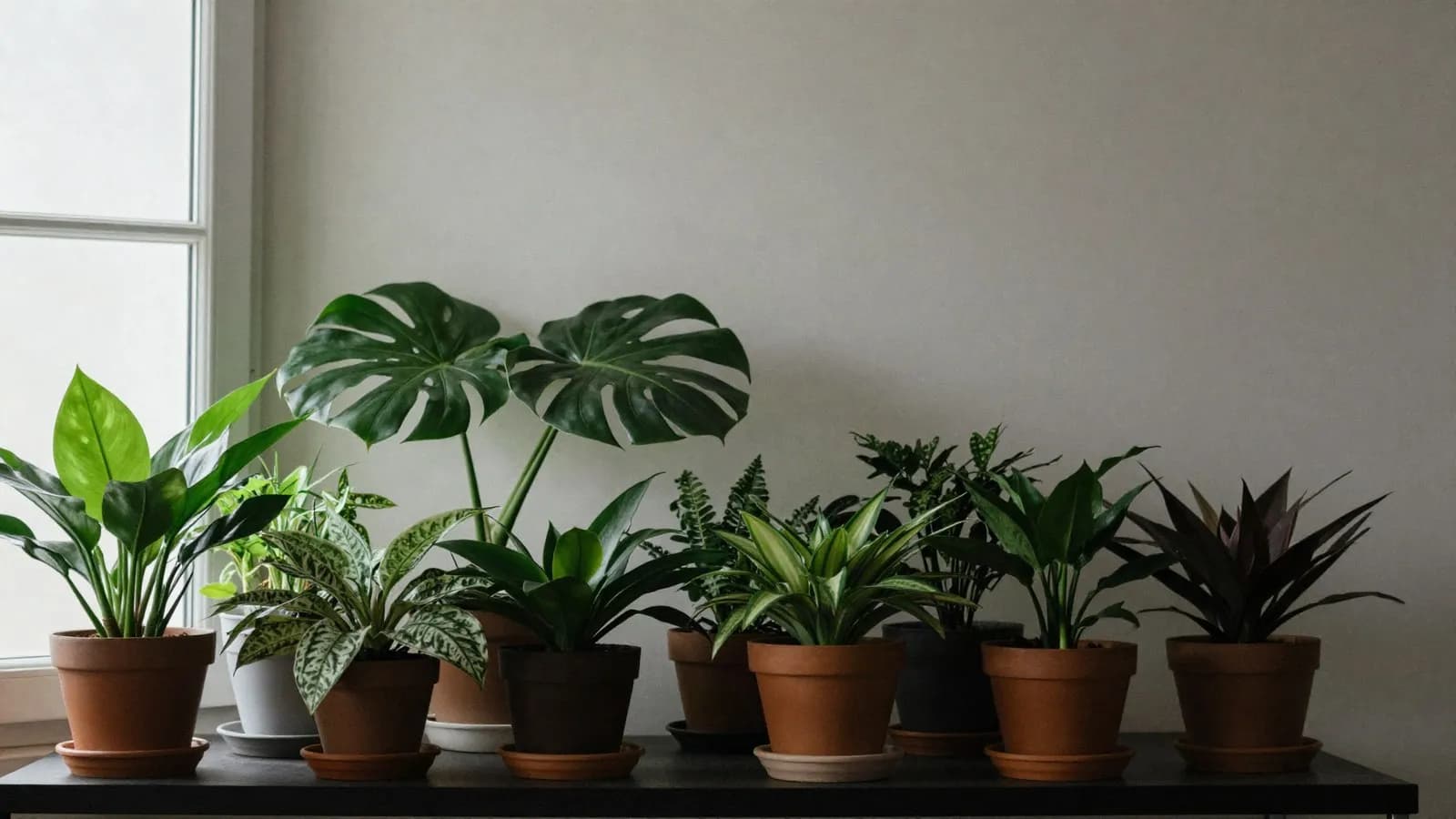
Somewhere in the last thirty years, buying a plant stopped being a decorating decision and became a health one. Nurseries label them as air purifying. Office fit-outs justify them on wellbeing grounds. The claim is repeated so consistently that questioning it feels contrarian.
It comes from a single study, it was never about your living room, and the research since has not supported the extrapolation.
Where did the claim come from?
NASA, in 1989, looking at a genuinely different problem.
The agency was investigating how to keep air breathable in sealed spacecraft and space stations, where there is no ventilation and no outside air to dilute anything. Researchers found that common houseplants could remove volatile organic compounds from the air in addition to absorbing carbon dioxide.
Inside a small sealed chamber, that finding is real. The problem is what happened to it afterwards: a result about airtight capsules was applied to ordinary homes, and the qualifier disappeared somewhere between the paper and the garden centre.
Why does it not work in a house?
Because your home is not sealed, and the competition is much faster than the plant.
Air exchange in a normal building, through ventilation, open windows, doors and the ordinary leakiness of construction, dilutes volatile organic compounds far more quickly than plants can absorb them. The plant is doing something measurable, but it is doing it at a rate that is irrelevant next to the rate at which air is already being replaced.
A review of twelve published studies concluded that the evidence for plants as home air purifiers was not applicable to modern buildings, and researchers at Drexel University reached the same conclusion. The American Lung Association has published the plain version: houseplants do not clean your air.
Estimates of how many plants it would take to match ordinary ventilation in a single room run to numbers no one would live with. This is not a matter of buying more plants.
So does anything improve indoor air?
Ventilation, source control and filtration, in that order.
Ventilation is the simplest and most effective thing available. Opening windows is free, though in a Gulf summer that is a genuine trade against heat and dust, which pushes the answer toward mechanical ventilation with a decent filter.
Source control means not introducing the pollutants: low-emission paints and boards, cooking with extraction running, and not smoking indoors. Cooking is a much larger indoor air event than most people realise.
Filtration with a proper particulate filter addresses fine particles, which matter in a region with dust storms and heavy traffic.
None of these are as charming as a monstera, which is precisely why the myth had such a comfortable life.
Then why keep plants?
Because the benefit that is actually documented is the one people undersell.
The mental health and wellbeing effects of living with plants are reasonably well established and genuinely valuable. Attention restoration, lower reported stress, the small daily structure of caring for something. In an office, planting improves how people rate a space.
There is also a straightforwardly aesthetic case that needs no scientific costume. Plants soften hard rooms, break up flat planes, filter light, absorb a little sound and add the one thing a flat surface cannot: movement and irregularity. That is why they sit so naturally inside the argument for biophilic design in a small apartment, and why they work alongside texture in warm minimalism.
What actually survives a Gulf apartment?
The constraint here is not heat. It is light and air conditioning.
Interiors are cooled to around 22 degrees with very low humidity, which is a desert climate indoors, and windows are often heavily tinted to meet the glazing requirements that keep the building cool, which cuts the light plants receive far more than the bright exterior suggests.
Plants that tolerate that combination are the tough, low-light, drought-adapted ones: snake plant, ZZ plant, pothos, aglaonema, most succulents given a bright spot. The common failure is overwatering, because people water on a schedule rather than checking the soil, and roots sitting wet in a cool room rot.
Keep them because a room with living things in it is better to be in. That claim needs no study, and unlike the purifying one, it is true.
Published in The Outspoken Digest
Newsletter
The Digest, in your inbox
One edition, sent when it is ready. No noise, and your address is never passed on.
Read Next
More Lifestyle →
Street Fighter Opens With $4 Million in Thursday Previews as Critics Split on the Video Game Reboot
Oct 16, 2026/2 min read
Two Stolen Renoirs Found Behind a Cinder-Block Wall as Police Say Suspects Eyed the Fondation Maeght
Oct 15, 2026/2 min read

Hulu Orders Ryan Coogler's X-Files Reboot to Series With Danielle Deadwyler and Himesh Patel
Oct 14, 2026/2 min read
Tarek Atoui Opens Hold in Tate Modern's Turbine Hall, Turning the Cavernous Space Into a Giant Sound Instrument
Oct 13, 2026/2 min read