İmam Bayıldı: The Turkish Aubergine Dish Named for a Man Who Fainted, and the Olive Oil That Explains Why
Whole aubergines split, stuffed with slow-cooked onion, garlic and tomato, and braised in olive oil until collapsing. Served at room temperature, entirely vegan, and one of the great dishes of the Ottoman kitchen. The legend, the method, and the oil.
Sunday, September 6, 2026/4 min read
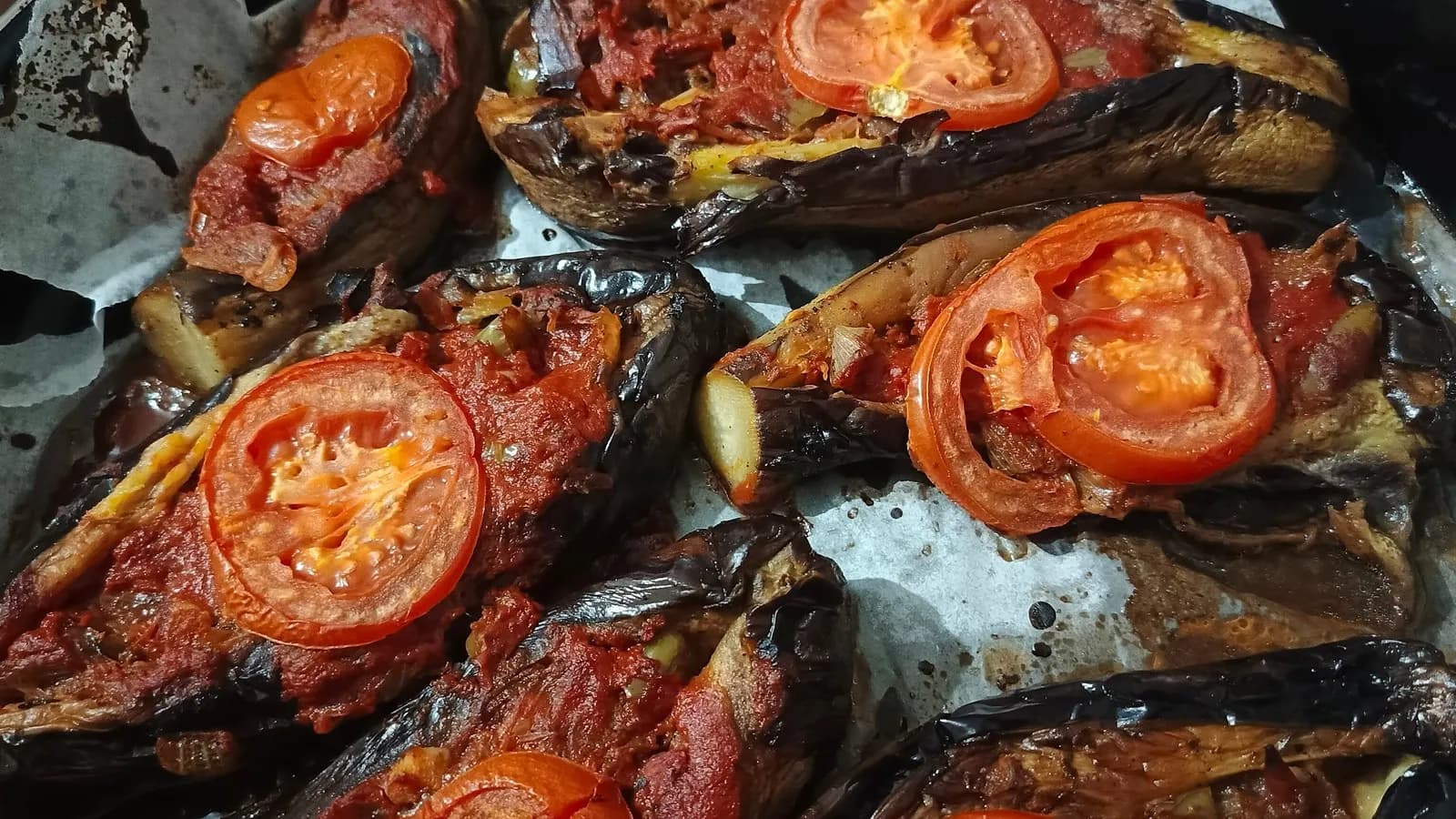
The name means the imam fainted, and the stories about why divide neatly by temperament. In the generous version he swooned with pleasure when his wife first served it. In the thrifty version he fainted when he learned how much olive oil had gone into it. Both versions agree on the essential point, which is that this is a dish about olive oil, and that skimping on it produces something else.
What it is
İmam bayıldı belongs to the Turkish family of zeytinyağlılar, dishes cooked in olive oil and eaten at room temperature, usually as a first course. Small aubergines are split lengthwise, softened in oil, filled with a mixture of onions cooked slowly to sweetness with garlic, tomato and parsley, and then braised gently in more oil with a little water and sugar until the whole thing is meltingly soft and glossy. It is served cold or at room temperature, never hot, ideally the day after it is made, with bread and perhaps yoghurt on the side. It is found across the former Ottoman lands under variations of the name, and its close relative karnıyarık, made with minced meat and served hot, is a different dish for a different occasion.
Ingredients, for four as a starter
- 4 small to medium aubergines, about 200 g each, the slim purple kind rather than the large globes
- 200 ml extra virgin olive oil
- 3 large onions, halved and sliced thinly
- 6 cloves garlic, sliced
- 4 ripe tomatoes, peeled and chopped, or 400 g tinned
- 1 green pepper, finely chopped, optional
- A large bunch of flat-leaf parsley, chopped
- 1 teaspoon sugar
- Juice of half a lemon
- Salt and black pepper
- A pinch of Aleppo pepper or chilli flakes, optional
Method
- Leave the aubergines whole with the stalks on. Peel them in stripes lengthwise, leaving alternating bands of skin, which helps them hold together. Cut a deep slit along one side of each, stopping short of the ends, to make a pocket. Salt the insides and leave in a colander for half an hour, then pat dry.
- Heat half the oil in a wide, deep pan that will later hold the aubergines in one layer. Fry the aubergines over medium heat, turning, until the skin is browned and the flesh has begun to soften, ten to twelve minutes. Remove and set aside. The traditional method deep-fries them; shallow frying in generous oil is the reasonable compromise.
- In the same pan, adding oil if needed, cook the onions with a good pinch of salt over low heat for twenty to twenty-five minutes until completely soft, golden and sweet. Do not rush this; the onions are most of the flavour. Add the garlic and pepper if using for the last five minutes.
- Add the tomatoes, half the sugar, salt and pepper and cook for ten minutes until thick. Stir in most of the parsley and the chilli if using. Taste; it should be sweet, savoury and well seasoned.
- Open the slit in each aubergine and fill generously with the onion mixture, pressing it in. Arrange them slit side up in the pan, packed snugly.
- Mix the remaining oil with 150 ml of water, the lemon juice and the rest of the sugar, and pour around the aubergines. Cover, and braise over the lowest heat for forty to forty-five minutes, or in a 180°C oven, until the aubergines are completely tender and the liquid has reduced to a glossy sauce. Spoon the sauce over them once or twice.
- Cool in the pan. Refrigerate overnight if you can. Serve at room temperature, scattered with the remaining parsley, with the oil from the pan.
Notes
The oil is not incidental. It carries the flavour of the onions into the aubergine, it gives the dish its sheen, and it is what makes it keep for days and improve as it does. Two hundred millilitres for four aubergines is the honest quantity. A version made with two tablespoons is a baked aubergine with onions, which is a fine thing but is not this.
Aubergine absorbs oil in proportion to how long it is fried raw, and the salting step reduces that by collapsing the cell structure slightly before it meets the pan. Some cooks skip the frying and roast the aubergines whole at 220°C for twenty minutes instead; the texture is slightly different, less silky, and the oil goes in with the braising liquid instead. It works.
This is the dish that Turkish cooks point to when the Levantine aubergine tradition, covered in our survey of Middle Eastern aubergine cooking and our moutabal recipe, is discussed as if it were a single thing. The vegetable is shared. The olive-oil braise, cooked once and eaten cold over days, is a distinctly Turkish way of treating it.
Published in The Outspoken Digest
Editorial desk
Outspoken Digest Food DeskCooking, ingredients, restaurants and the economics of what ends up on the table.
Newsletter
The Digest, in your inbox
One edition, sent when it is ready. No noise, and your address is never passed on.
Read Next
More Recipes →
Swangy Tamarind Glazed Chicken Wings for the Flavour Replacing Swicy on Fast Food Menus
Sep 29, 2026/3 min read

Baked Apple Cider Doughnuts for a Cider Season That Peaked Earlier Than the Calendar Says
Sep 29, 2026/3 min read
An Obatzda Bavarian Beer Cheese Dip for the Final Stretch of Oktoberfest 2026
Sep 29, 2026/3 min read