Something Has Been Crossing Into the Ageing Human Brain That Was Not Supposed to Get In
Stanford researchers borrowed the trick a consumer ancestry test uses and found immune cells migrating out of the blood and into the human brain from middle age onwards. Mice do not do it. Nor did the primates tested alongside them.
Tuesday, August 25, 2026/4 min read
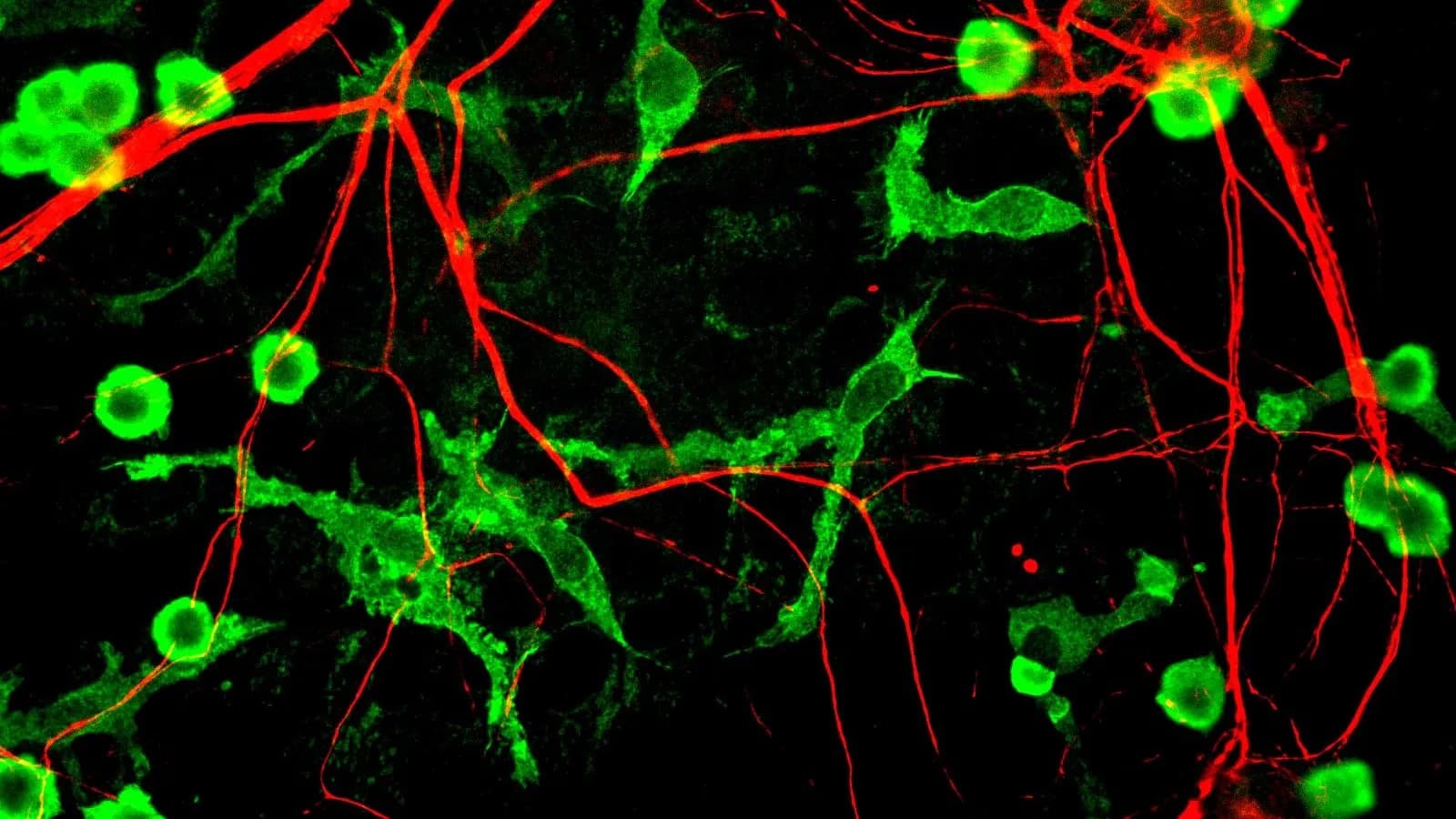
For most of the past century the brain has been described as an immune island. The blood brain barrier keeps the body's circulating immune cells out, and the brain's own resident immune cells, the microglia, arrive before birth and are supposed to maintain their own population for the rest of your life without reinforcements.
A Stanford team has just reported that this is not what happens in people. Writing in Nature, they found immune cells moving out of the bloodstream and into the human brain, where they become microglia, and that the migration is detectable from middle age.
How do you prove a cell came from somewhere else?
By reading its mutations, which is the part of this study worth understanding even if the biology is not your subject.
Blood stem cells accumulate small, harmless, naturally occurring mutations across a lifetime. Every cell descended from a given stem cell carries that stem cell's particular set. So a mutation pattern works as a family name.
The first author, Julia Belk, put it plainly: if the same mutations turn up in the blood and in the brain's microglia, then the cells in the brain are descendants of the cells in the blood. It is the same logic a consumer ancestry test runs on you, applied to two tissues from one person rather than two people from one family.
That is considerably harder to argue with than an imaging study. It does not depend on catching a cell in the act of crossing. It depends on the cell carrying a record of where it came from.
What did they actually find?
That the crossings are not rare, and that they start earlier than anyone was looking.
Immune cells had moved from the body into the brain as early as middle age. Once inside, they did not remain visitors. They took on the identity of microglia, the specialised cells that prune connections, clear debris and drive inflammation in the brain.
The samples came from the Stanford Rapid Autopsy Center and from the University of Washington's Alzheimer's Disease Sequencing Project. The senior authors are Siddhartha Jaiswal and Howard Chang, both of whom work on how mutations in blood stem cells shape disease elsewhere in the body.
The finding that should stop people short
It does not appear to happen in mice.
Nor in the nonhuman primates tested alongside them. On the evidence so far this is a feature of human ageing specifically, which is an uncomfortable thing to discover about a process the entire field studies in mice.
Consider what rests on that model. Almost everything known about microglia in Alzheimer's disease, in Parkinson's, in stroke recovery and in the general inflammation of an old brain has been worked out in rodents, on the assumption that the mouse brain's immune compartment is a reasonable stand in for ours. If a whole population of human microglia arrives from the bloodstream and the mouse equivalent never does, the model is missing a category of cell, not a detail.
That is not a reason to discard sixty years of work. It is a reason to ask which conclusions depended on the sealed brain assumption, and those are identifiable rather than infinite.
Why would the body do this?
Nobody knows yet, and the honest position is that the study describes the traffic rather than explaining it.
There are two obvious readings and they point in opposite directions. The arriving cells could be reinforcements: an ageing brain losing resident microglia and topping up from the only other supply available. Or they could be part of the problem, carrying the inflammatory habits of the body's immune system into a place that has spent a lifetime being protected from them.
Both are plausible. The paper does not settle it, and any coverage telling you which one it is has gone past the evidence.
What this does not show
Three things, and they are worth being precise about, because a finding this striking attracts more certainty than it earned.
It does not show that these cells cause any disease. The samples are post mortem tissue, which gives you a snapshot of what arrived, not a film of what it did.
It does not establish how many. The reporting describes large numbers and early onset without a proportion attached, so the scale of the phenomenon is still an open question.
And middle age is when the migration becomes detectable, which is not the same as when it begins. Absence of a signal in younger tissue is a limit of the method as much as a fact about the biology.
What follows from it
The interesting work now is whether the arriving cells behave differently from the ones born there, because that is where a treatment would come from.
Blood is reachable. If a category of brain immune cell comes from the bone marrow, then it passes through a compartment medicine already knows how to modify, which is not true of a cell that has been sitting in the brain since before you were born. That is the practical reason this paper matters more than its novelty suggests.
It also joins a run of results that keep finding the ageing body more connected than the textbook allows, including the long argument about whether hormone therapy protects the ageing brain, which we set out in what the oestrogen and dementia evidence actually says, and the search for a drug that slows ageing itself, covered in the metformin longevity trial. The pattern in all of it is the same. The systems we describe separately, because they are taught separately, keep turning out not to be separate.
Published in The Outspoken Digest
Editorial desk
Outspoken Digest Health DeskMedicine, public health and the research behind the headlines, read carefully.
Newsletter
The Digest, in your inbox
One edition, sent when it is ready. No noise, and your address is never passed on.
Read Next
More Health →
FDA Approves Hibsago, the First Antisense Drug for Chronic Hepatitis B, With a Boxed Warning
Oct 22, 2026/2 min read

A Night-Owl Subtype of Depression Appears to Start Earlier, Hit Harder and Respond Worse to Common Antidepressants
Oct 21, 2026/2 min read

CDC and FDA Link Salmonella Illnesses in 12 States to Raw Oysters From Virginia's Little Wicomico River
Oct 20, 2026/2 min read
FDA Approves Dostarlimab for dMMR Rectal Cancer, an Option That May Spare Some Patients Surgery
Oct 19, 2026/2 min read