Jain Cooking Removes the Roots As Well, and the Reasoning Is Stricter Than It Looks
No onion, no garlic, no potato, no carrot, no ginger. Jain dietary practice extends non-violence to the plant that has to be killed entirely to be eaten, and cooking within it is a genuine technical problem.
Friday, September 4, 2026/3 min read
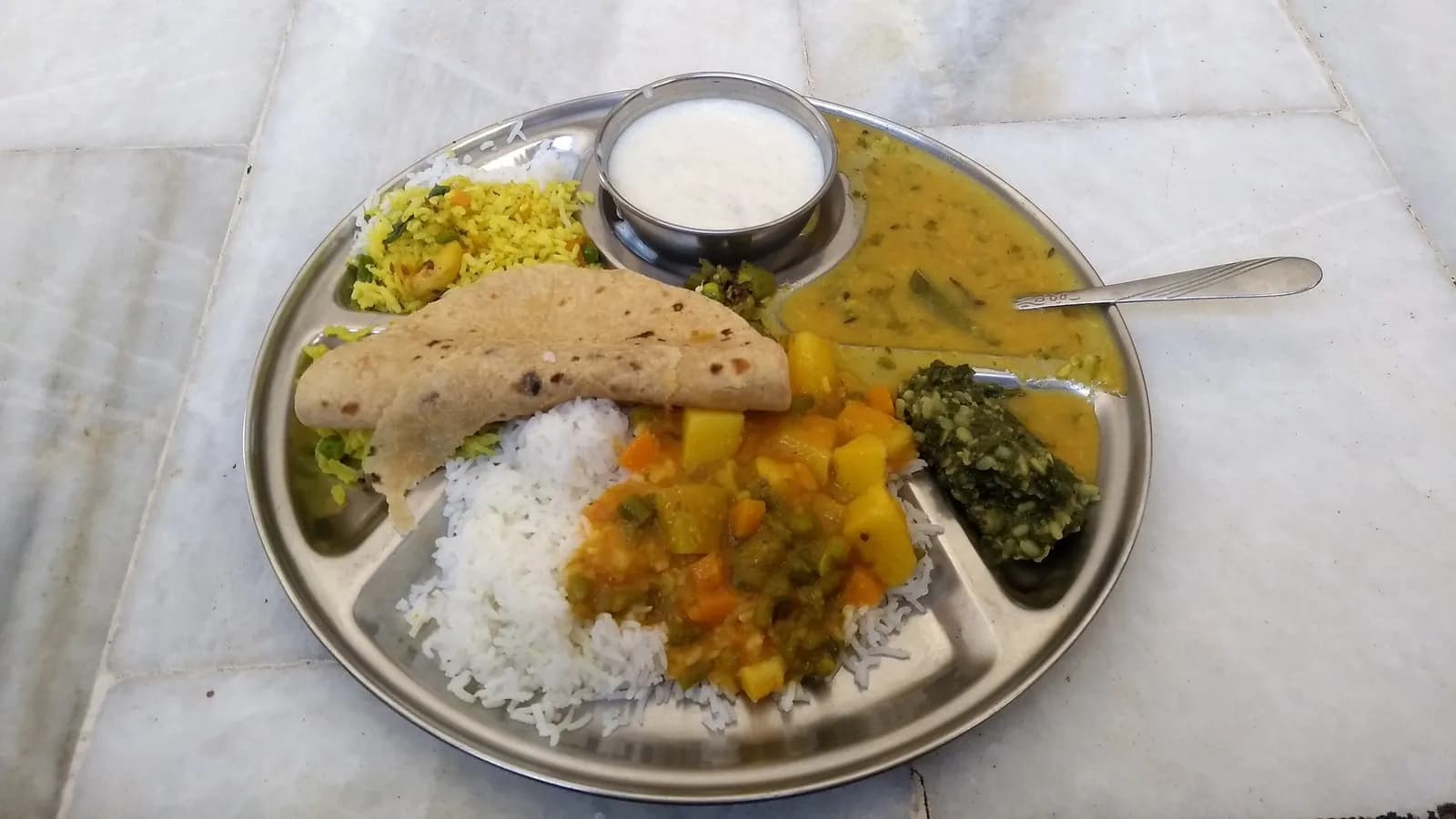
Sattvic cooking removes onion and garlic. Jain cooking removes the entire underground category: potatoes, carrots, radishes, beetroot, ginger, turmeric root, onions and garlic, along with several other things besides.
It is easy to present this as an arbitrary restriction. It is not. It follows quite directly from a premise, and the premise is worth stating accurately because it is more thought-through than most food rules.
The reasoning
Jainism places ahimsa, non-violence, at the centre of its ethics, and extends it further down the ladder of living things than most traditions do.
Two arguments then apply to root vegetables. The first is that harvesting a root generally kills the whole plant. Picking an apple or a bean leaves the plant alive to produce again; pulling up a carrot ends it. The second is that soil and the root surface support very large numbers of microorganisms, which are destroyed in harvesting and preparation.
There is a further classification in Jain thought of certain underground vegetables as anantkaya, understood as containing infinite lives rather than a single one, which places them in a distinct and heavier category.
Onion and garlic carry the additional objection, shared with the sattvic tradition, that they are held to inflame passion and disturb the mind.
Practice varies. Monks and nuns observe the rules strictly. Many lay Jains keep them fully, others during festivals and fasting periods, and there are recognised allowances for illness and necessity. Anyone writing about this as though it were uniform is flattening a living tradition.
The technical problem
Take away onion, garlic and ginger and you have removed the base of essentially all North Indian cooking. What replaces them has to supply four separate things.
Savoury depth comes from asafoetida, whose sulphur compounds read as allium, and it does most of the heavy lifting. Note the important caveat: most compounded asafoetida uses wheat flour as its carrier and is not gluten free unless it says so.
Sweetness and body come from tomato cooked down hard, and from cabbage or bottle gourd softened slowly.
Pungency comes from green chilli and black pepper, since ginger is unavailable.
Acidity comes from tomato, tamarind, lemon or dried mango powder.
A Jain cabbage and pea sabzi
For four.
- 3 tbsp ghee or oil
- 1 tsp cumin seed
- 1/2 tsp mustard seed
- 1/4 tsp asafoetida, gluten free if it matters to you
- 2 green chillies, slit
- 1/2 tsp turmeric powder, which is permitted where the fresh root is not
- 1 tsp ground coriander
- 1/2 tsp amchur, dried mango powder
- 3 tomatoes, grated
- 1/2 medium cabbage, shredded, about 500g
- 200g peas
- Salt, and coriander leaf to finish
Heat the fat, add cumin and mustard, and wait for the mustard to pop. Take the pan off the heat for a count of three, add the asafoetida, and put it straight back. It scorches almost instantly at full heat and becomes acrid, which is why so many people think they dislike it.
Add the chillies, then the ground spices for twenty seconds, then the tomato. Cook it down hard for six to eight minutes until the fat separates at the edges. This is the step that does the work the onion would otherwise have done, and it cannot be hurried.
Add the cabbage and salt, cover, and cook on a low heat for ten minutes, stirring once. The cabbage releases its own water and should collapse rather than fry. Add the peas for the last four minutes, then the amchur and coriander off the heat.
A note on powdered spices
Many Jain households use dried turmeric and dried ginger powder while avoiding the fresh roots, on the reasoning that the dried product no longer contains living matter. Others avoid both. This is a real internal variation rather than an inconsistency, and if you are cooking for someone observant the only sensible approach is to ask rather than assume.
The related but distinct sattvic constraint, which keeps root vegetables and removes only the alliums, is in our sattvic curry, and the fat most often used in both kitchens is covered in the ghee piece.
Published in The Outspoken Digest
Editorial desk
Outspoken Digest Food DeskCooking, ingredients, restaurants and the economics of what ends up on the table.
Newsletter
The Digest, in your inbox
One edition, sent when it is ready. No noise, and your address is never passed on.
Read Next
More Recipes →
Swangy Tamarind Glazed Chicken Wings for the Flavour Replacing Swicy on Fast Food Menus
Sep 29, 2026/3 min read

Baked Apple Cider Doughnuts for a Cider Season That Peaked Earlier Than the Calendar Says
Sep 29, 2026/3 min read
An Obatzda Bavarian Beer Cheese Dip for the Final Stretch of Oktoberfest 2026
Sep 29, 2026/3 min read