Ghee Takes Twenty Minutes and One Decision: When to Take It Off the Heat
Clarified butter cooked a little further until the milk solids brown. It keeps for months without refrigeration, has a smoke point around 250C, and is the one Ayurvedic staple whose usefulness needs no theory at all.
Friday, September 4, 2026/3 min read
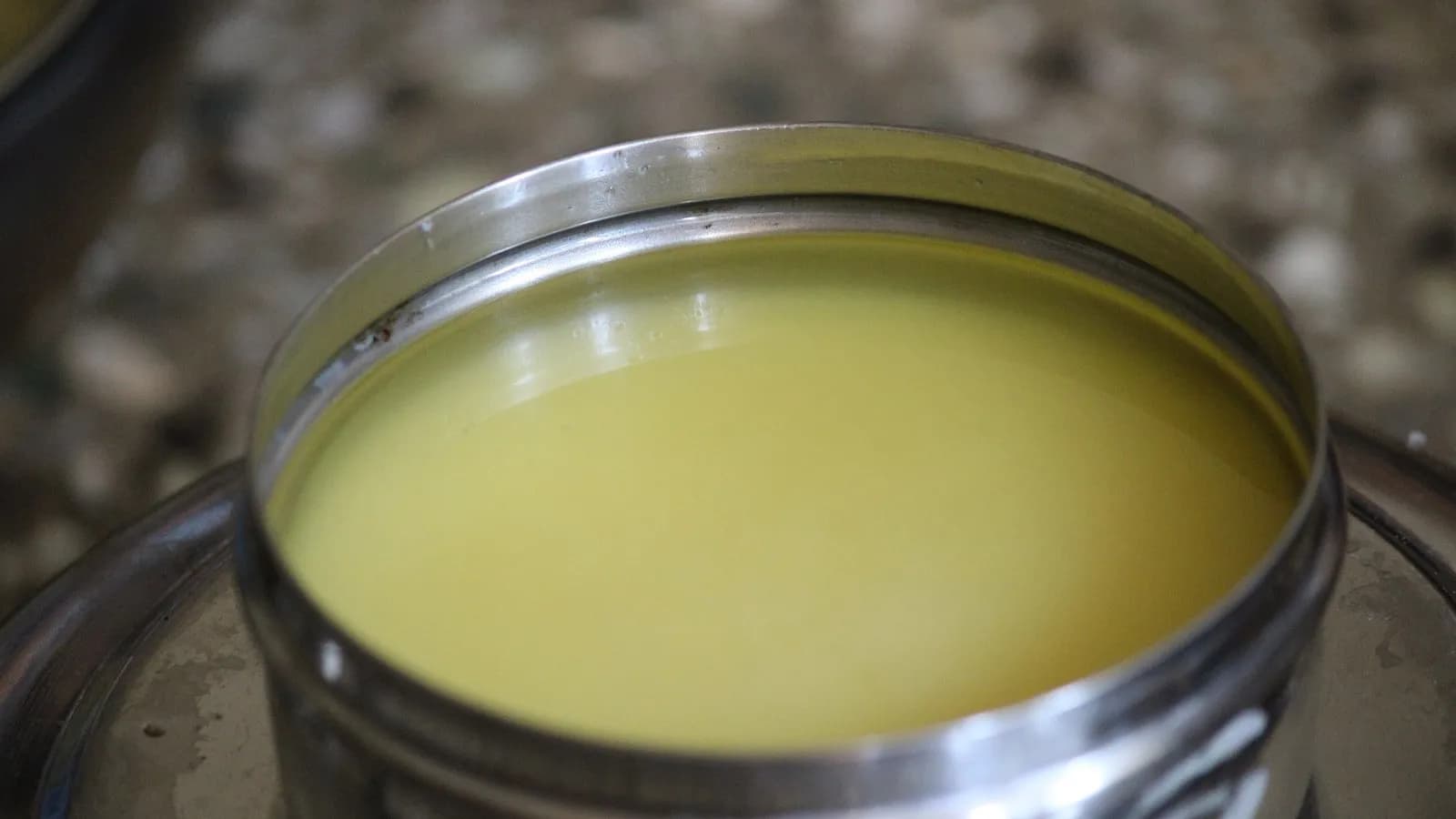
Ghee occupies a strange position. It is treated as almost sacred in Ayurveda and in Hindu ritual, it is sold at startling prices in health food shops, and it is one of the easiest things in cooking to make yourself out of a single ingredient.
You need butter. That is the ingredient list.
What ghee actually is
Butter is roughly 80 percent fat, 16 to 17 percent water and a few percent milk solids, mostly protein and lactose.
Clarified butter is what you get when you melt butter and remove the water and the solids, leaving nearly pure butterfat. Ghee goes one step further: the solids are allowed to brown in the fat before being strained out, which produces the nutty, caramelised aroma that distinguishes it from plain clarified butter.
Two consequences follow from removing the water and protein. It keeps, because the things that spoil are the things you took out, so ghee sits happily in a cupboard for months. And it can take much higher heat, with a smoke point in the region of 250C against roughly 150C for butter, because it is the milk solids that burn first in butter.
The method
Use 500g of unsalted butter. Salted works but concentrates the salt awkwardly.
Cut it into cubes and melt over a medium-low heat in a heavy pan, ideally a light-coloured one so you can see the colour change. Do not stir.
It will pass through three stages, and knowing them is the whole skill.
First it melts and a white foam rises. That foam is protein. You can skim it or leave it; leaving it gives a nuttier result.
Then it bubbles noisily for ten to fifteen minutes. That noise is water boiling off. While the pan is loud, nothing can burn, because the temperature is pinned near the boiling point of water.
Then the noise stops. This is the moment that matters. When the crackling quietens and the bubbles turn small and lazy, the water is gone and the temperature starts climbing fast. The solids at the bottom will go from pale to golden to deep brown in about ninety seconds.
Take it off the heat when the solids are the colour of a hazelnut skin and the smell turns nutty rather than sweet. Then stop looking at it and pour: residual heat keeps browning it in the pan.
Strain through muslin or a coffee filter into a dry, clean jar. Any water left in the jar will shorten its life dramatically.
Getting it wrong in both directions
Under-cooked ghee is pale and tastes like plain clarified butter. Nothing is wrong with it; it is simply less interesting.
Over-cooked ghee is bitter and smells acrid. There is no rescue. The window is genuinely about ninety seconds wide, which is why the instruction to listen rather than watch is the useful one.
What Ayurveda claims, and what to think about the fat
Ayurveda treats ghee as a carrier: a substance that transports the properties of herbs into the body, valued for the digestion and for the tissues, and used in preparations as well as cooking. That is a claim inside a theoretical framework, not a clinical finding.
The nutritional position is simpler and less exciting than either its promoters or its critics suggest. Ghee is close to pure fat, largely saturated, and it is neither a health food nor a poison. Mainstream dietary guidance still advises limiting saturated fat, and ghee is a concentrated source of it; the fashion for treating it as therapeutic runs ahead of the evidence in exactly the way that our guide to judging diet claims describes. Use it because it tastes extraordinary and takes heat, which are both true and sufficient.
Uses
Anything that needs high heat: searing, tempering whole spices, frying eggs, roasting potatoes. It is what you want for blooming cumin and mustard seed, as in the sattvic curry, and it is the traditional fat for golden milk.
The browned solids you strained out are excellent. Do not throw them away: stir them into rice with a little salt, or onto toast.
Published in The Outspoken Digest
Editorial desk
Outspoken Digest Food DeskCooking, ingredients, restaurants and the economics of what ends up on the table.
Newsletter
The Digest, in your inbox
One edition, sent when it is ready. No noise, and your address is never passed on.
Read Next
More Recipes →
Swangy Tamarind Glazed Chicken Wings for the Flavour Replacing Swicy on Fast Food Menus
Sep 29, 2026/3 min read

Baked Apple Cider Doughnuts for a Cider Season That Peaked Earlier Than the Calendar Says
Sep 29, 2026/3 min read
An Obatzda Bavarian Beer Cheese Dip for the Final Stretch of Oktoberfest 2026
Sep 29, 2026/3 min read