Manakish: The Za'atar Flatbread That Starts the Day
Dough pressed flat with the fingertips, spread with za'atar loosened in olive oil, baked hot and fast. The Levantine breakfast that a whole region eats standing up.
Thursday, August 13, 2026/6 min read
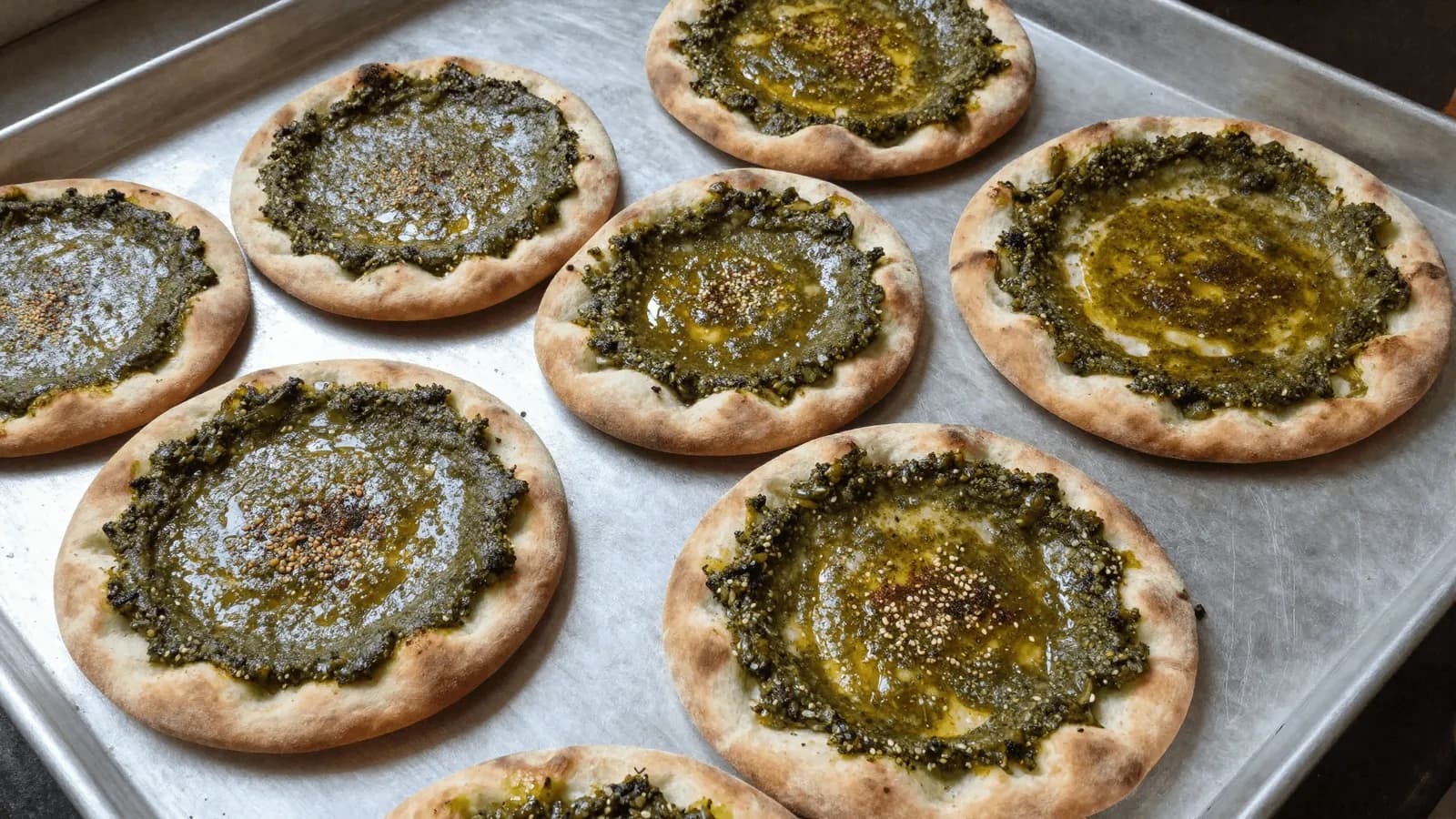
There is a particular smell that belongs to a Levantine morning, and it is za'atar hitting hot olive oil on a bread that has been in the oven for ninety seconds. Every bakery in Beirut, Damascus, Amman and Ramallah produces it from about six in the morning, and most of it is eaten within a hundred metres of where it was baked, folded in half, out of a paper sheet, on the way to somewhere else.
The dish is manakish. Singular man'ousheh, plural manakish, also written manaeesh, manaqish and manakeesh depending on which side of which border you learned it on. It is a flatbread with a topping baked into it, and the standard topping is za'atar loosened with olive oil into a loose, dark green paste.
It is also one of the easiest genuinely great things you can make at home, provided you understand one thing about your oven.
What the name actually tells you
The word comes from an Arabic root meaning to carve or to engrave, and it describes the making rather than the eating. Before the topping goes on, the dough is pressed all over with the fingertips, leaving a field of small dents. Those dents are the naqsh, the engraving, and they are not decorative.
They hold the oil. A perfectly smooth disc lets the za'atar paste slide to the edges and pool there, so the middle bakes dry and the rim burns. The dents trap it in place. This is the first thing a bakery apprentice is taught and the first thing home cooks skip.
As the general description of the dish notes, the bread is found across Lebanon, Syria, Jordan and Palestine, and the question of where it began is not settled and probably cannot be. It is village bread, baked in communal ovens and on the saj, the domed metal griddle, for a very long time before anyone wrote it down.
Ingredients
Makes 6 flatbreads, about 20 cm across. Around 2 hours including the rise.
- 500 g plain white flour, plus more for the bench
- 7 g instant dried yeast
- 1 teaspoon sugar
- 1.5 teaspoons fine salt
- 320 ml warm water
- 3 tablespoons olive oil, for the dough
- 6 tablespoons za'atar
- 6 tablespoons olive oil, for the topping
- Optional, to serve: tomato, cucumber, mint leaves, olives, labneh
The dough is a plain lean bread dough and the topping is two ingredients. Everything rests on the quality of those two.
Method
1. Mix and knead
Whisk the yeast and sugar into the warm water and leave it five minutes until it foams. Combine the flour and salt in a bowl, pour in the yeast water and the three tablespoons of oil, and bring it together into a shaggy mass.
Knead for eight to ten minutes by hand until it is smooth and springs back slowly when pressed. It should be soft and very slightly tacky. A stiff dough gives a cracker; you want bread.
2. Let it rise
Oil the bowl, return the dough, cover, and leave it somewhere warm for about ninety minutes until doubled. In a Gulf summer kitchen this will take an hour. In a cold one, longer. Judge the dough, not the clock.
3. Make the za'atar paste
Stir the za'atar and the olive oil together in a small bowl. You want a spoonable, loose paste, not a dry crumble and not a slick of oil with herbs floating in it.
Roughly equal volumes is the starting ratio, and you adjust from there: a coarse, sesame-heavy blend drinks more oil than a fine one. Let it sit while the oven heats. The za'atar softens and the sumac bleeds its colour through.
4. Heat the oven as hot as it goes
This is the step that decides everything. Put a baking steel, a heavy tray or an upturned oven tray on the top shelf and heat the oven to its maximum, 250C or higher, for a full 30 minutes.
A domestic oven is a poor imitation of a bakery oven, and the only way to close the gap is preheated mass and real heat. An underheated oven dries the bread out before it can colour, which is why home manakish so often comes out pale, tough and disappointing.
5. Shape and top
Divide the dough into six, roll each into a ball, and rest them ten minutes so they stop fighting you. Flatten each into a disc about 20 cm across, roughly half a centimetre thick.
Now press all over with your fingertips, firmly, right to about a centimetre from the edge. Spoon on a tablespoon of the paste and spread it over the dimpled area with the back of the spoon.
6. Bake fast
Slide the manakish onto the hot surface and bake for five to seven minutes, until the base is set and spotted and the edges have just taken colour. The za'atar should look glossy and darkened, never black.
Za'atar burns quickly because of the sesame in it, and burnt sesame is bitter in a way that no amount of good bread underneath will rescue. Pull it a fraction early rather than a fraction late.
7. Eat it immediately
Manakish is at its best within about ten minutes of leaving the oven. Fold it in half, or top the folded half with sliced tomato, cucumber, mint and olives, which is the standard street version and turns it into a proper breakfast.
How do you get the za'atar ratio right?
Start at one part olive oil to one part za'atar by volume and adjust for your blend. Too dry and the topping scorches into dust in the oven heat; too wet and it runs off the bread and smokes on the tray. The paste should hold a soft peak on the spoon and fall slowly when tilted, which is about the consistency of a loose pesto.
Can you make manakish without an oven?
Yes, and it may be closer to the original. Use a heavy dry frying pan or a flat griddle over a medium-high heat: cook the plain side down first for two to three minutes, flip, then spread the topping on the cooked side and cover the pan for another two minutes so the residual heat sets the za'atar. This is the saj method in domestic form, and it is what most Levantine households actually do on a weekday morning.
What is the difference between manakish and pizza?
Structurally they are cousins, and the resemblance is real enough that manakish is often sold abroad as Lebanese pizza. The differences that matter are that manakish carries no tomato sauce and usually no cheese, that the topping is applied as a herb-and-oil paste rather than as separate ingredients, and that it is a breakfast food rather than a dinner one. It is also considerably thinner and baked far faster.
Why does homemade manakish come out tough?
Almost always the oven. A domestic oven at 200C takes long enough to bake the bread that the crumb dries and stiffens before the outside colours, giving something closer to a rusk than a flatbread. Preheating a heavy tray or steel at maximum temperature for a full half hour is the single change that fixes it. The second most common cause is a dough kneaded too stiff, which cannot be corrected once the water is in.
What to do with the leftovers
There will not be leftovers, but the dough freezes well after shaping. Freeze the discs between sheets of baking paper, then top and bake from frozen with an extra two minutes.
The other move is to stop thinking of za'atar as the only topping. Cheese manakish, made with the stretchy white akkawi, is the other half of the tradition and is covered in our cheese version. Minced lamb with tomato and onion gives you the family of open meat pies that includes sfiha.
And if the blend itself is the part you are unsure about, start with what za'atar actually is, because a stale supermarket jar will undo every other thing you did right.
Published in The Outspoken Digest
Editorial desk
Outspoken Digest Food DeskCooking, ingredients, restaurants and the economics of what ends up on the table.
Newsletter
The Digest, in your inbox
One edition, sent when it is ready. No noise, and your address is never passed on.
Read Next
More Recipes →
Swangy Tamarind Glazed Chicken Wings for the Flavour Replacing Swicy on Fast Food Menus
Sep 29, 2026/3 min read

Baked Apple Cider Doughnuts for a Cider Season That Peaked Earlier Than the Calendar Says
Sep 29, 2026/3 min read
An Obatzda Bavarian Beer Cheese Dip for the Final Stretch of Oktoberfest 2026
Sep 29, 2026/3 min read