Cheese Manakish, and the Salt Problem Nobody Warns You About
Akkawi is brined hard enough to be inedible straight from the packet. Soak it, and you get the stretchy, mild, faintly squeaky cheese bread that half the Levant eats for breakfast.
Thursday, August 13, 2026/5 min read
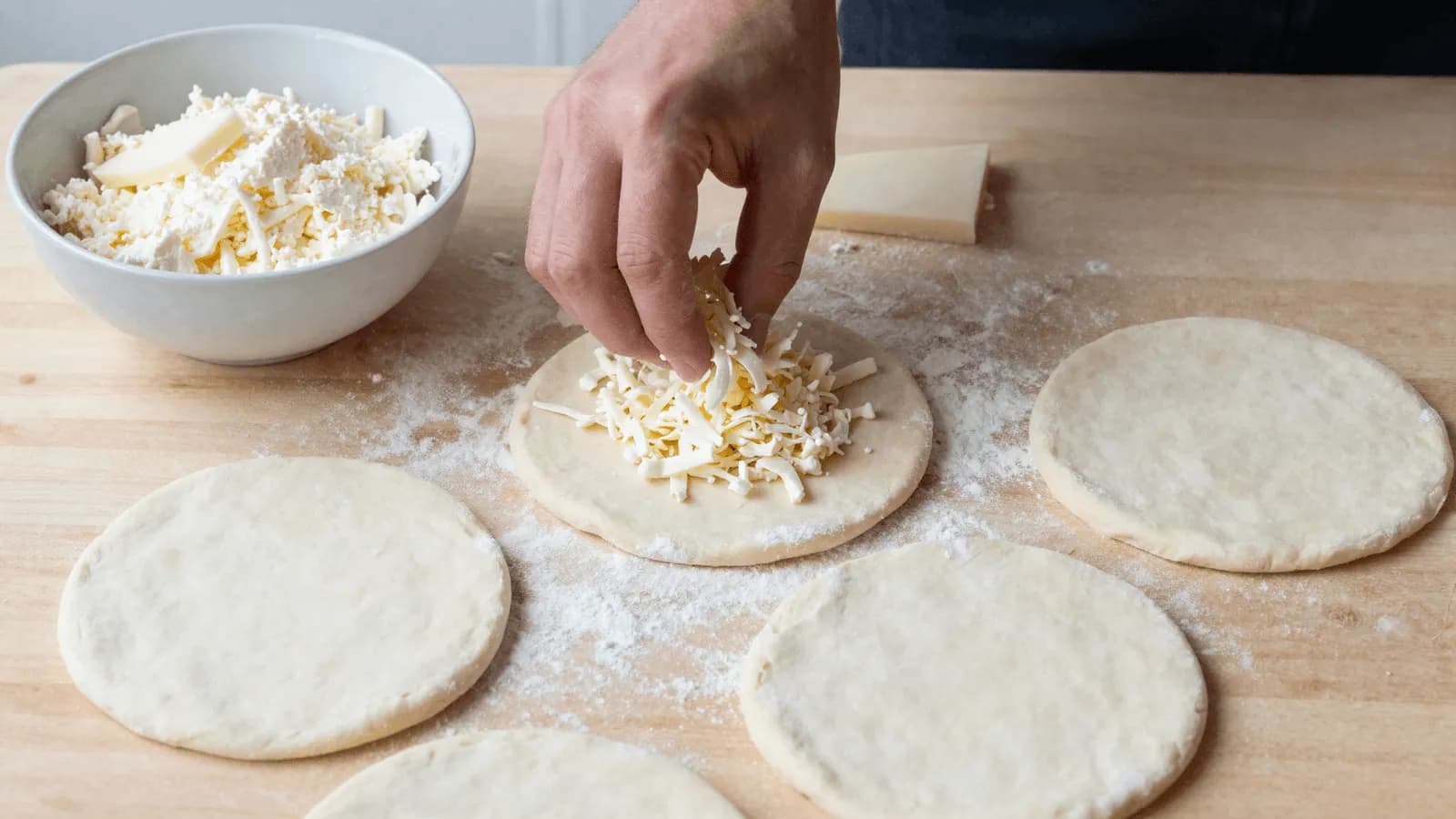
Walk into a Levantine bakery at seven in the morning and there are two queues forming in front of the same oven. One is for za'atar. The other is for jibneh, the cheese version, and it is the one children ask for.
Cheese manakish is a plain bread dough with a layer of soft white cheese baked into it until it slumps, blisters and pulls into strings when you tear it. It is simple to the point of being barely a recipe, and there is exactly one thing that will ruin it.
The salt problem
The traditional cheese is akkawi, named for Acre on the Palestinian coast. It is a smooth white cow's milk cheese, mild and slightly springy, and it is sold packed in heavy brine because that is how it keeps.
Straight out of that brine it is close to inedible. Not slightly salty; aggressively, mouth-drying salty. Bake it into bread untreated and you produce something nobody will finish.
So you soak it. Cube or slice the cheese, cover it with cold water, and change the water every hour or two. Two to three hours is usually enough for a supermarket block; overnight in the fridge with two changes is safer if you are unsure. Taste it. When it reads as pleasantly salty rather than saline, it is ready.
This step takes no work but it does take time, which is why it needs planning rather than skill. It is also the whole difference between the bakery version and the one you make once and never repeat.
Getting the stretch
Soaked akkawi on its own melts softly but does not really pull. Bakeries blend, and so should you.
The common Lebanese blend is akkawi with a proportion of low-moisture mozzarella for stretch, sometimes with a little kashkaval or a mild white cheddar for flavour and colour. Roughly two parts soaked akkawi to one part mozzarella is a good starting point.
If you cannot find akkawi at all, the usable substitute is fresh mozzarella squeezed dry and mixed with a small amount of feta rinsed under the tap for saltiness, or nabulsi treated exactly the same way as akkawi. Halloumi is not a substitute; it is designed specifically not to melt.
Ingredients
Makes 6 flatbreads, about 20 cm across. Around 2 hours plus soaking time.
- 1 quantity manakish dough (500 g flour, see below)
- 400 g akkawi cheese
- 200 g low-moisture mozzarella, grated
- 1 tablespoon nigella seeds (optional)
- 1 tablespoon olive oil, for brushing
- To serve: mint leaves, sliced tomato, a squeeze of lemon
The dough is the standard soft, oil-enriched flatbread dough set out in full in the dough guide: 500 g plain flour, 320 ml warm water, 7 g instant yeast, 1 teaspoon sugar, 1.5 teaspoons salt and 3 tablespoons olive oil, kneaded, risen and divided into six rested balls.
Method
1. Soak the cheese first
Do this before anything else, ideally the night before. Cut the akkawi into 1 cm slices, cover generously with cold water, and refrigerate. Change the water at least twice.
Slicing it thin matters: a whole block soaks only at the surface and stays fiercely salty in the middle, which produces a bread that is fine in one bite and inedible in the next.
2. Drain and shred
Drain the soaked cheese thoroughly and press it gently between clean tea towels. Water left in the cheese turns to steam in the oven and makes the bread soggy underneath.
Grate or crumble it, then toss it with the grated mozzarella and the nigella seeds if you are using them.
3. Heat the oven properly
Put a baking steel or heavy inverted tray on the top shelf and heat the oven to maximum, 250C or above, for a full 30 minutes.
Cheese manakish is even less forgiving of a cool oven than the za'atar version, because a slow bake gives the cheese time to release its fat and fry the surface greasy rather than melting it in place.
4. Shape and fill
Press each dough ball out to about 20 cm and dimple the surface with your fingertips, leaving a clear centimetre at the rim.
Spread roughly 100 g of the cheese mixture over each, right to the edge of the dimpled area. Do not heap it in the middle. A thick mound in the centre will still be cold when the rim has burnt.
5. Bake fast and watch it
Bake for six to eight minutes, until the cheese has slumped into a single molten sheet with a few brown blisters and the base is set and spotted.
You are looking for pale gold with dark freckles, not an evenly browned crust. Cheese manakish goes from correct to rubbery in about ninety seconds, so stay at the oven.
6. Serve folded
Brush the rim with a little olive oil, fold in half, and eat it hot. Mint leaves and sliced tomato tucked inside is the standard bakery treatment and cuts the richness properly.
What cheese is used in cheese manakish?
Akkawi is the traditional choice, a mild brined white cow's milk cheese from the Levantine coast, almost always blended with low-moisture mozzarella so it pulls into strings when torn. Nabulsi is the other traditional option and behaves the same way, including the need for soaking. Where neither is available, drained fresh mozzarella with a little rinsed feta gives a defensible result. Halloumi does not work, because it is specifically formulated to hold its shape under heat.
How long do you soak akkawi cheese?
Two to three hours in several changes of cold water for thin slices, or overnight in the fridge for a whole block cut into pieces. The only reliable test is tasting it, because brine strength varies considerably between producers. Aim for the point where the cheese tastes seasoned rather than salty, and remember that baking concentrates what is left rather than driving it off.
Can you freeze cheese manakish?
Freeze it after baking rather than before. The cheese topping weeps as it thaws if frozen raw, which soaks the base. Bake, cool completely, then freeze flat in a bag, and reheat straight from frozen in a very hot oven for four to five minutes. It will not be quite as good as fresh, but the difference is smaller than you would expect and considerably smaller than for the za'atar version.
The half-and-half
The move worth knowing is the one every bakery will do if you ask: half za'atar, half cheese on the same bread. Spread the za'atar paste over one half of the dimpled disc and the cheese over the other, and bake as normal.
It is the best possible argument for both, on one piece of bread, and it is how most of the region actually eats this when nobody is making them choose. The za'atar side is in the classic recipe, and if the blend itself is a mystery to you, start with what za'atar actually is.
Published in The Outspoken Digest
Editorial desk
Outspoken Digest Food DeskCooking, ingredients, restaurants and the economics of what ends up on the table.
Newsletter
The Digest, in your inbox
One edition, sent when it is ready. No noise, and your address is never passed on.
Read Next
More Recipes →
Swangy Tamarind Glazed Chicken Wings for the Flavour Replacing Swicy on Fast Food Menus
Sep 29, 2026/3 min read

Baked Apple Cider Doughnuts for a Cider Season That Peaked Earlier Than the Calendar Says
Sep 29, 2026/3 min read
An Obatzda Bavarian Beer Cheese Dip for the Final Stretch of Oktoberfest 2026
Sep 29, 2026/3 min read