Mandi, Kabsa and Machboos Are Not the Same Dish, and the Difference Is Mostly the Oven
One is cooked in a pit with the meat hanging above the rice. One is built on a tomato and spice base. One is the same dish under a different name across four countries. The word mandi comes from the Arabic for dew.
Friday, August 21, 2026/3 min read
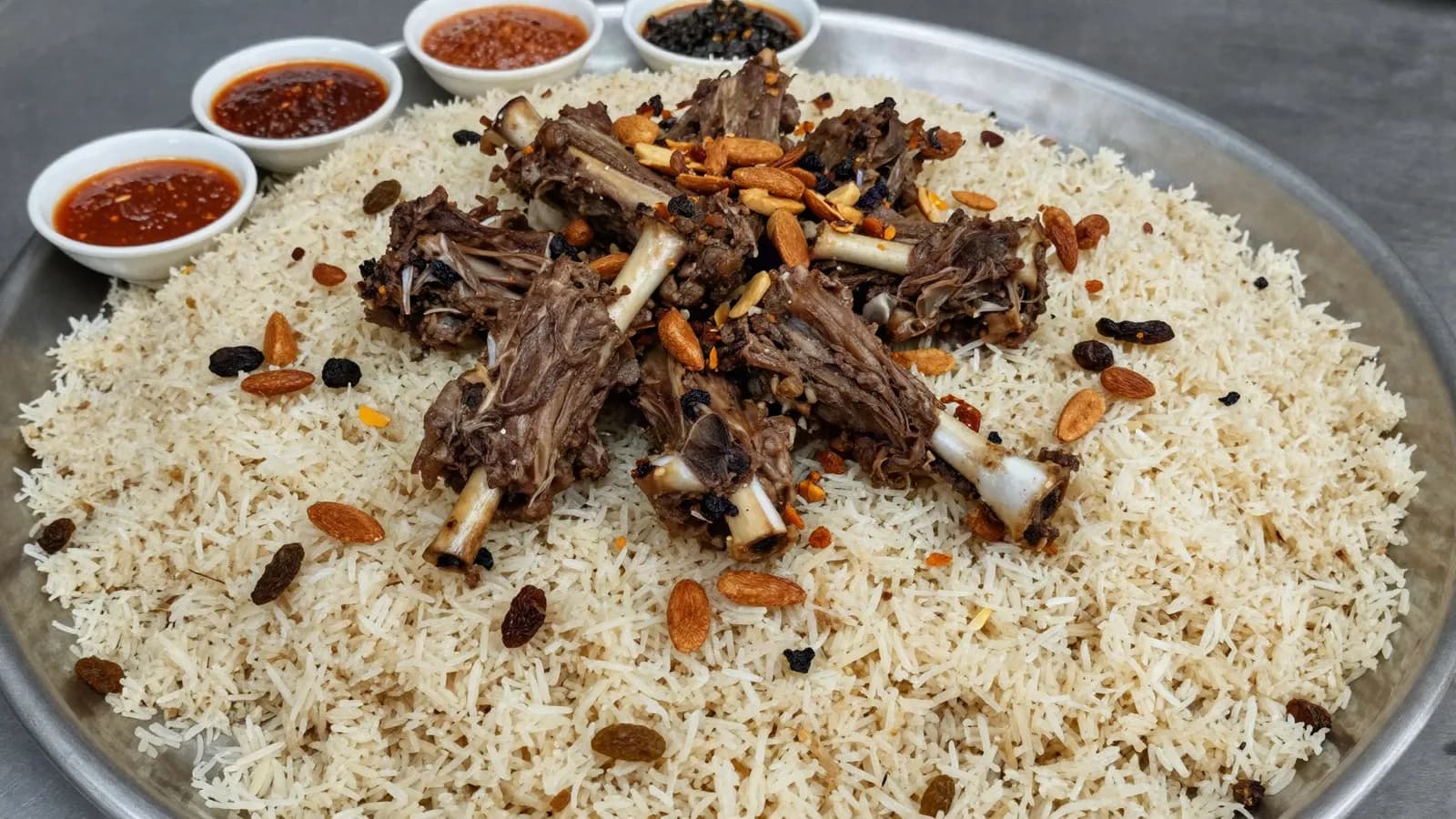
Order rice and meat anywhere on the Arabian Peninsula and you will be offered several dishes that look, to an outsider, more or less identical: long grain rice, a joint of lamb or a whole chicken, a scatter of nuts, a side of chilli sauce.
They are not the same, and the distinctions are not subtle once you know what you are looking at. Most of the difference is in how the meat meets the heat.
What is mandi?
A Yemeni dish from Hadhramaut, defined by being cooked in a pit oven.
The meat, usually lamb or chicken, is suspended inside a taboon, a tandoor-style oven set into the ground, with the rice positioned below it. The oven is sealed and the heat is indirect and enclosed. As the meat cooks, its fat and juices drip down through the rice, seasoning it from above while the enclosed smoke perfumes everything.
The name is the giveaway. Mandi derives from the Arabic nada, meaning dew, describing the moist texture the method produces. Meat cooked this way falls off the bone and stays wet in a way that roasting does not achieve.
The rice is comparatively restrained: lighter in colour, drier in the grain, with the flavour arriving as smoke and rendered fat rather than as a sauce.
What is kabsa?
The national dish of Saudi Arabia, believed to originate in Yemen, and built on a wet, aromatic base rather than a pit.
Here the meat is cooked with onion, tomato, garlic and a spice mix, and the rice is then cooked in that resulting broth. So the seasoning goes through the grain rather than dripping onto it. The result is a sweeter, tomato-forward, altogether saucier dish, usually darker in colour, often finished with raisins and fried nuts.
The spice blend is where households differ most, generally running through black lime, cardamom, cinnamon, cloves and bay. Ours is set out in the kabsa spice mix, and the full method is in the lamb kabsa recipe.
So what is machboos?
Largely the same dish as kabsa, under the name used in Qatar, the United Arab Emirates, Bahrain and Kuwait.
This is the answer that surprises people, and it is worth stating plainly rather than inventing a distinction to justify two words. Machboos is the regional variation and the regional name.
Where it does differ in practice is emphasis. Machboos leans harder on dried black lime, giving a distinctly sour, slightly fermented note, and the chicken is often poached in the spiced broth first and then crisped under a grill before serving. Presentation tends to be more decorated, with fried almonds and sweet raisins over the top. Our chicken machboos recipe follows that route.
How do you tell them apart on a plate?
Three things, in order of reliability.
Colour of the rice. Pale, loose, faintly smoky means mandi. Deeper gold or reddish brown, with the seasoning clearly cooked into the grain, means kabsa or machboos.
Smoke. Mandi carries a real smokiness from the enclosed oven. Restaurants outside Yemen sometimes fake it by resting a piece of burning charcoal in a small dish on the rice and covering the platter, which is a legitimate trick and detectable because the smoke sits on the surface rather than running through it.
Wetness. Kabsa and machboos have a sauce lineage. Mandi does not. If the grains are glossy and clumping slightly, you are eating from the kabsa family.
What about mathbi and madfun?
The same regional family, distinguished again by method, which is the pattern throughout.
Mathbi is grilled, with the meat cooked on hot flat stones. Madfun means buried, and the meat is cooked wrapped underground. Both are usually served with the same style of rice as mandi.
Once you see that the naming convention is describing the cooking method rather than the ingredients, the whole category becomes navigable. It is the same logic that runs through the vertical spit dishes, where three of the four names simply mean turning.
Which should you order?
Depends what you want the rice to taste of.
Order mandi if you want the meat to be the event and the rice to carry smoke and fat. Order kabsa or machboos if you want a spiced, layered, slightly sweet plate where every grain has been seasoned.
One practical note for anyone eating this properly for the first time: these are communal dishes, served on a large platter for a group, and the polite thing is to eat from the section directly in front of you rather than ranging across the middle.
Published in The Outspoken Digest
Editorial desk
Outspoken Digest Food DeskCooking, ingredients, restaurants and the economics of what ends up on the table.
Newsletter
The Digest, in your inbox
One edition, sent when it is ready. No noise, and your address is never passed on.
Read Next
More Recipes →
Cheesy Ramen on the Stove: Instant Noodles in a Real Cheese Sauce in Ten Minutes
Oct 18, 2026/3 min read
Beer-Battered Jalapeno Cheese Curds: The Wisconsin Bar Snack, Fried Properly at Home
Oct 18, 2026/3 min read
A Thanksgiving Turkey Sub With Hot Stuffing, Cranberry and Gravy to Dip
Oct 17, 2026/3 min read

Pecan Pie Bars With a Shortbread Base and a Caramel Filling That Slices Cleanly
Oct 17, 2026/3 min read