The Maqluba Spice Mix, and Why Turmeric Is Doing Two Jobs
Allspice, cinnamon, turmeric, cumin and black pepper. A warm, sweet-leaning blend that has to season rice, meat and fried aubergine at once, and colour the whole thing while it is at it.
Saturday, August 15, 2026/5 min read
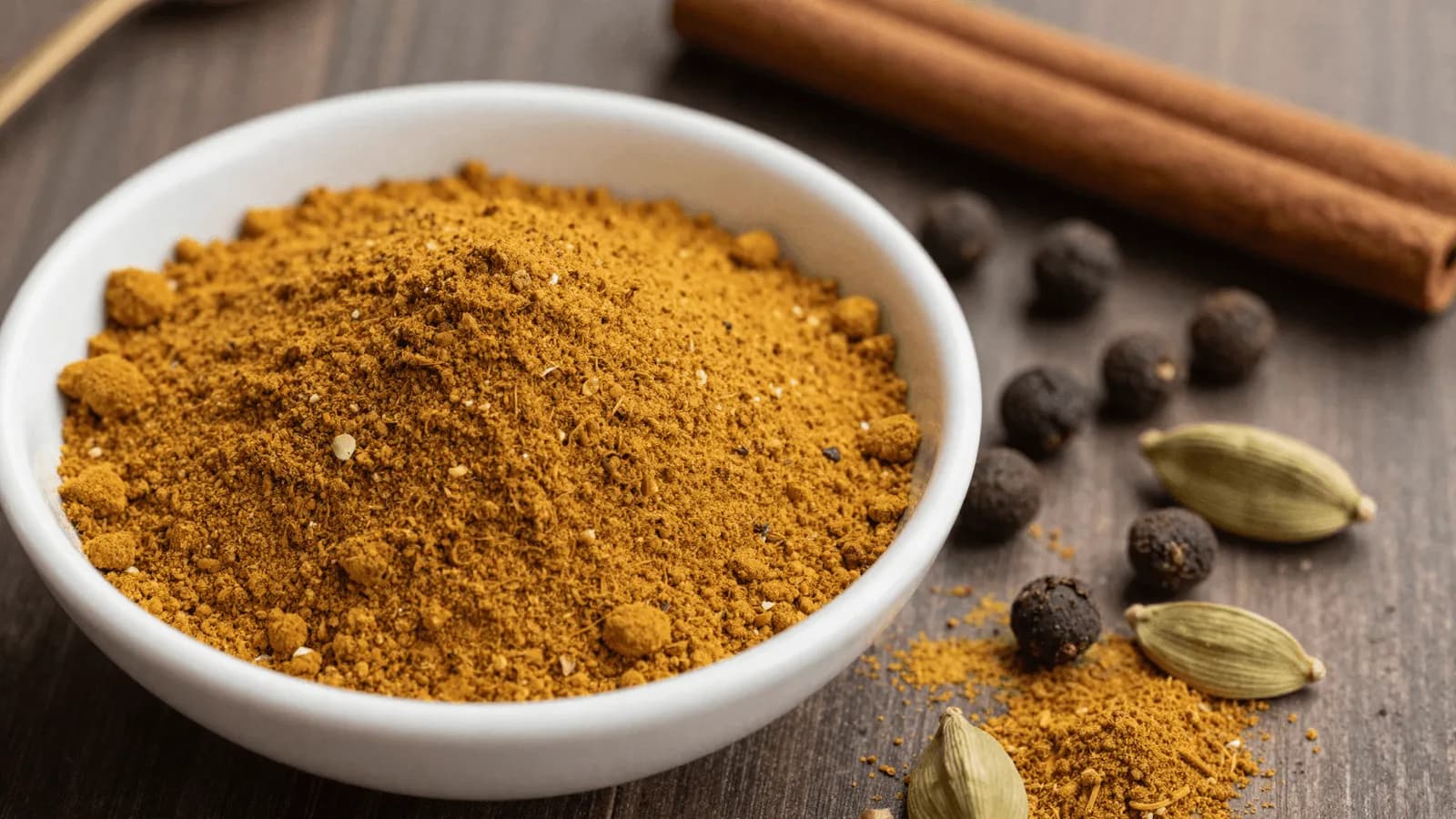
Maqluba is layered in a pot and turned out upside down, and the flip is what everyone photographs. The spicing is what decides whether the thing under the photograph is worth eating.
The blend has an unusually hard job. It has to season chicken or lamb, fried aubergine or cauliflower, and a large quantity of plain rice, all cooked together in one vessel where nothing can be corrected once the lid goes on. And it has to colour the rice, because a maqluba turned out pale looks like a mistake regardless of how it tastes.
What kind of blend this is
It belongs to the family Levantine cooks call bharat, which simply means spices, and which varies by household and by dish. The maqluba version is warm and sweet-leaning rather than hot, built on allspice and cinnamon, with turmeric for colour and cumin and black pepper underneath.
The distinguishing feature against its neighbours is the allspice. Where a Saudi kabsa blend leads with dried lime and coriander and points towards the Gulf, and a Moroccan ras el hanout piles up a dozen or more components, the maqluba blend is short, warm and unmistakably Levantine. Allspice is the note that places it.
There is no chilli in a traditional version. This is not a hot dish and adding heat pushes it somewhere else entirely.
The turmeric question
Turmeric is in the blend primarily for colour, and that creates a trap.
The temptation, when a first attempt comes out pale, is to double the turmeric. Turmeric in quantity is bitter and slightly chalky, and it will flatten the sweetness the cinnamon and allspice are providing. Past a certain point you get a yellow dish that tastes worse than the beige one did.
The better answers are to brown the onions properly, to brown the meat before it goes in, and to make sure the rice cooks in the meat broth rather than in water. Colour in this dish should come mostly from what happened in the pan, with the turmeric finishing the job rather than doing all of it.
A quarter teaspoon of ground saffron or a pinch of soaked saffron threads is the traditional upgrade where the budget allows, giving colour without bitterness.
Ingredients
Makes about 60 g, enough for four to five batches of maqluba. 10 minutes.
- 2 tablespoons ground allspice
- 1 tablespoon ground cinnamon
- 1 tablespoon ground turmeric
- 2 teaspoons ground cumin
- 2 teaspoons ground black pepper
- 1 teaspoon ground coriander
- 1 teaspoon ground cardamom
- 0.5 teaspoon ground cloves
- 0.5 teaspoon ground nutmeg
- 0.25 teaspoon ground cinnamon extra, for a sweeter Jordanian lean (optional)
Buy allspice whole if you can. It is a berry, it holds its oils well, and pre-ground allspice loses its character faster than almost anything else on this list.
Method
1. Toast the whole spices
If you are grinding from whole, toast the allspice berries, cumin seed, coriander seed, cardamom pods and cloves in a dry pan over a medium heat for two to three minutes, shaking constantly, until they smell fragrant.
Do not toast the turmeric, the cinnamon or the nutmeg. Ground turmeric scorches almost immediately and cinnamon turns acrid.
2. Cool completely, then grind
Tip the toasted spices onto a cold plate and let them cool fully before grinding. Warm spices grind into a paste rather than a powder because the oils are still mobile.
Grind in a spice mill or a mortar until fine, then sieve out any husks, particularly the papery cardamom shells.
3. Combine and store
Stir the ground toasted spices together with the turmeric, cinnamon, black pepper and nutmeg until the colour is completely uniform with no streaks.
Jar it airtight, keep it dark and cool, and use it within three months. Ground spice blends do not spoil so much as fade, and a blend this dependent on aromatics is noticeably weaker at six months.
4. Use it in two places, not one
The mistake is treating this as a rice seasoning. Use roughly a third of the blend on the meat as it browns, a third in the broth, and a third tossed with the fried vegetables before layering.
Seasoning applied at each stage penetrates in a way that a spoonful stirred into the pot at the end never will, and this is the practical difference between a competent maqluba and a very good one.
How much maqluba spice do you use per pot?
About two to two and a half tablespoons for a maqluba serving six, which uses roughly 500 g of rice and a kilogram of meat. Split it across the browning, the broth and the vegetables rather than adding it all at once. It is worth erring slightly low on a first attempt, because you can adjust the broth by taste before the rice goes in and you cannot adjust anything afterwards.
What is the difference between maqluba spice and kabsa spice?
Both are warm Levantine and Gulf blends and they overlap on cinnamon, cardamom, cumin and black pepper. The differences that matter are that maqluba spice leads with allspice and includes turmeric for colour, while kabsa spice is defined by loomi, the dried black lime, and leans on coriander with a sourness maqluba does not have. Substituting one for the other produces an edible dish that tastes like the wrong country. Our kabsa blend sets that side out.
Can you buy maqluba spice instead of making it?
You can, and commercial Palestinian and Jordanian blends sold as bharat or maqluba seasoning are generally sound. The two things to check are salt and colour. Many packaged blends are substantially salt, which means you are paying spice prices for it and cannot then season the dish accurately. And a blend that is uniformly bright yellow is usually heavy on turmeric to look appealing on a shelf, which is exactly the bitterness problem in packaged form.
Where to use the rest of the jar
It is not a single-dish blend. It works on roast chicken, in stuffed vegetables, in the mince for kibbeh, and stirred through plain rice with fried onions and toasted almonds for a fast side dish that tastes like considerably more effort than it was.
The dish it was built for is in the maqluba recipe, including the part where you turn the pot over and find out whether you left it to settle long enough.
Published in The Outspoken Digest
Editorial desk
Outspoken Digest Food DeskCooking, ingredients, restaurants and the economics of what ends up on the table.
Newsletter
The Digest, in your inbox
One edition, sent when it is ready. No noise, and your address is never passed on.
Read Next
More Recipes →
Swangy Tamarind Glazed Chicken Wings for the Flavour Replacing Swicy on Fast Food Menus
Sep 29, 2026/3 min read

Baked Apple Cider Doughnuts for a Cider Season That Peaked Earlier Than the Calendar Says
Sep 29, 2026/3 min read
An Obatzda Bavarian Beer Cheese Dip for the Final Stretch of Oktoberfest 2026
Sep 29, 2026/3 min read