Eating the Same Meal in a Different Order Cut Post-Meal Glucose by More Than a Third
Identical food, identical calories, identical macronutrients. The only variable was what went in the mouth first, and glucose at sixty minutes fell by 36.7 per cent. It is the cheapest intervention in diabetes nutrition.
Outspoken Digest Nutrition Desk
Tuesday, August 18, 2026/3 min read
Almost all dietary advice for diabetes concerns what to eat and how much. Very little concerns the order, which is odd, because order turns out to matter a great deal and costs nothing to change.
The clearest demonstration came from a study published in Diabetes Care. Participants with metformin-treated type 2 diabetes ate an identical meal of 628 calories, made up of 55 grams of protein, 68 grams of carbohydrate and 16 grams of fat, on two separate occasions a week apart.
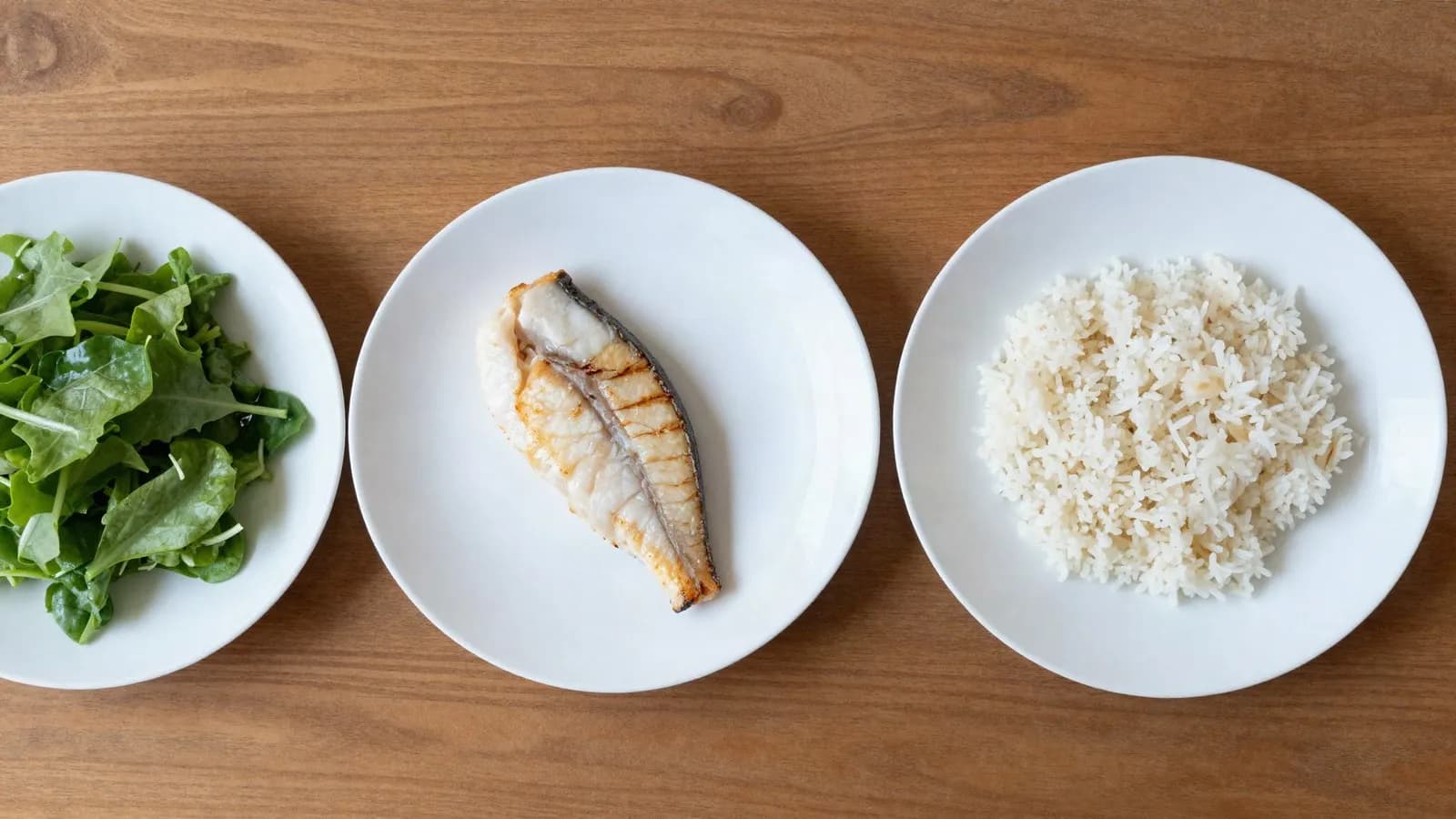
On one day they ate the carbohydrate first, waited 15 minutes, then had the protein and vegetables. On the other they reversed it: protein and vegetables first, a 15 minute wait, then the bread and orange juice.
Same food. Same calories. Same macronutrients. Same people.
How much difference did the order make?
Mean post-meal glucose fell by 28.6 per cent at 30 minutes, 36.7 per cent at 60 minutes, and 16.8 per cent at 120 minutes when protein and vegetables came first.
Those are large numbers for an intervention that involves buying nothing, giving up nothing and adding no time to the day. A pharmaceutical company would be pleased with that curve.
The honest caveat belongs here: this was a small study, with 11 participants. It is a pilot rather than a definitive trial. But the finding has been reproduced in other settings, including in prediabetes and in women with gestational diabetes, and the mechanism is well understood, which is what raises it above a statistical curiosity.
Why does the order change anything?
Three things happen when protein, fat and fibre arrive before carbohydrate.
The stomach empties more slowly. Protein and fat both slow gastric emptying. Carbohydrate arriving into an intestine that is already working through them is delivered gradually rather than as a bolus, and a slower delivery means a lower peak.
Gut hormones are already released. Protein and fat entering the small intestine stimulate the incretin hormones, GLP-1 among them, which prime the insulin response. By the time the carbohydrate arrives, the system is ready for it rather than reacting to it.
Fibre forms a physical barrier. Vegetables eaten first create a viscous layer that slows the absorption of sugars travelling behind them, the same mechanical principle that makes psyllium work.
None of this is exotic. It is the ordinary physiology of digestion, being used deliberately rather than accidentally.
How do you actually do it?
The rule is short: vegetables first, protein second, carbohydrate last.
In practice that means eating the salad before the rice rather than alongside it. Starting with the soup or the mezze. Eating the grilled meat before the bread. Leaving the potato until the end of the plate.
The 15 minute gap used in the study is not essential for a real meal. Simply front-loading the vegetables and protein and finishing with the starch captures most of the effect. Nobody is suggesting you sit with a timer at dinner.
This fits the structure of a great deal of regional eating better than most dietary advice does. A meal that opens with fattoush or tabbouleh, moves to grilled meat, and arrives at rice last is already sequenced correctly. What breaks it is eating everything simultaneously from a shared plate, or starting with bread while waiting for the food.
Who does this help most?
People whose main problem is the post-meal spike rather than the fasting number, which describes a very large share of type 2 diabetes and essentially all of prediabetes.
It is also unusually well suited to anyone who has found dietary change difficult, because it demands no restriction. Nothing is removed from the plate. Nobody has to eat food they dislike, refuse hospitality, or explain a special diet at a family table. It is invisible to everyone else present, which matters more than clinicians tend to appreciate.
Combined with a ten minute walk afterwards, which pulls glucose into muscle without needing insulin, it is two free interventions targeting the same window.
What it does not do
It does not license the meal. Sequencing a very large carbohydrate load still leaves you with a very large carbohydrate load, arriving more slowly. The area under the curve improves less than the peak does.
It is a modifier, not a replacement for portion and composition. But as an addition to what someone is already doing, it is close to free, and there is not much else in this field that can be described that way.
Published in The Outspoken Digest
Editorial desk
Outspoken Digest Nutrition DeskDiet, food science and the evidence behind claims about what we eat.
Newsletter
The Digest, in your inbox
One edition, sent when it is ready. No noise, and your address is never passed on.
Read Next
More Nutrition →
Small Pilot Trial Finds Meals or an App Slowed Weight Regain After People Stopped GLP-1 Drugs
Oct 15, 2026/2 min read
Potassium-Rich DASH Diet Did Not Raise Blood Potassium to Unsafe Levels in Adults on Blood Pressure Drugs
Oct 13, 2026/2 min read
Matched for Calories and Macronutrients, an Ultra-Processed Meal Still Drew a Bigger Insulin Response in a Small Trial
Oct 9, 2026/3 min read
A Study of 371,000 Americans Found Whole Fruit, Not Juice, Is Linked to Better Heart Health
Oct 1, 2026/2 min read