Psyllium Husk Is the Dullest Thing in the Supplement Aisle and Almost the Only One That Works
It has an authorised FDA health claim, which almost no supplement does, and meta-analyses behind it for cholesterol, blood glucose and constipation. One gel-forming property explains all three, and so does the way it goes wrong.
Outspoken Digest Nutrition Desk
Thursday, August 20, 2026/5 min read
The supplement industry runs on novelty. Something exotic, recently discovered, ideally from a remote plant, with a mechanism nobody can quite explain and a price that suggests it must be doing something.
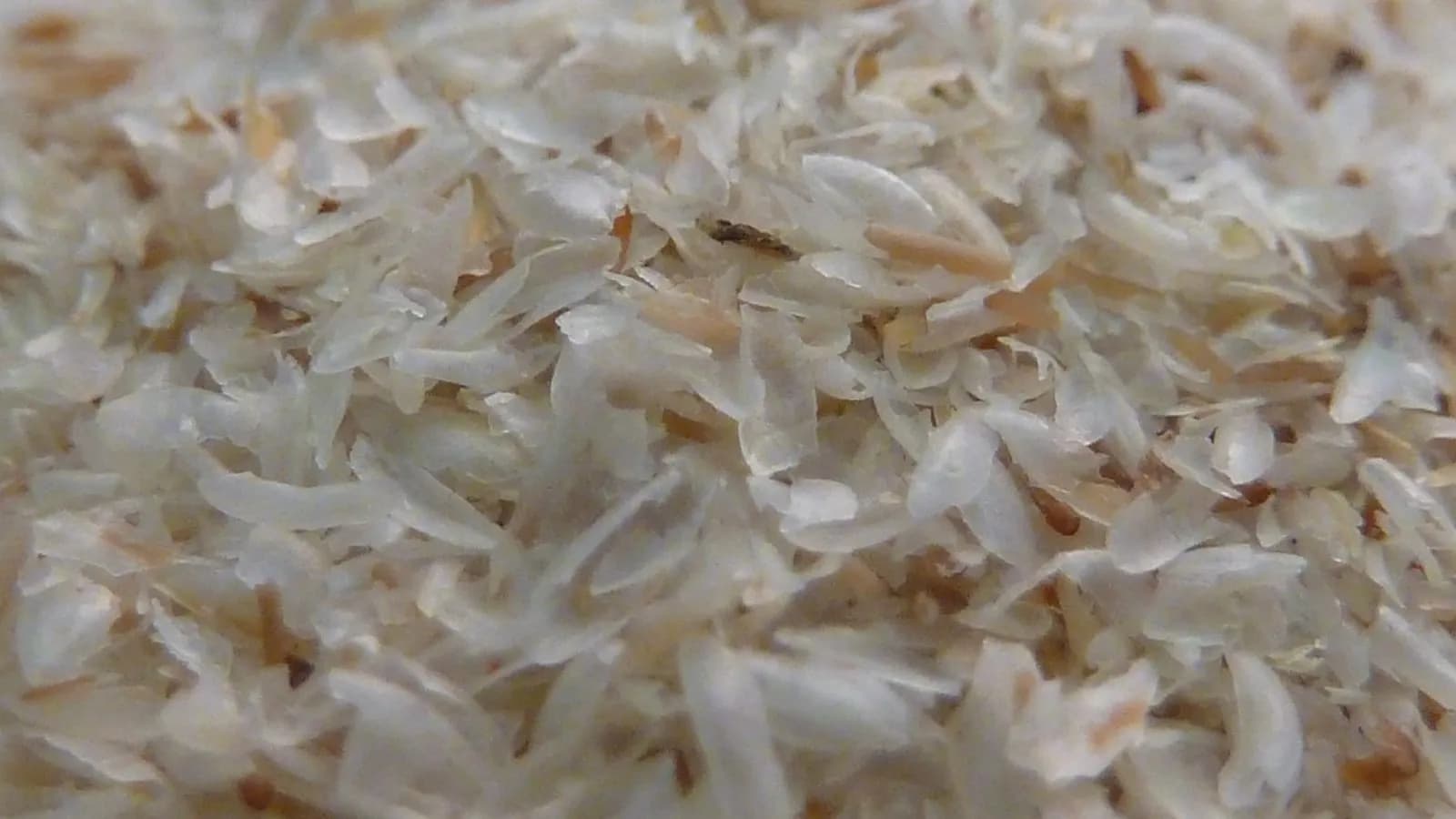
Psyllium husk is the seed coat of Plantago ovata, has been used medicinally for centuries, costs almost nothing, and tastes of very little. It is also one of the very few things on the shelf with an authorised health claim from the FDA, granted in 1998, linking its soluble fibre to reduced risk of coronary heart disease. Regulators hand those out rarely and grudgingly.
It is the boring option, and it is the one with the evidence.
What does psyllium actually do in the body?
One thing, from which everything else follows. It forms a gel.
Psyllium is a viscous soluble fibre. In water it swells into a thick, slippery mass that your body cannot digest and your gut bacteria barely ferment. That single property is doing all the work in three different-looking places at once.
In the small intestine, the gel physically slows the movement of everything travelling with it, so sugars are absorbed more gradually. It also traps bile acids and carries them out rather than letting them be recycled, forcing the liver to pull cholesterol from the blood to make replacements. In the colon, the gel holds water, which softens hard stool and, less obviously, firms up loose stool, because the same gel adds bulk in both directions.
Almost nothing else in nutrition works this cleanly. There is no receptor, no metabolic pathway, no signalling cascade to argue about. It is mechanical.
How much does it lower cholesterol?
Modestly, reliably, and in proportion to the dose.
A 2025 dose-response meta-analysis pooling 41 randomised controlled trials across 2,049 participants found psyllium reduced LDL cholesterol by around 8.55 mg/dL and total cholesterol by around 9.05 mg/dL, roughly 0.22 and 0.23 mmol/L. The analysis found a genuine dose-response relationship across intakes from about 3 to 20 grams a day, which is the signature of a real effect rather than a statistical accident.
Be clear about the size of this. It is not a statin, and anybody who needs a statin should take one. It is the kind of shift that matters at population scale and as an addition to other measures, not a substitute for treatment.
Does it help blood sugar?
This is the finding that surprises people, and it is the strongest practical case for psyllium in this region.
A GRADE-assessed systematic review and meta-analysis pooling 19 randomised controlled trials across 962 participants found psyllium significantly reduced HbA1c, with a weighted mean difference of −0.75 percentage points and a confidence interval running from −1.21 to −0.29. Fasting blood sugar and HOMA-IR, a measure of insulin resistance, also fell. Fasting insulin itself did not move significantly.
A three quarters of a point reduction in HbA1c is not a trivial number. It is in the territory of some glucose-lowering medications. The confidence interval is wide, the trials are heterogeneous, and effects concentrate in people who have something to correct rather than in the already healthy. But given how much diabetes there is across the Gulf, a cheap intervention with that effect size deserves more attention than it gets.
Worth noting what the FDA did not do. It permits only a qualified claim linking psyllium to reduced type 2 diabetes risk, while stating there is very little scientific evidence for it. Improving glucose control in people who already have diabetes and preventing diabetes in people who do not are separate questions, and only the first has decent support.
Is it the best thing for constipation?
On current evidence, yes, and by a clear margin over the alternatives.
Systematic review work on fibre supplementation for chronic constipation has repeatedly put psyllium at the top for increasing stool frequency and improving consistency. Crucially, it does this without stimulating the bowel, which is what separates it from senna and similar laxatives that the gut can become reliant on.
It also helps the opposite problem, which sounds contradictory until you remember the mechanism. The gel absorbs excess water in loose stool and donates water to hard stool. It is a normaliser rather than a laxative.
How should you actually take it?
The instructions are short and the first one is not optional.
- Water, and then more water. A gel-forming fibre taken with too little fluid can swell in the oesophagus rather than in the gut. This is a documented cause of obstruction and the reason every package carries the warning. One heaped teaspoon needs a full large glass, drunk promptly, not sipped over an hour.
- Start low. Around 3 to 5 grams a day for the first week. Going straight to 15 produces bloating and cramping that convinces people the stuff does not agree with them, when the dose escalation was the problem.
- Separate it from medication. That gel slows the absorption of what travels with it, and that includes drugs. A two hour gap either side is the usual advice, and it matters most for anyone on thyroid hormone, lithium, carbamazepine or diabetes medication where timing affects the dose response.
- Take it before meals if glucose is your goal. The gel has to be in place before the carbohydrate arrives to slow its absorption. Afterwards is too late, a timing principle that also underlies what eating things in a different order does to a glucose curve.
Should this replace fibre from food?
No, and this is the limit worth being honest about.
Psyllium is barely fermented, which is exactly why it works mechanically and passes through intact. But fermentation is the process by which gut bacteria turn fibre into short-chain fatty acids, and that is a large part of why dietary fibre is associated with so much. A supplement that skips fermentation skips those benefits.
So psyllium is not a substitute for beans, oats, vegetables and fruit. It is the specific tool for three specific jobs: shifting cholesterol slightly, blunting a glucose curve, and fixing a bowel that is not cooperating. On those three, it is unusually well evidenced and unusually cheap, which is a combination that almost never survives contact with the supplement aisle.
Published in The Outspoken Digest
Editorial desk
Outspoken Digest Nutrition DeskDiet, food science and the evidence behind claims about what we eat.
Newsletter
The Digest, in your inbox
One edition, sent when it is ready. No noise, and your address is never passed on.
Read Next
More Nutrition →
Small Pilot Trial Finds Meals or an App Slowed Weight Regain After People Stopped GLP-1 Drugs
Oct 15, 2026/2 min read
Potassium-Rich DASH Diet Did Not Raise Blood Potassium to Unsafe Levels in Adults on Blood Pressure Drugs
Oct 13, 2026/2 min read

Matched for Calories and Macronutrients, an Ultra-Processed Meal Still Drew a Bigger Insulin Response in a Small Trial
Oct 9, 2026/3 min read

A Study of 371,000 Americans Found Whole Fruit, Not Juice, Is Linked to Better Heart Health
Oct 1, 2026/2 min read