NASA Prepares Three August Spacewalks Outside the ISS
NASA has scheduled three U.S. spacewalks for August, turning routine-looking maintenance into a reminder of the planning behind an orbital laboratory.
Tuesday, July 28, 2026/2 min read
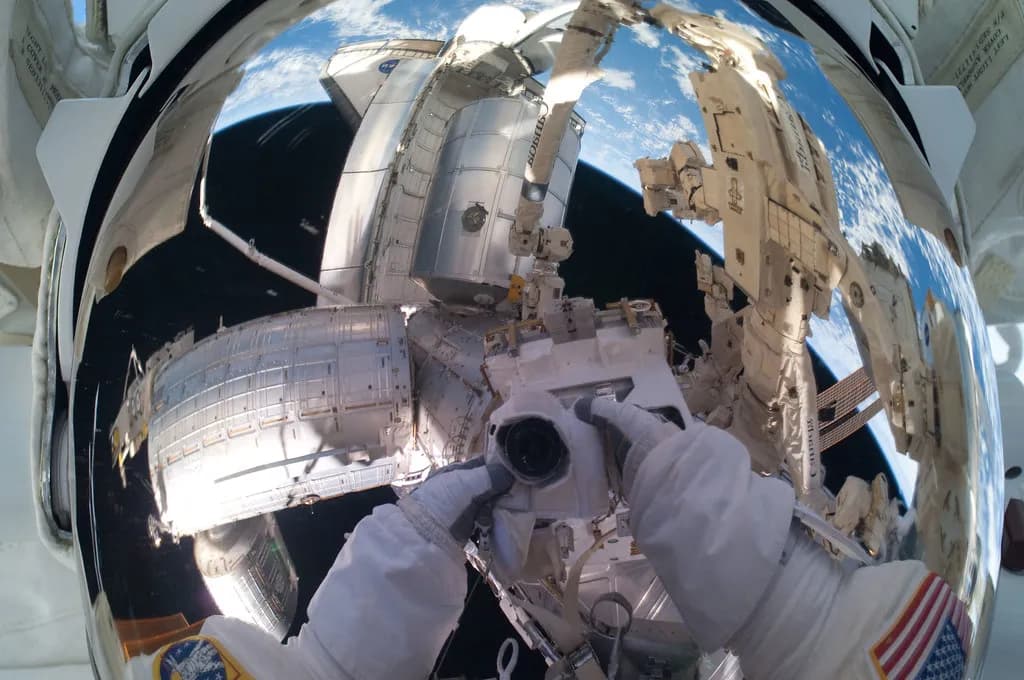
NASA is preparing coverage of three U.S. spacewalks outside the International Space Station in August. From Earth, the images can look calm: astronauts move slowly against a black sky while the planet turns below. The operation is anything but casual. Every tool, path, body position and contingency is rehearsed around a spacecraft traveling at orbital speed.
What changed
NASA 2026 News Releases provides the primary factual record. Spacewalks support maintenance, upgrades and scientific work that cannot be completed from inside the station. Scheduling three in one month concentrates attention on crew preparation and mission control coordination. Changes to start times, including the July 27 update to NASA's advisory, show how operational plans remain responsive until execution.
Public coverage naturally focuses on spectacular views, but success depends on ordinary engineering disciplines: checklists, redundant systems, communication, fatigue management and clear stop decisions. Spacewalk planning is a useful counterweight to technology culture that celebrates improvisation without showing verification.
Why it matters beyond the headline
Technology news is strongest when the operational details remain visible: constraints, maintenance, verification and the people accountable for the outcome.
Viewers can use NASA's official channels for schedules and live coverage, remembering that times may change. Educators can pair the broadcast with material on life support, suit design and station maintenance. The most interesting questions often concern preparation: what happens when a tool is lost, a task runs long or a sensor disagrees?
What readers should watch next
- Use NASA's live schedule because times can change.
- Watch the checklist and communication, not only the view.
- Treat a delay as part of safe operations.
The wider evidence
NASA: Spacewalks adds context. NASA's 2026 newsroom lists the updated advisory and will provide the authoritative coverage details. The agency's spacewalk overview explains the purpose, suits and history behind extravehicular activity, adding context beyond a single broadcast.
That second view is important because early coverage often compresses uncertainty. Dates can move, rules can change and one result can look larger than it is. The most reliable next step is to return to the primary source as new information arrives.
Limits and cautions
Mission schedules are operational and can change for safety, station traffic, equipment or crew considerations. Readers should confirm the latest time directly with NASA. Speculation about an adjustment should not be mistaken for evidence of a problem.
The useful takeaway
This is a developing story, but it does not need exaggerated certainty to be worth reading. The facts already available show what changed, the tradeoffs explain why it matters and the next official update will reveal whether the early direction becomes a lasting shift.
Published in The Outspoken Digest
Editorial desk
Outspoken Digest News DeskReports for The Outspoken Digest across Latest Trends, Sports, Nutrition, Crypto.
Newsletter
The Digest, in your inbox
One edition, sent when it is ready. No noise, and your address is never passed on.
Read Next
More Technology →
Some White Dwarfs Would Look Green, Pink or Purple, Warwick Astronomers Calculate
Oct 15, 2026/2 min read
Oxford Physicists Reproduce the Aharonov-Bohm Effect on a Hybrid Quantum Computer
Oct 15, 2026/2 min read

Japan Will Fund Up to $21 Billion for Two GlobalFoundries Chip Plants in New York
Oct 15, 2026/2 min read
Apple's $299 HomeView Smart Display Takes Preorders, but Not in the European Union
Oct 15, 2026/2 min read