Omega Three and a Daily Aspirin Matched Antibiotics for Severe Gum Disease Over a Full Year
In a placebo controlled trial of 109 people, 58 per cent of the antibiotic group and 57.7 per cent of the supplement group reached the clinical target. The placebo group reached 23.1 per cent, and that third number is what makes the first two mean anything.
Monday, August 31, 2026/3 min read
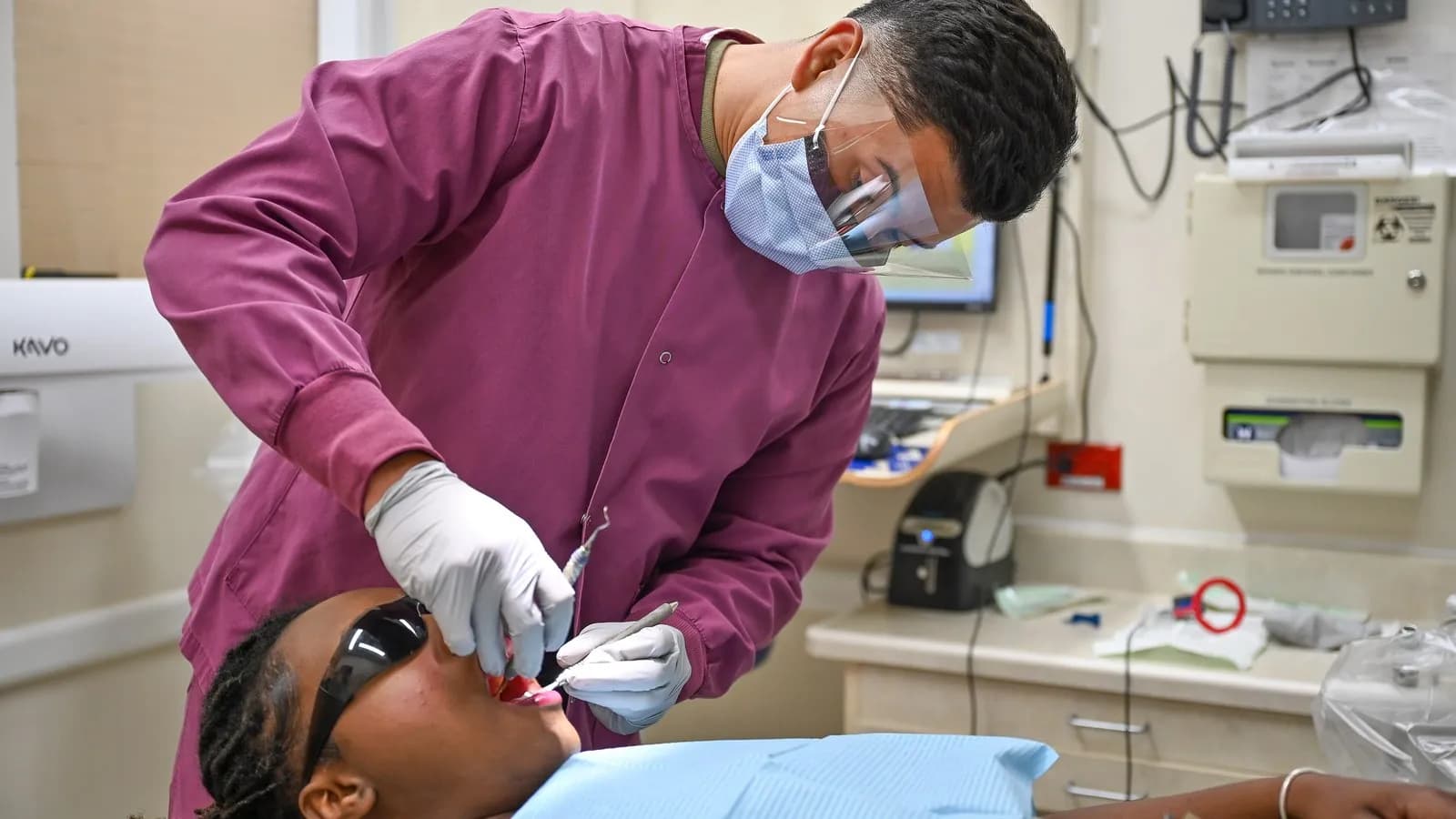
A year long randomised trial gave people with advanced gum disease either antibiotics or a combination of omega three and low dose aspirin, and could not tell the two groups apart at the end of it.
58 per cent of the antibiotic group reached the clinical target. 57.7 per cent of the omega three and aspirin group did. The gap between those numbers is noise.
The number that matters most is the third one
23.1 per cent.
That is the group who had the standard mechanical treatment, the deep clean below the gumline that is the foundation of all periodontitis care, plus placebo versions of everything else. Fewer than a quarter of them got to the target.
Without that arm, two treatments performing identically would be an uninteresting result: they might both be doing nothing. With it, the trial is saying that scaling alone leaves three quarters of severe cases short of the goal, and that either of two very different additions roughly doubles the proportion who get there. That is a real effect, measured against the right comparison.
How it was run
109 people with advanced periodontitis, in a multicentre, double blind, placebo controlled randomised trial, across Brazilian institutions including Albert Einstein Israelite Hospital, Guarulhos University, the University of Taubate and the Ribeirao Preto School of Dentistry at USP, with Harvard involved. Published in the Journal of Periodontology.
Four arms. Everyone got subgingival instrumentation. One group then had metronidazole and amoxicillin three times daily for fourteen days. One had three grams of omega three daily plus a daily aspirin for six months. One had both. One had placebo.
The target was clinical and specific: no more than four remaining deep periodontal pockets at one year. Assessments ran at three, six and twelve months, and the benefit held for six months after treatment stopped.
Why the mechanism is plausible
Because the two treatments are not really doing the same job.
Antibiotics attack the bacteria. Omega three and aspirin act on the inflammation the bacteria provoke, and the tissue destruction in periodontitis is substantially the body's own response rather than the microbes directly. Aspirin at low dose and omega three both push the inflammatory system towards resolution.
So the result is not two routes to the same place by accident. It is a reminder that a disease named after an infection can be treated at the point where the damage actually happens.
What this is not
It is not permission to buy fish oil and skip the dentist, and it is not a licence to self prescribe aspirin.
Daily aspirin is a real drug with a real bleeding risk, which is precisely why medicine spent the last decade walking back its routine use for heart protection in healthy people. Three grams of omega three daily is also a high dose, well above what a supplement label usually suggests. Both belong in a conversation with a clinician who knows the rest of your history.
The trial's own limitation is that participants did not have significant systemic or other oral disease. The people most likely to be offered this instead of antibiotics, older patients with diabetes or cardiovascular disease on several medicines already, are exactly the people the study cannot speak for.
And none of it replaces the mechanical treatment. Every arm had the scaling. The question was only what to add.
The reason to care beyond dentistry
Antibiotic courses handed out for a chronic, non life threatening condition are one of the quieter contributors to resistance, because they are given repeatedly, to large numbers of people, for years.
A treatment that merely matches antibiotics is therefore not a disappointment. It is the point. Matching, with a route that does not select for resistant organisms, is worth more than beating them by a few percentage points would be. We looked at the same argument playing out on the fungal side in the WHO's antifungal resistance guidance, where the shortage of alternatives is further advanced.
One of the researchers said the team had expected the supplement arm to come in somewhat below the antibiotics and found the result surprising. That is the correct reaction, and it is also the reason to wait for replication in a larger and sicker population before anything changes at the chair. For how to weigh a supplement finding that has not got that far yet, our guide to reading the evidence on vitamin D applies almost line for line.
Published in The Outspoken Digest
Editorial desk
Outspoken Digest Health DeskMedicine, public health and the research behind the headlines, read carefully.
Newsletter
The Digest, in your inbox
One edition, sent when it is ready. No noise, and your address is never passed on.
Read Next
More Health →
Two Days After the Nobel for Optogenetics, a Small NEJM Trial Shows It Helped Some Blind Patients Detect Objects
Oct 9, 2026/3 min read

WHO Launches a Global Roadmap on Pre-Eclampsia and Pregnancy Hypertension, Tied to 42,000 Maternal Deaths a Year
Oct 8, 2026/3 min read

WHO Says Diet and Exercise Come First and Children Under 10 Should Not Get Weight-Loss Drugs or Surgery
Oct 7, 2026/3 min read

Kenya Confirms Its First Ebola Case, a Man Who Flew In From Uganda After Years in Congo and Died in Nairobi
Oct 6, 2026/3 min read