Pesto alla Genovese in a Mortar, With the Trofie, Potatoes and Green Beans It Was Made For
The Genoese sauce is seven ingredients pounded, not blended, and in Liguria it dresses a short twisted pasta cooked in the same pot as potatoes and beans. Why the mortar matters, what the official recipe specifies, and how to keep it green.
Sunday, September 6, 2026/4 min read
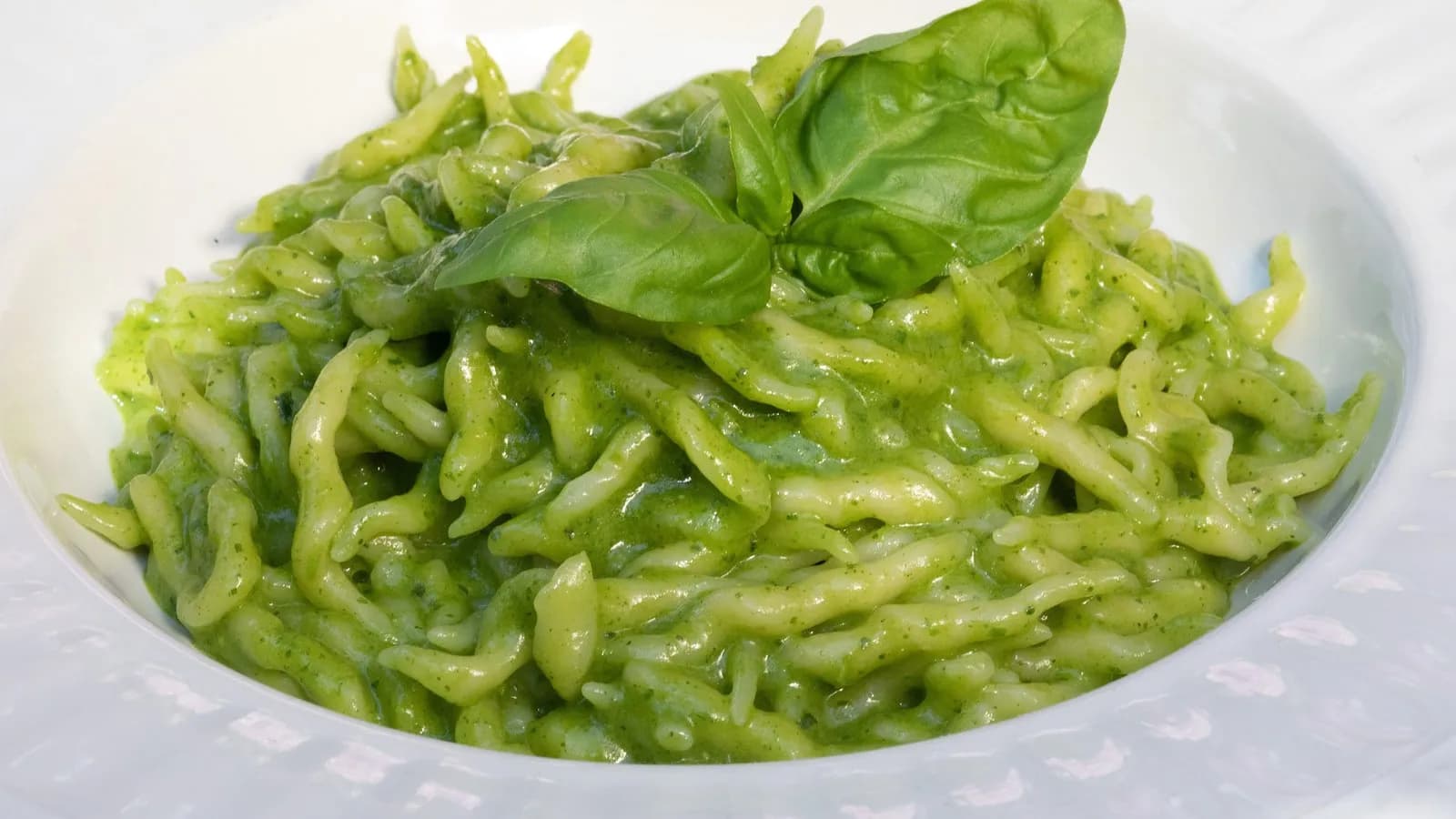
The word pesto is the past participle of the Genoese verb for to pound, and that is the whole argument in one etymology. Pesto is a pounded sauce. A blender makes something green and pleasant that is not quite it, for a reason that is physical rather than sentimental: steel blades spinning at speed heat the basil and cut its cells, which oxidises the leaves and turns the flavour grassy and the colour dull. A pestle crushes them cold and releases the oils without the heat. Fifteen minutes in a marble mortar with a wooden pestle produces a sauce that is brighter, greener and more fragrant than anything a machine has made, and the difference is not subtle.
The official version
Genoa takes this seriously enough to hold a world championship in pesto made by mortar, with a codified recipe: Genoese basil, which is grown under protected designation and has small, pale, tender leaves without the mint note of larger varieties; pine nuts; garlic; coarse salt; Parmigiano Reggiano; Pecorino, traditionally the Sardinian Fiore Sardo; and Ligurian extra virgin olive oil, which is mild and buttery rather than peppery. Nothing else. No lemon, no walnuts, no spinach to keep it green, no cream.
Outside Liguria the basil will be a larger-leaved variety and the oil will be whatever is good and not too aggressive. The result is still pesto. Just do not make it with a strong Tuscan oil, which fights the basil.
Ingredients, for four
For the pesto:
- 60 to 70 g basil leaves, the smallest and youngest you can find, stripped from the stems, washed and dried completely
- 30 g pine nuts
- 1 to 2 cloves garlic, depending on strength, green shoot removed
- A generous pinch of coarse sea salt
- 50 g Parmigiano Reggiano, finely grated
- 25 g Pecorino, finely grated
- 80 to 100 ml mild extra virgin olive oil
For the pasta:
- 400 g trofie, or trenette or linguine
- 2 medium waxy potatoes, peeled and cut into 1 cm dice
- 150 g fine green beans, topped and cut in half
Method
- Put the garlic and salt in the mortar and pound to a paste. The salt is the abrasive and it is what breaks the garlic down.
- Add the pine nuts and pound until they form a creamy paste with the garlic.
- Add the basil a handful at a time. Do not pound it: press and turn the pestle against the side of the mortar in a rotating motion, crushing the leaves against the stone. This is the step that takes time. Continue until the leaves have become a bright green paste and the mortar is releasing a strong perfume.
- Add the cheeses and work them in with the pestle.
- Add the oil in a thin stream, stirring with the pestle or a wooden spoon, until the sauce is loose enough to coat pasta but still holds together. Taste for salt. It should be intensely green and taste of basil first, cheese second, garlic a distant third.
- Bring a large pan of well-salted water to the boil. Add the potatoes. After five minutes add the pasta. Two minutes before the pasta is done, add the beans. Everything should finish together, the potatoes just yielding, the beans still bright.
- Reserve a cup of the cooking water and drain. Put the pesto in a warm serving bowl, loosen it with two or three tablespoons of the cooking water, add the pasta, potatoes and beans and toss until every piece is coated. Serve at once, with more cheese if wanted.
Notes
Pesto is never cooked and never heated directly. It goes onto hot pasta in a bowl, off the heat, and the pasta's warmth is all it needs. Put it in a pan and it splits and goes brown.
The potatoes and beans are not a modern healthy addition; they are the Ligurian way of serving trofie al pesto and have been for as long as anyone has written the dish down. The potato starch thickens the sauce and the beans give it something to be sharp against. Trofie themselves, the short twisted hand-rolled shapes traditional around Sori east of Genoa, are made for catching a sauce of this texture; linguine or trenette are the flat alternatives and are equally traditional in the city.
To keep pesto for a few days, press it into a jar, cover the surface completely with a layer of oil so no air touches it, and refrigerate. It freezes well without the cheese, which is stirred in after thawing. It goes brown on contact with air and there is no trick to prevent it other than eating it. For a sauce from the other end of the Mediterranean that lives by the same rule, pounded not blended and eaten fresh, see our toum recipe, and for a different herb sauce made the same way, our chermoula.
Published in The Outspoken Digest
Editorial desk
Outspoken Digest Food DeskCooking, ingredients, restaurants and the economics of what ends up on the table.
Newsletter
The Digest, in your inbox
One edition, sent when it is ready. No noise, and your address is never passed on.
Read Next
More Recipes →
Swangy Tamarind Glazed Chicken Wings for the Flavour Replacing Swicy on Fast Food Menus
Sep 29, 2026/3 min read

Baked Apple Cider Doughnuts for a Cider Season That Peaked Earlier Than the Calendar Says
Sep 29, 2026/3 min read
An Obatzda Bavarian Beer Cheese Dip for the Final Stretch of Oktoberfest 2026
Sep 29, 2026/3 min read