Raja Ampat in 2026: Extraordinary Reefs, Real Currents and New Pressure
Raja Ampat remains one of diving's richest destinations, but current, season, permits and mounting pressure from tourism and mining belong in the booking decision.
Saturday, July 25, 2026/3 min read
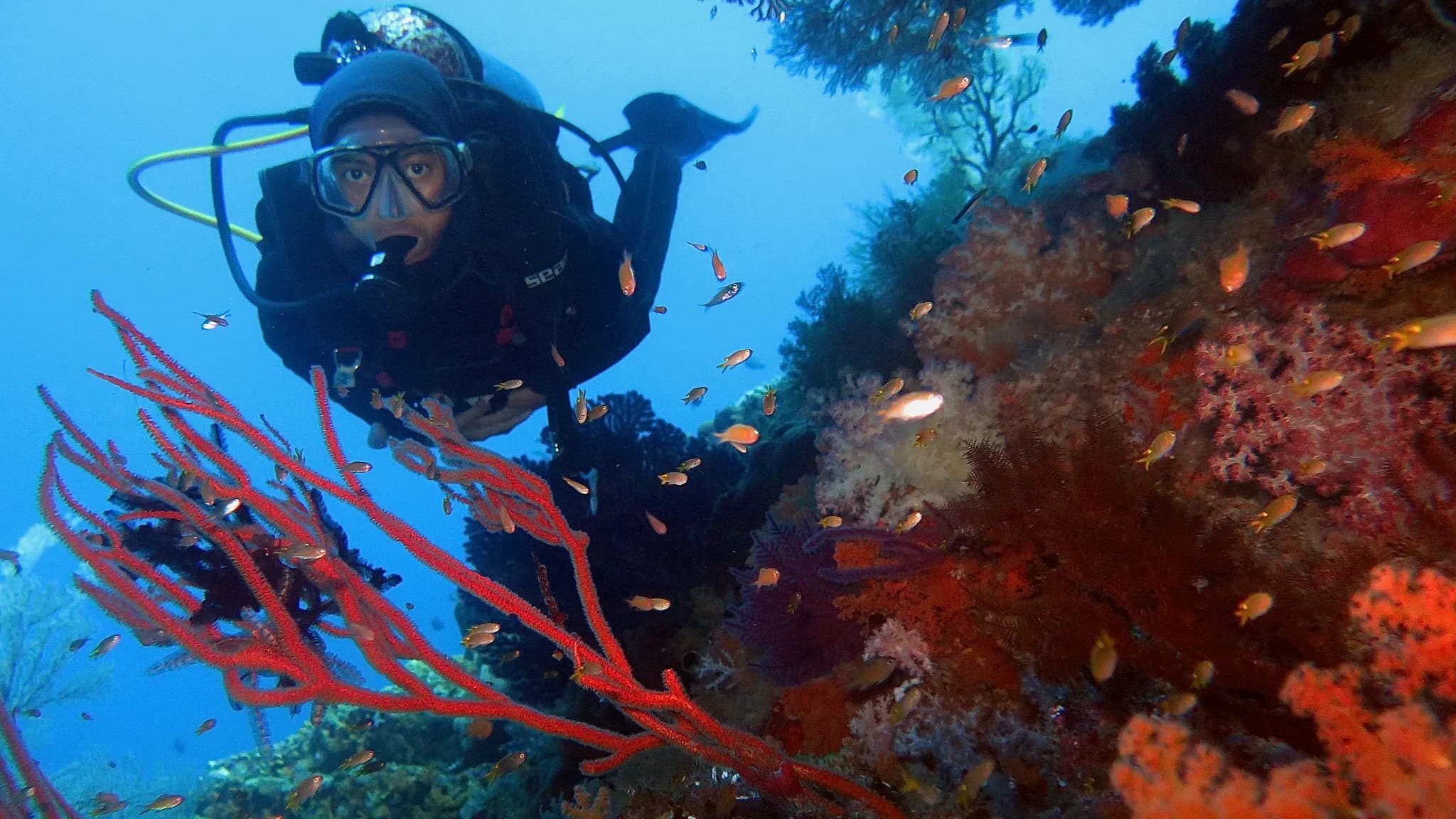
Raja Ampat has become shorthand for abundance: coral gardens stacked with fish, mantas circling cleaning stations, wobbegongs under ledges and schools moving so densely that a diver can briefly lose sight of the reef. That reputation is deserved. It is also incomplete.
The same currents that feed the reefs can make a site demanding. The same growth in liveaboard tourism that funds patrols can add anchors, waste and pressure. And in 2026, the archipelago's conservation success sits beside renewed concern about nickel mining near some of the world's most diverse marine habitat.
Why the underwater life is exceptional
Raja Ampat sits in the Coral Triangle, where exchanges between seas move larvae and nutrients through an enormous mosaic of islands. Associated Press reporting from Misool describes sharks, mantas and turtles moving through reef systems that scientists consider the most biodiverse on Earth. Ten marine protected areas cover about two million hectares, including a large share of the region's reef, mangrove and seagrass habitat.
Protection has produced measurable gains. The same reporting cites a 2024 Misool Foundation assessment that found fish biomass had risen 109 percent inside its area after long-term protection. Tourism fees help support community patrols and monitoring. The dive trip, when booked through a compliant operator, participates in that model rather than merely observing it.
Current is not background scenery
Raja Ampat's famous sites are not uniformly difficult, but many are shaped by moving water. Current can concentrate fish over a ridge and turn an ordinary-looking point into a spectacle. It can also separate a poorly positioned diver from the group.
A good guide checks the water before entry, adjusts the site or route, and gives a briefing specific to that moment. The responsible diver listens instead of assuming yesterday's easy dive predicts today's. Surface signaling equipment, close buddy contact and controlled buoyancy are ordinary parts of the safety system, not signs that a dive is extreme.
When to go
The Raja Ampat Marine Park authority says conditions are relatively stable through much of the year but identifies October through April as the period generally associated with calmer wind and drier weather. Northern manta activity is also associated with this period. In July and August, and sometimes across a wider June-to-October window, southerly winds can produce rougher seas; some liveaboards suspend operations and shore-based operators may cancel exposed dives.
Microclimates complicate any neat calendar. It can be calm near one island and raining over another. Treat the season as a probability, then let local guides make daily decisions.
The permit is not optional
The marine park authority requires visitors to obtain the relevant entry card and pay the environmental service fee. Liveaboards need their own operating permits, while patrols can inspect documents in the field. Ask an operator how permits, mooring rules, sewage and waste are handled before booking. A polished website is not evidence of compliance.
The pressure above the reef
Raja Ampat is no longer isolated from industrial and tourism growth. AP reported in April 2026 that conservationists remain concerned about nickel concessions and sediment near sensitive islands, even after Indonesia revoked four mining permits in 2025. International visitors now dominate tourism, and the number of tourist vessels has grown. Poor anchoring and waste management can damage the same reefs visitors fly across the world to see.
This does not make visiting unethical. It makes operator choice meaningful. Boats that use moorings, manage sewage, limit contact with animals and employ local staff strengthen the argument that living reefs are worth more intact than degraded.
Resort or liveaboard?
A liveaboard covers more geography and can reach distant sites, but it commits a diver to a fixed boat and schedule. A land-based resort or homestay covers a smaller area while offering more flexibility, community contact and a stable place to rest. Neither is inherently more authentic. The right choice depends on experience, budget, tolerance for boat life and whether the goal is maximum site variety or deeper familiarity with one region.
This is journalism, not a dive plan. Currents and site conditions change quickly; qualified local guides should choose entries, routes and limits for the actual group and day.
Go for the reef, not the superlative
Raja Ampat does not need to be sold as a contest winner. Its value is visible in the ordinary moments: a healthy shallow reef, juveniles sheltering inside coral and communities earning income from keeping fish in the water. The best visitors arrive prepared to see abundance and disciplined enough not to add to its pressure.
Published in The Outspoken Digest
Editorial desk
Outspoken Digest Diving DeskCovers freediving, recreational and technical diving, dive medicine and the incidents the sport learns from.
Newsletter
The Digest, in your inbox
One edition, sent when it is ready. No noise, and your address is never passed on.
Read Next
More Diving →
Black Swallower Filmed With a Hugely Swollen Belly 1,259 Metres Down Off Trinidad and Tobago
Oct 13, 2026/2 min read
Playing Recordings of a Healthy Reef Drew More Coral and Fish Larvae to Artificial Structures Off Hawaii
Oct 9, 2026/3 min read

Blacktip Sharks Can Hear a Sound From Nearly 250 Feet Away and Swim Straight Toward or Away From It
Oct 1, 2026/2 min read
A Sea Turtle Species Never Recorded Nesting in the United States Laid Eggs on a Southern California Beach
Oct 1, 2026/2 min read