The Telescope Launching This Month Sees a Patch of Sky a Hundred Times Wider Than Hubble's
Nancy Grace Roman is not a bigger Webb. It is a survey instrument, built to photograph enormous areas of sky at Hubble-class sharpness, and its value is in the sheer volume of what it will record.
Outspoken Digest Technology Desk
Friday, August 21, 2026/3 min read
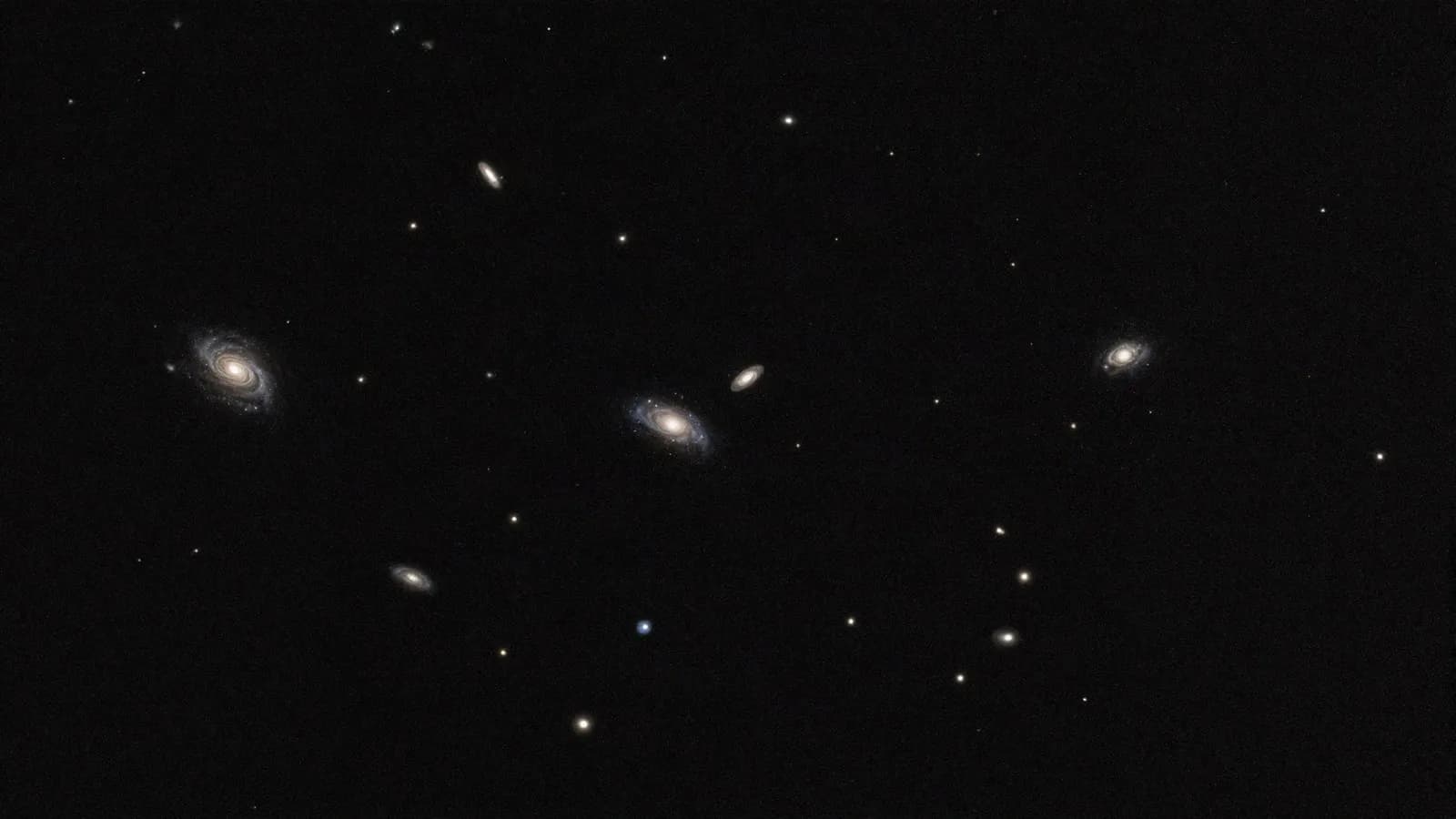
Space telescopes get sold to the public on sharpness. Hubble made things clear, Webb made things clear in the infrared and further away, and the pictures did the arguing.
The Nancy Grace Roman Space Telescope, scheduled to launch at the end of this month on a Falcon Heavy from Kennedy Space Center, is built on a different premise. Its advantage is not resolution. It is field of view.
What makes it different?
It sees a vastly wider patch of sky at once, at comparable sharpness.
Hubble produces exquisite images of very small areas. That is the correct design for studying a specific object in detail, and the wrong one for asking questions about how the universe is arranged, because you cannot survey a sky one keyhole at a time.
Roman is a survey instrument. It is built to capture very large areas in single exposures at a quality previously available only over tiny fields. The consequence is not one better picture. It is a catalogue: hundreds of millions of objects, measured consistently, in a form that can be analysed statistically.
That is a different kind of science. Instead of examining one galaxy closely, you measure a hundred million and ask what the distribution tells you.
What is it actually looking for?
Two questions that need enormous samples rather than close-ups.
Dark energy. The expansion of the universe is accelerating and nobody knows why. Testing the competing explanations means measuring how expansion has changed over cosmic time to a precision that requires vast numbers of galaxies and supernovae, measured the same way. That is a survey problem.
Exoplanets, by a method the other telescopes cannot use. Roman will watch for microlensing, where a foreground star passes in front of a background one and its gravity briefly magnifies the light. The signature reveals planets that transit surveys systematically miss: worlds far from their stars, and free-floating planets bound to no star at all. Catching those events requires staring at a crowded field continuously, which again needs field of view.
Why does the naming matter?
Because Nancy Grace Roman is the reason the previous generation of telescopes exists.
She was NASA's first chief astronomer, and she spent years making the institutional and political case for putting telescopes above the atmosphere at a time when that was not an obvious priority. Hubble is substantially her achievement, and she is generally credited as the reason it happened at all.
Naming a survey telescope after an administrator rather than a theorist is a slightly unusual choice, and a fair one. The hard part of large science is rarely the idea.
What will it produce?
Data on a scale that is itself the challenge.
A wide-field instrument returning very large images continuously generates volumes that cannot be examined by eye. The science comes out through automated pipelines and, increasingly, machine learning applied to the catalogue rather than the pictures.
That is now the normal shape of observational astronomy, and it is the same pattern visible across research generally, where the instrument produces more than any team can read and the bottleneck moves to the analysis, a shift covered in how AI is being pushed into scientific work.
How does it fit with what else is flying?
It complements rather than competes, which is the honest framing.
Webb looks deep and narrow in the infrared at objects already known to be interesting. Roman finds the interesting objects in the first place, across huge areas, and hands targets on. Survey instruments are the front of a pipeline, and the follow-up telescopes are the back of it.
Between this and China's Chang'e 7 mission to the lunar south pole, launching days earlier, the second half of August is unusually busy for two entirely unrelated reasons, one about operating in space and one about understanding it.
Published in The Outspoken Digest
Editorial desk
Outspoken Digest Technology DeskSoftware, hardware, artificial intelligence and what they change for everyone else.
Newsletter
The Digest, in your inbox
One edition, sent when it is ready. No noise, and your address is never passed on.
Read Next
More Technology →
Webb Caught a Probable Supernova From the Early Universe Only Days After It Exploded
Oct 18, 2026/2 min read
Webb Maps an Exoplanet's Atmosphere as Egg-Shaped, With a Puffed-Up Evening Side Hotter Than Its Morning Edge
Oct 18, 2026/2 min read
A Hole in a 75,000-Year-Old Shoulder Blade Points to a Wooden Spear, and Perhaps to Neanderthal Care
Oct 18, 2026/2 min read

Anthropic's Own Staff Data: Junior Technical Hires Fell From 27 to 9 Percent as Its AI Agents Outworked Humans
Oct 18, 2026/2 min read