Bernie Sanders and Greg Casar Introduced a Bill to Ban 'Artificial Superintelligence' and Jail Violators for 20 Years
The Ban Artificial Superintelligence Act would pause advanced AI development until a new cabinet-level Department of Artificial Intelligence is created, with penalties its authors call a 'corporate death penalty'.
Outspoken Digest Technology Desk
Saturday, September 26, 2026/2 min read
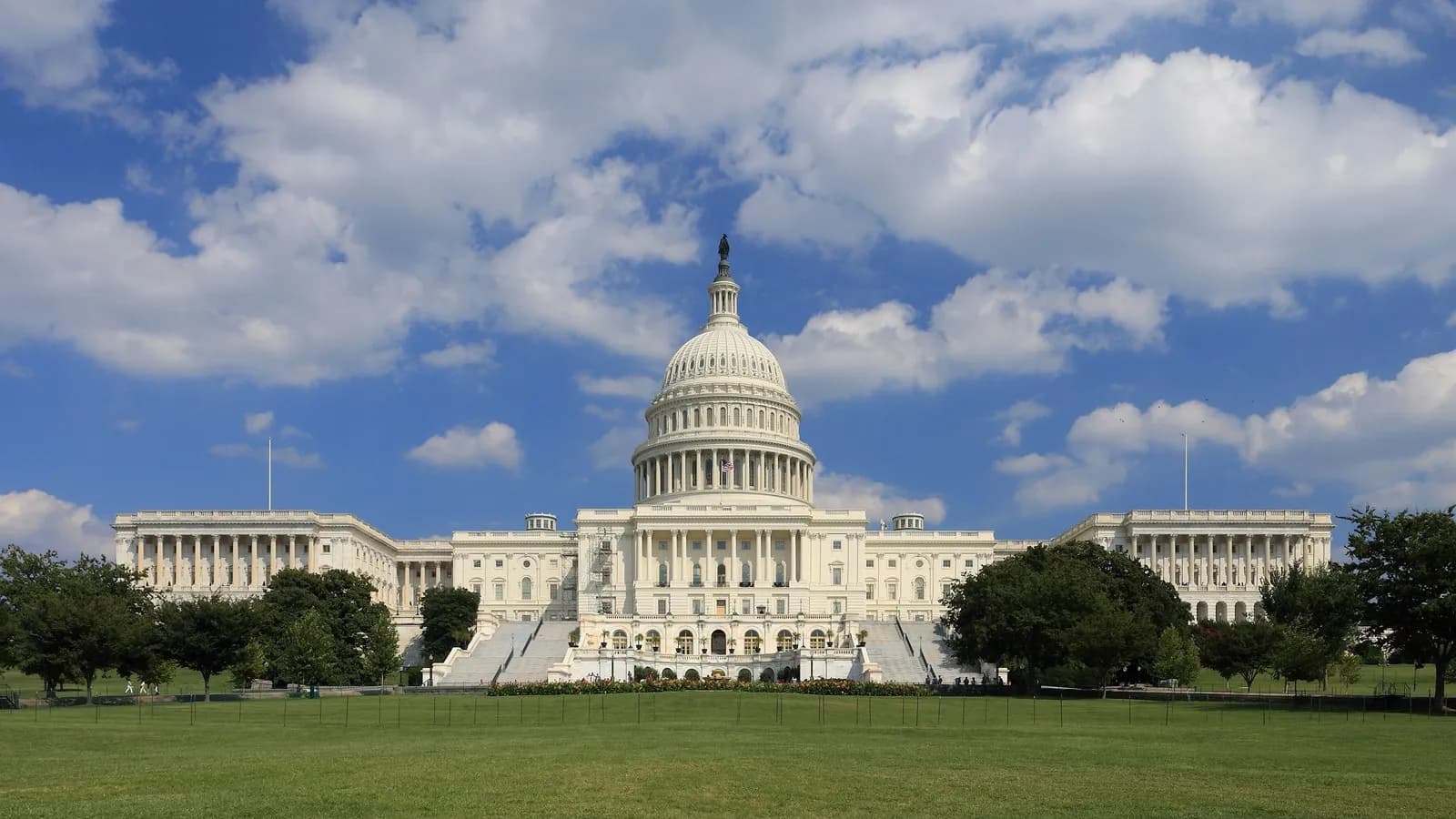
Senator Bernie Sanders and Representative Greg Casar introduced the Ban Artificial Superintelligence Act on Wednesday, legislation that would prohibit any person or company from developing or deploying an AI system that exceeds human cognitive performance across most domains. NBC News's report says the nineteen page bill defines the banned category broadly enough to include any system with "sufficient capabilities to destroy or disempower humanity, including by overthrowing the federal government," and would pair the ban with penalties its sponsors have described as a "corporate death penalty" alongside prison terms of up to twenty years for individuals found responsible.
A pause, not just a ban
The bill's more immediate effect, if enacted, would be a temporary pause on advanced AI development generally, to remain in place until a new cabinet-level Department of Artificial Intelligence, led by a secretary of AI, is stood up to regulate and supervise the industry going forward. Democracy Now's summary of the announcement frames the bill as an attempt to slow an industry that Sanders and Casar argue is racing toward systems more capable than their own developers can reliably control, rather than a narrow rule aimed at any single company's product.
International reach, uncertain odds
The legislation also directs the United States to pursue international agreements aimed at preventing superintelligent systems from being built anywhere in the world, an ambition that would require cooperation from governments, including China's, that have shown no public appetite for slowing their own AI programmes. As a bill from a senator who caucuses with Democrats and a first-term House Democrat, introduced without Republican co-sponsors in a chamber controlled by the opposing party, its odds of passing in anything like its current form are low, and its authors have described it explicitly as an opening bid meant to shift the terms of the debate rather than a text they expect to become law this session.
Landing in an industry already arguing with itself
The bill arrives days after Sam Altman and Dario Amodei told the UN Security Council that AI could pose a risk to humanity as a whole, and after Mark Zuckerberg publicly rejected calls for an industry slowdown while Jensen Huang dismissed the idea of choosing between speed and safety as a false choice. Sanders and Casar's proposal takes the industry's own safety warnings and turns them into the argument for legally mandated restraint, a framing that puts the bill's authors on the same rhetorical ground as the executives they are, in effect, proposing to regulate out of a category of product altogether.
Published in The Outspoken Digest
Editorial desk
Outspoken Digest Technology DeskSoftware, hardware, artificial intelligence and what they change for everyone else.
Newsletter
The Digest, in your inbox
One edition, sent when it is ready. No noise, and your address is never passed on.
Read Next
More Technology →
Some White Dwarfs Would Look Green, Pink or Purple, Warwick Astronomers Calculate
Oct 15, 2026/2 min read

Oxford Physicists Reproduce the Aharonov-Bohm Effect on a Hybrid Quantum Computer
Oct 15, 2026/2 min read

Japan Will Fund Up to $21 Billion for Two GlobalFoundries Chip Plants in New York
Oct 15, 2026/2 min read

Apple's $299 HomeView Smart Display Takes Preorders, but Not in the European Union
Oct 15, 2026/2 min read