Buddhist Monks Invented Mock Meat in the Sixth Century and Called It Mianjin
Wheat gluten appears in a Chinese agricultural encyclopaedia written in 535. It has been a temple staple across East Asia for fifteen centuries, and the word seitan was only coined in the twentieth.
Friday, September 4, 2026/3 min read
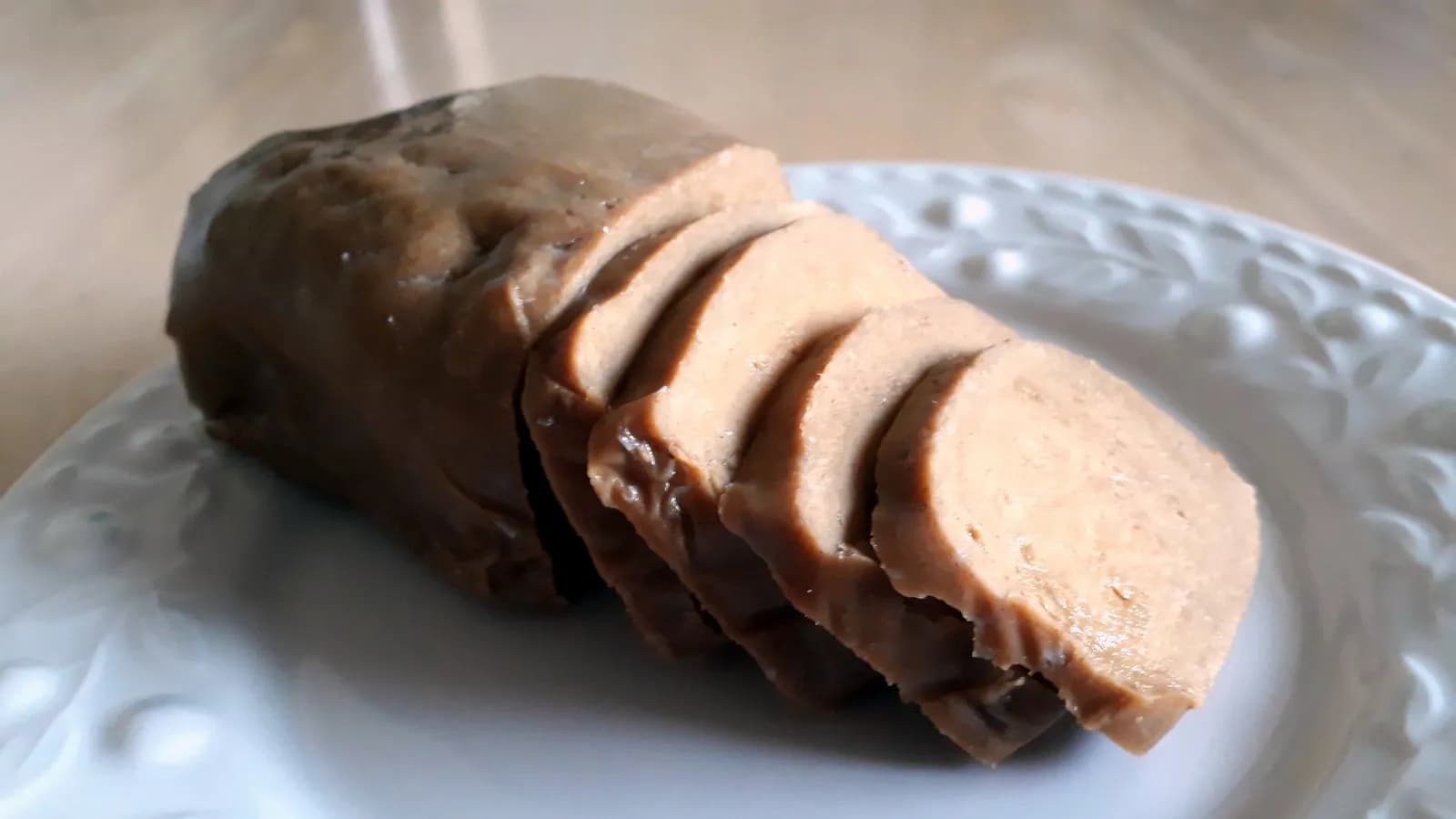
The idea that plant-based meat substitutes are a recent invention of Silicon Valley is wrong by about fifteen hundred years.
The earliest known reference to wheat gluten is in the Qimin Yaoshu, a Chinese agricultural encyclopaedia compiled by Jia Sixie around 535. Buddhist monastery kitchens in China developed it and called it mianjin, and it spread as a staple of vegetarian temple cooking across East and Southeast Asia. The word seitan is a twentieth-century coinage, attributed to the Japanese macrobiotic advocate George Ohsawa.
The monks were not making a compromise. They were bound by precepts against taking life, they had wheat, and they worked out that wheat contains a protein network you can isolate and cook.
What it is, physically
Wheat flour dough is a mixture of starch granules and gluten proteins. Knead it and the gluten forms an elastic web. Wash that dough under running water and the starch rinses away, leaving the web behind as a springy grey mass.
That is seitan. It is essentially pure wheat protein, which is why it has a fibrous, chewy texture that no bean or soy product replicates, and also why it is entirely unsuitable for anyone with coeliac disease or wheat allergy. There is no gluten-free seitan. The name is a contradiction.
The fast method
Washing flour is the traditional approach and takes over an hour. Vital wheat gluten flour, which is the isolated protein sold as a powder, gets you there in ten minutes.
For about 500g cooked, serving four.
- 200g vital wheat gluten
- 2 tbsp nutritional yeast
- 1 tsp onion powder, 1 tsp garlic powder, 1 tsp smoked paprika
- 180ml cold vegetable stock
- 2 tbsp soy sauce
- 1 tbsp tahini or any nut butter
For the poaching broth: 1.5 litres vegetable stock, 60ml soy sauce, a few slices of ginger, 2 star anise, a cinnamon stick.
The method, and the two rules
Mix the dry ingredients. Whisk the wet ingredients separately, then combine and knead for no more than three minutes. It will be stiff and rubbery almost immediately.
Let it rest for ten minutes, then divide into two or three pieces and shape them into logs. It will fight you and shrink back; that is the gluten, and resting is what relaxes it.
Bring the broth to a bare simmer, add the pieces, and hold it there for an hour, turning occasionally.
Two rules decide whether this works.
Do not over-knead. Long kneading develops the gluten into something dense and unpleasantly rubbery. Three minutes is enough, and less is better than more.
Never boil it. A rolling boil forces the gluten to expand rapidly and produces a spongy, brain-textured interior full of holes. You want the surface of the liquid barely trembling. This is the single most common failure.
Cooked seitan should be firm, dense and slightly springy, and it firms further as it cools. Let it cool in the broth if you have time.
What to do with it
Slice thinly and pan fry hard in oil until the edges crisp, then treat it as you would any browned protein. It takes the cumin and chilli treatment in our Silk Road flatbread extremely well, since that dish descends from the same part of the world.
It also braises, skewers and grills. What it does not do is absorb flavour quickly, so seasoning has to go into the dough and the poaching liquid rather than being added at the end.
Nutrition, honestly
Seitan is high in protein, roughly a quarter of its cooked weight, and low in fat and carbohydrate.
Its limitation is that wheat protein is low in lysine, an essential amino acid, so it is not a complete protein on its own in the way soy is. This matters very little in practice, because almost nobody eats seitan alone. Eaten across a day with legumes, which are lysine-rich, the shortfall closes without anyone having to think about combining anything at a single meal.
The other soy-based staple with a genuinely traditional pedigree is in the tempeh piece, which also covers the vitamin B12 claim that follows fermented foods around and should not be relied on.
Published in The Outspoken Digest
Editorial desk
Outspoken Digest Food DeskCooking, ingredients, restaurants and the economics of what ends up on the table.
Newsletter
The Digest, in your inbox
One edition, sent when it is ready. No noise, and your address is never passed on.
Read Next
More Recipes →
Swangy Tamarind Glazed Chicken Wings for the Flavour Replacing Swicy on Fast Food Menus
Sep 29, 2026/3 min read

Baked Apple Cider Doughnuts for a Cider Season That Peaked Earlier Than the Calendar Says
Sep 29, 2026/3 min read
An Obatzda Bavarian Beer Cheese Dip for the Final Stretch of Oktoberfest 2026
Sep 29, 2026/3 min read