Cumin, Chilli and Mushrooms on Flatbread, or What the Silk Road Actually Tasted Like
Cumin lamb from Xi'an and Levantine flatbread are not a modern mash up. They sit at opposite ends of a road that carried the same spices and the same bread technology for a thousand years.
Friday, September 4, 2026/3 min read
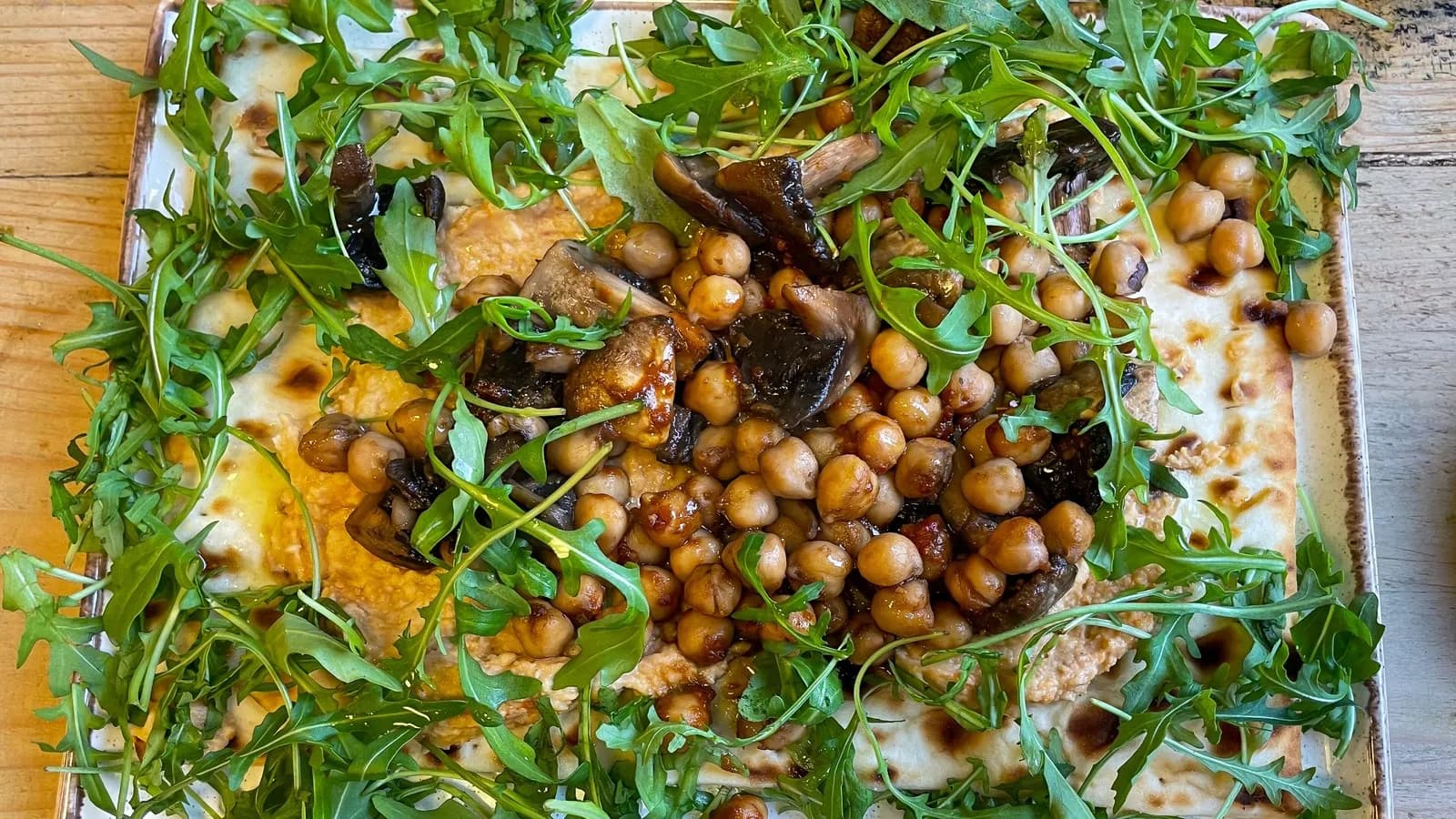
Fusion is usually an accusation. It suggests two cuisines forced together by a restaurant that wanted a hook. But some pairings are not inventions at all, because the two ends were already connected and everybody has simply forgotten the middle.
Cumin is the clearest case. It is the defining spice of Xi'an street food, of Uyghur cooking across Xinjiang, of North Indian tempering, of Persian rice, of Levantine kofta and of Egyptian ful. That is not coincidence or convergence. It is one continuous trade corridor, and cumin travelled it in both directions along with the flatbread that everyone at every point along the route was already baking.
So a cumin and chilli mushroom flatbread is not a collision. It is a dish assembled from things that have been next to each other for a very long time.
What you need
For two.
- 400g oyster mushrooms, or king oyster, torn not chopped
- 2 tsp whole cumin seed
- 1 tsp coriander seed
- 1 to 2 tsp chilli flakes, Aleppo pepper if you have it
- 1/2 tsp ground Sichuan pepper, optional but it is the thing that makes it taste like Xi'an
- 3 cloves garlic, sliced thin
- 3cm ginger, julienned
- 2 spring onions, cut in long diagonals
- 1 tbsp soy sauce
- 1 tsp sugar
- 3 tbsp neutral oil, high smoke point
- 2 large flatbreads, or khubz, lavash or naan
- Yoghurt or tahini to serve, and coriander leaf
Tear the mushrooms, do not slice them
This is the step that decides the dish.
A sliced mushroom has flat, smooth faces and browns evenly and boringly. A torn mushroom has ragged edges and exposed fibres, and those edges catch the heat, crisp, and take on the chew that makes this work as a substitute for the meat the original uses. Tear along the grain into strips roughly the width of your finger.
Then get them dry. Mushrooms are mostly water and they will steam themselves into grey rags if crowded. Use the widest pan you own, work in two batches if you must, and do not stir for the first two minutes.
The method
Toast the cumin and coriander seed in the dry pan for about a minute until they smell like a spice shop, then tip them out and crush coarsely. Coarse matters. Ground cumin turns muddy here, and the pleasure of the dish is biting into whole seeds.
Heat the oil until it shimmers. Add the mushrooms in one layer, leave them alone for two minutes, then toss and cook another three or four until the edges are brown and crisping.
Push them to one side, drop in the garlic and ginger, and give them thirty seconds. Any longer and the garlic goes bitter. Add the crushed spices, the chilli and the Sichuan pepper, toss everything together for another thirty seconds, then the soy and sugar. It will hiss and glaze almost instantly.
Off the heat, throw in the spring onions so they keep their bite.
Warm the flatbreads directly over a flame or in a dry pan until they blister. Spread with yoghurt or tahini, pile the mushrooms on, scatter coriander, and eat immediately with your hands.
Why Sichuan pepper belongs on a Levantine bread
Because the numbing is the point, and there is no substitute for it.
Sichuan pepper is not hot. It contains hydroxy alpha sanshool, which produces a tingling, slightly numbing sensation on the lips and tongue rather than the burn of capsaicin. In the cumin lamb dishes of northwestern China it works against the fat and the chilli, resetting the palate between mouthfuls.
Leave it out and you have a good spiced mushroom wrap. Put it in and you have something that tastes distinctly of one particular part of the world.
Notes and variations
Any firm mushroom works. Chestnut mushrooms torn in half are fine, shiitake are excellent, and a mixture is better than any single type.
To keep it vegan, use tahini rather than yoghurt, and check the flatbread. Many commercial naans contain dairy.
The same spice treatment is very good on cauliflower florets, on halloumi, and on aubergine. If you want the Levantine end of the road on its own terms, our vegetarian repertoire is in this piece, and the za'atar that anchors that whole tradition is explained in our guide to the blend.
Published in The Outspoken Digest
Editorial desk
Outspoken Digest Food DeskCooking, ingredients, restaurants and the economics of what ends up on the table.
Newsletter
The Digest, in your inbox
One edition, sent when it is ready. No noise, and your address is never passed on.
Read Next
More Recipes →
Swangy Tamarind Glazed Chicken Wings for the Flavour Replacing Swicy on Fast Food Menus
Sep 29, 2026/3 min read

Baked Apple Cider Doughnuts for a Cider Season That Peaked Earlier Than the Calendar Says
Sep 29, 2026/3 min read
An Obatzda Bavarian Beer Cheese Dip for the Final Stretch of Oktoberfest 2026
Sep 29, 2026/3 min read