Vegetarian Middle Eastern Cooking Is Not a Compromise
Most of the Levantine repertoire was already meatless, because meat was expensive and fasting traditions are old. These are dishes designed to be eaten without meat, not adapted to be.
Friday, August 14, 2026/3 min read
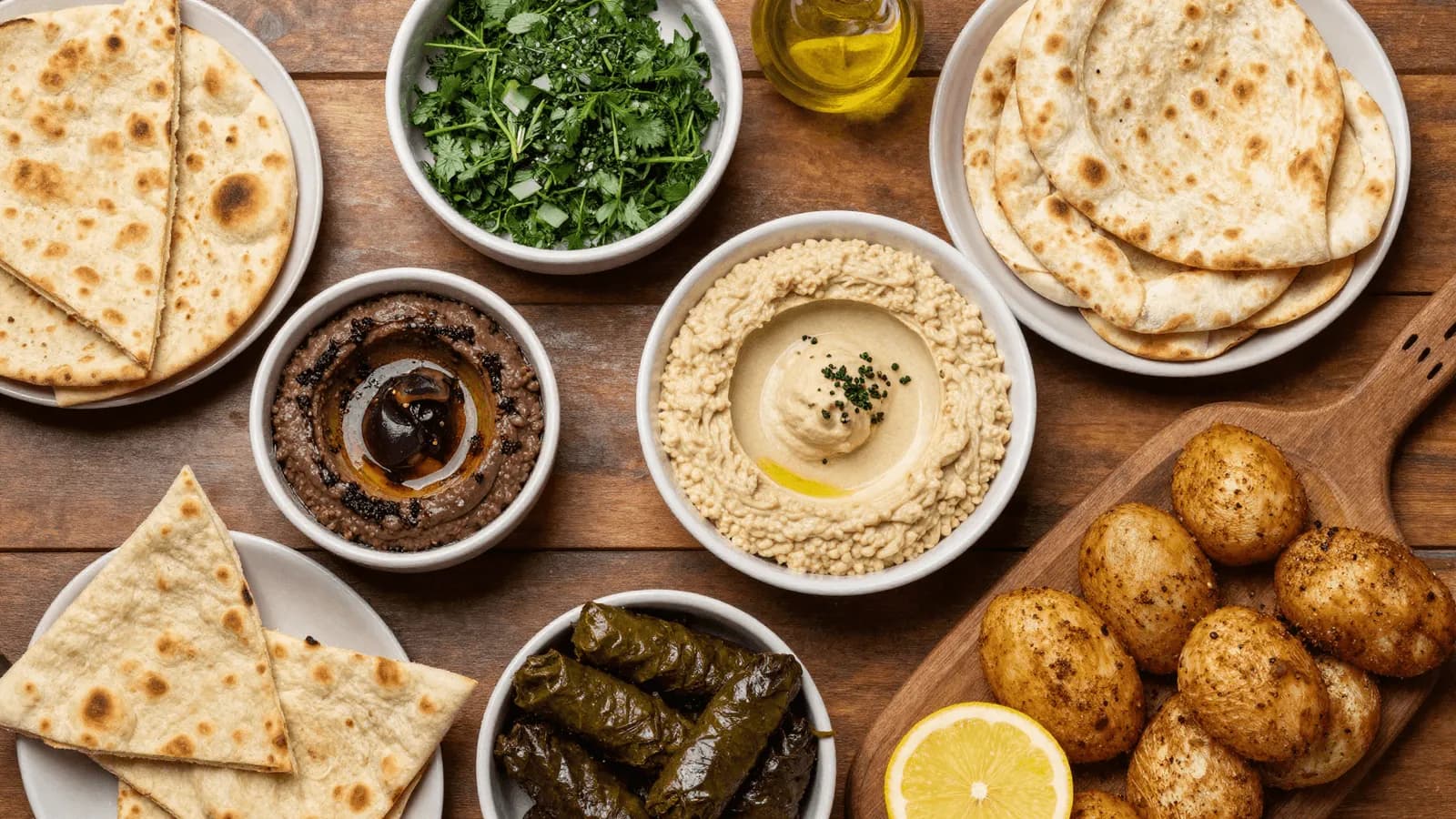
A large part of the Levantine repertoire is vegetarian by origin rather than by adaptation. Meat was expensive, Lent in the Eastern churches is long and strict, and the result is a body of dishes built to be satisfying without it. This is the opposite of most cuisines, where the vegetarian option is the main course with the centre removed.
The word for it in Arabic Christian cooking is siyami, meaning fasting food, and it covers a great deal of what people now order as mezze.
Why it works
Three structural reasons, and they are worth understanding because they transfer to your own cooking.
Pulses carry the meal. Chickpeas and lentils provide protein and, more importantly, the density that makes a plate feel finished.
Tahini and olive oil provide richness. Fat is what most vegetarian food lacks, and Levantine cooking is generous with both.
Acid and herbs prevent monotony. Lemon, sumac, pomegranate molasses and enormous quantities of parsley keep a meatless table from tasting flat.
The dishes that stand on their own
Mujadara
Rice and lentils with caramelised onions, and the single best argument in this entire article. Cheap, ancient, and genuinely one of the best things in the cuisine rather than one of the best meatless things. The onions must go further than you think. Recipe.
Fattet hummus
Chickpeas, toasted bread, garlic yogurt and pine nuts, layered while hot so the bread half softens. A complete meal that happens to have no meat in it. Recipe.
Warak enab
Vine leaves stuffed with rice, tomato and herbs. The meatless version is not a lesser version; it is the one eaten cold, dressed with lemon and oil, and it is arguably better. Recipe.
Moutabal and hummus
The two dips that anchor a mezze table. Both entirely vegetable, both built on tahini. See moutabal and hummus done properly.
Falafel
Fried chickpea fritters, the region's most exported dish, and vegan without anyone having to plan it that way. Recipe.
Batata harra
Potatoes fried and tossed with garlic, coriander and chilli. Deserves to be a main more often than it is. Recipe.
Kousa mahshi, meatless
Stuffed courgettes with rice, tomato and herbs, cooked in a tomato broth. Recipe.
The salads
Tabbouleh and fattoush, both of which are substantial enough to be lunch.
How to build a meatless table
The mistake is to cook one large vegetarian main. The tradition does not work that way; it works by putting six or seven small things out together, and the variety is what creates satisfaction.
A workable structure:
- Two dips, one tahini-based, one not.
- One substantial pulse dish, mujadara or fatteh.
- One fried thing, falafel or batata harra.
- One sharp salad, tabbouleh or fattoush.
- One pickled thing, and plenty of bread.
That feeds four people generously and nobody at the table asks where the meat is.
Vegetarian and vegan are not the same here
Worth flagging, because Levantine cooking uses dairy heavily. Yogurt, labneh and cheese run through the repertoire, and fatteh in particular is built on garlic yogurt.
Most of these dishes are naturally vegan: hummus, moutabal without yogurt, falafel, mujadara, batata harra, the salads, warak enab in its cold form. Where yogurt is structural, our cultured cashew labneh substitutes convincingly, which is not true of most commercial dairy alternatives.
For where to eat this way in the region rather than cook it, we have guides to Dubai and Abu Dhabi and to Beirut.
Published in The Outspoken Digest
Editorial desk
Outspoken Digest Food DeskCooking, ingredients, restaurants and the economics of what ends up on the table.
Newsletter
The Digest, in your inbox
One edition, sent when it is ready. No noise, and your address is never passed on.
Read Next
More Recipes →
Swangy Tamarind Glazed Chicken Wings for the Flavour Replacing Swicy on Fast Food Menus
Sep 29, 2026/3 min read

Baked Apple Cider Doughnuts for a Cider Season That Peaked Earlier Than the Calendar Says
Sep 29, 2026/3 min read
An Obatzda Bavarian Beer Cheese Dip for the Final Stretch of Oktoberfest 2026
Sep 29, 2026/3 min read