Every Sleep Tip You Have Read Is the One Treatment Guidelines Do Not Recommend on Its Own
Dim the lights, avoid caffeine, keep the room cool. Sleep hygiene is the advice everyone has absorbed, and clinical guidelines do not recommend it as a standalone treatment for insomnia. What they recommend instead is not a supplement.
Outspoken Digest Lifestyle Desk
Friday, August 21, 2026/3 min read
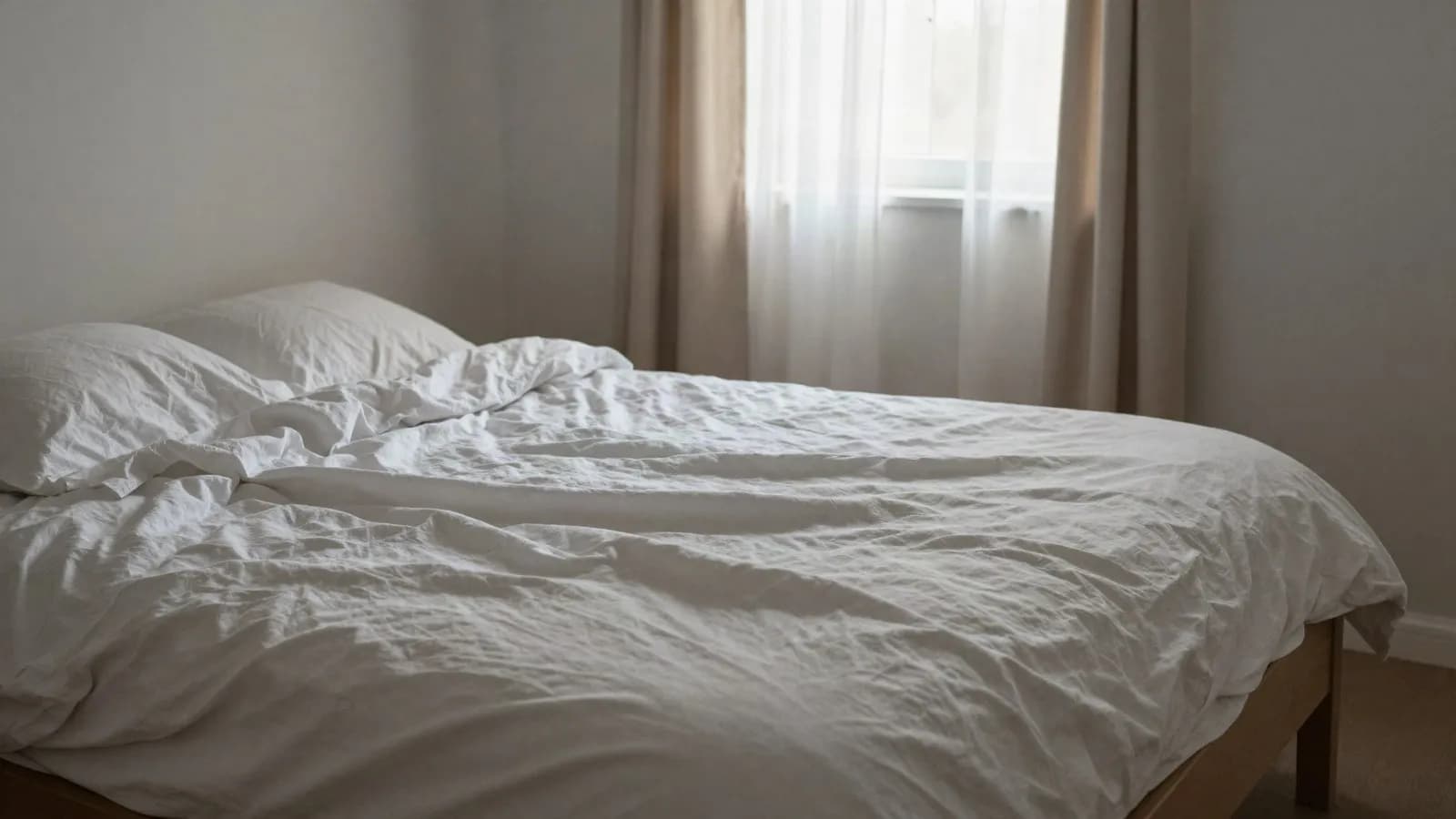
There is a version of sleep advice so widely repeated that it has stopped sounding like advice and started sounding like common knowledge. Keep the room cool and dark. No screens before bed. No caffeine after two. Same bedtime every night.
All of it is reasonable. None of it is, on its own, the treatment for insomnia, and the clinical guidelines say so explicitly.
What is sleep hygiene, technically?
A set of general habits around the sleep environment and daily routine, taught as education rather than as a structured intervention.
It is included in most multicomponent treatment packages, and it is genuinely useful context. But there is little evidence for its effectiveness as an independent treatment for insomnia, and current clinical practice guidelines do not recommend sleep hygiene as a single intervention.
That is a strange sentence to read after a decade of articles built entirely on it. The reason it fails alone is not that the tips are wrong. It is that they address the conditions for sleep, and chronic insomnia is usually maintained by something else.
What is actually recommended?
Cognitive behavioural therapy for insomnia, generally shortened to CBT-I.
The American College of Physicians recommends CBT-I as first-line treatment, and that position is echoed by the European Sleep Research Society, the American Academy of Sleep Medicine, the National Institutes of Health and the British Association of Psychopharmacology. That is an unusually broad agreement in a field where guidelines often diverge.
The evidence on medication comparison is the part most people have not heard: CBT-I is about as effective as sleeping pills in the short term and superior in the long term. Pills work while you take them. CBT-I keeps working after it stops.
What does CBT-I actually involve?
Four components, and two of them are counterintuitive enough that people abandon them early.
Sleep restriction is the one that sounds mad. It temporarily reduces the time you are allowed to be in bed to roughly the time you are actually sleeping, which builds sleep pressure and consolidates fragmented sleep. It makes you more tired for a week or two before it works, which is exactly when people quit.
Stimulus control rebuilds the association between bed and sleep. Bed is for sleep only. If you are awake more than about twenty minutes, you get up and go elsewhere until sleepy. In chronic insomnia the bed has become a cue for frustration and vigilance, and this is what breaks that.
Cognitive work targets the beliefs that keep arousal high. The catastrophic arithmetic performed at 3am about how ruined tomorrow will be is not a neutral observation, it is a stimulant.
Relaxation and sleep hygiene come along as supporting elements, which is the correct place for them.
Why does this matter more than it sounds?
Because the standard advice quietly frames insomnia as a discipline problem.
If the treatment is tips, then failing to sleep after following the tips means you did not follow them well enough. That is an unhelpful thing to believe at 4am, and it is one of the cognitive patterns that maintains the condition.
Reframing it as a treatable clinical condition with a structured, evidence-backed protocol removes that. The person who cannot sleep is not failing at a lifestyle. They are dealing with something that has a first-line therapy, in the same way that other conditions have interventions with a defensible evidence base rather than folklore.
Does everyone need a therapist?
No, and the access problem is real, so it is worth being practical.
There are not enough CBT-I clinicians anywhere, which is why digital CBT-I programmes were developed and studied, and they perform respectably. Self-guided books built on the same protocol exist. The important part is following an actual protocol rather than assembling tips.
Two caveats worth stating. Sleep restriction should not be attempted unsupervised by anyone with a seizure disorder, bipolar disorder, or a job requiring alertness where a fortnight of increased sleepiness is dangerous. And persistent sleep problems can be a symptom of sleep apnoea, thyroid disease, pain or depression, none of which CBT-I treats, so a proper assessment comes first.
What if you sleep fine?
Then the ordinary advice is still perfectly good and you should carry on.
Sleep hygiene is sensible for the general population. It is preventive housekeeping. The distinction being drawn here is narrow and important: housekeeping is not treatment, and someone with chronic insomnia has been handed housekeeping for years while a first-line therapy existed and went unmentioned. That is worth knowing, and it is the sort of thing worth protecting time for in the same spirit as rebuilding an evening that is not spent on a screen.
Published in The Outspoken Digest
Newsletter
The Digest, in your inbox
One edition, sent when it is ready. No noise, and your address is never passed on.
Read Next
More Lifestyle →
Street Fighter Opens With $4 Million in Thursday Previews as Critics Split on the Video Game Reboot
Oct 16, 2026/2 min read

Two Stolen Renoirs Found Behind a Cinder-Block Wall as Police Say Suspects Eyed the Fondation Maeght
Oct 15, 2026/2 min read

Hulu Orders Ryan Coogler's X-Files Reboot to Series With Danielle Deadwyler and Himesh Patel
Oct 14, 2026/2 min read

Tarek Atoui Opens Hold in Tate Modern's Turbine Hall, Turning the Cavernous Space Into a Giant Sound Instrument
Oct 13, 2026/2 min read