The Summer's Diving Deaths Have More in Common Than the Coverage Suggests
A cave in the Maldives, a lake in Germany, an inlet in Florida, a tuna farm off Malta. Four very different events, and a short list of factors that shows up in nearly all of them.
Thursday, August 13, 2026/4 min read
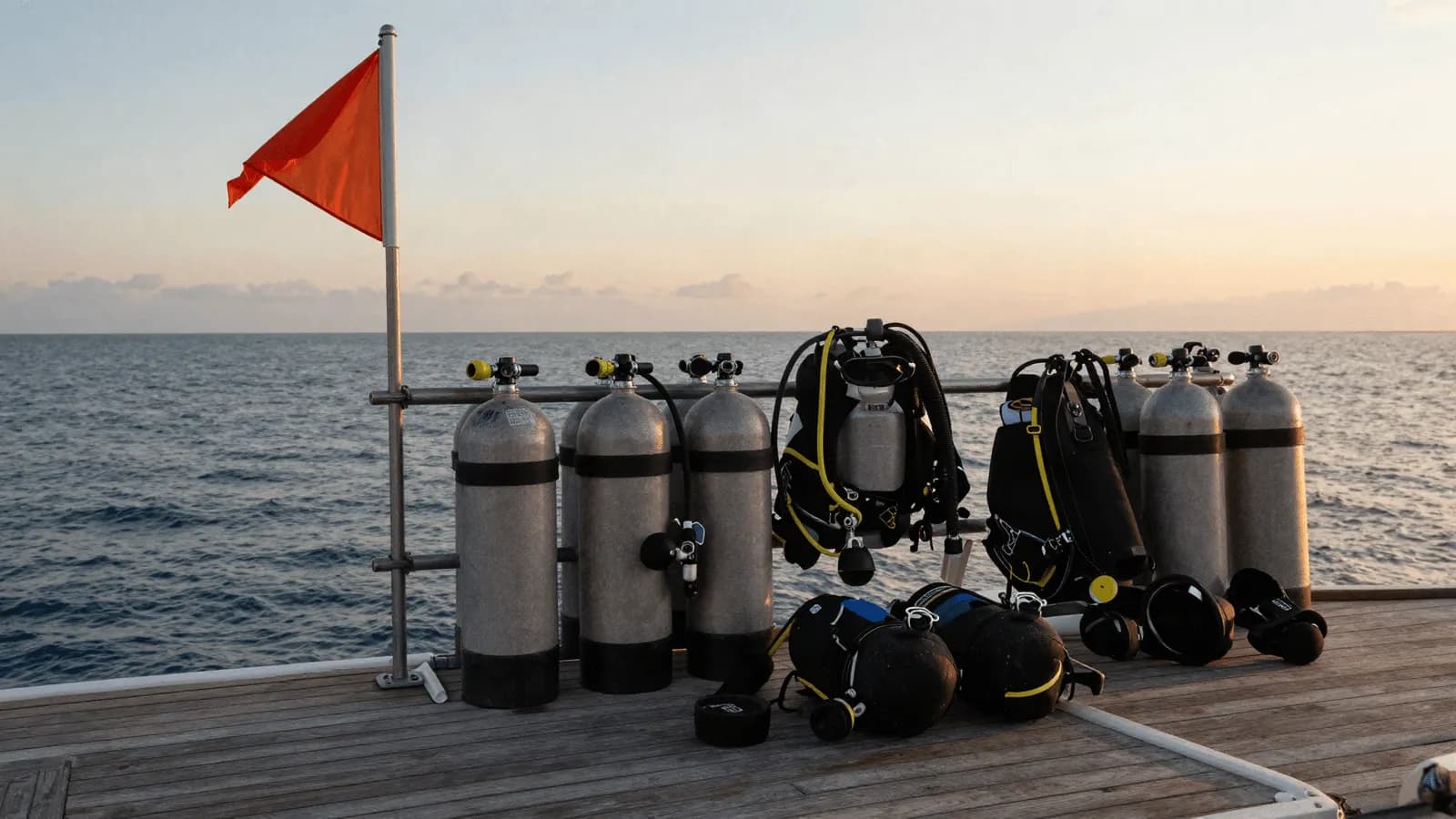
It has been a heavy few months for diving news. A cave in Vaavu Atoll took five Italian divers and the Maldivian rescuer who went in after them. Technical divers died in Lake Constance. A missing diver was recovered from the sea floor near Fort Pierce Inlet in Florida. This week a professional diver died at a tuna farm off Malta.
Clustering creates its own distortion. A run of deaths in a short window feels like a trend even when the underlying rate has not moved, and search traffic for diving accidents spikes accordingly. Diving remains, in absolute terms, a low-fatality activity relative to how many dives are made.
But it is worth looking across the cases rather than at each one, because when you do, the same handful of factors keeps reappearing.
1. The environment was overhead, or effectively so
A cave has a ceiling. So does a wreck penetration. So, functionally, does the inside of a net pen with a diver's back to the mesh, and so does any dive where a direct ascent is not available.
The recreational training system is built almost entirely around one assumption: if things go wrong, you can go up. Remove that and every other skill has to be replaced with a different one. The Maldives case, which we assessed in detail three months on, is the purest example. The divers were competent in open water and had none of the cave-specific equipment or procedure.
2. The gas plan did not match the exposure
Compressed air at 60 metres. A working diver making repeated descents on a farm schedule. Technical profiles in cold fresh water where decompression obligations build fast.
The recurring pattern is not that people ran out of gas through carelessness. It is that the gas plan was appropriate for the dive they intended and wholly inadequate for the dive they ended up in. A plan with no margin for the unplanned version of the dive is not a plan.
Depth compounds this brutally. At 60 metres you consume gas seven times faster than at the surface, so the ten minutes you thought you had is not ten minutes.
3. Nobody was in a position to help in time
Distance from a buddy, absence of a surface standby diver, a boat that did not notice a diver was overdue until well past the planned time. Across these cases, the response capability was consistently thinner than the risk.
Forty minutes elapsed before the diver at the Malta farm was found. Two and a half hours passed before the Maldives boat raised the alarm. Neither delay caused the accident. Both removed any possibility of the accident being survivable.
4. Somebody was doing work, or something like it
Occupational diving, scientific diving, and paid instruction all introduce a factor recreational diving does not have: an external reason to complete the dive. Task fixation is a well-documented contributor, and the discipline that counters it is a defined stop rule, agreed before entry, that anyone can invoke without needing to justify it.
5. Experience was present. Specific training was not
None of the summer's cases involve novices doing something obviously stupid. They involve capable, often highly experienced divers operating slightly outside the envelope their training covered.
This is the most uncomfortable finding in diving safety and the most consistent. Experience produces confidence that generalises. Competence does not generalise. A thousand open-water dives teaches you almost nothing about a silted cave, and it can actively hurt you by making the entry feel routine.
What this does not mean
It does not mean recreational diving is dangerous. The rate has been broadly stable for years, and the fatality data consistently shows the largest share of recreational deaths involving older divers with cardiovascular disease rather than dramatic environmental failures.
It also does not mean the answer is more regulation everywhere. The Maldives is drafting technical diving rules, Chile has tested new aquaculture legislation, and both may help. But law reaches operators, not decisions made by two friends at 25 metres.
The four questions worth carrying
If you dive, the practical distillation of this summer is four questions to ask before you get in.
- Can I go straight up from every point on this dive? If not, am I trained for that?
- Does my gas plan survive the dive taking twice as long as intended?
- How many seconds until someone can physically reach me?
- What is my stop rule, and have I said it out loud to someone?
The honest answers are more protective than any piece of equipment you could buy. Our honest answer on how safe diving really is makes the same argument at greater length: the sport is safe because of the procedures, not despite them.
Published in The Outspoken Digest
Editorial desk
Outspoken Digest Diving DeskCovers freediving, recreational and technical diving, dive medicine and the incidents the sport learns from.
Newsletter
The Digest, in your inbox
One edition, sent when it is ready. No noise, and your address is never passed on.
Read Next
More Diving →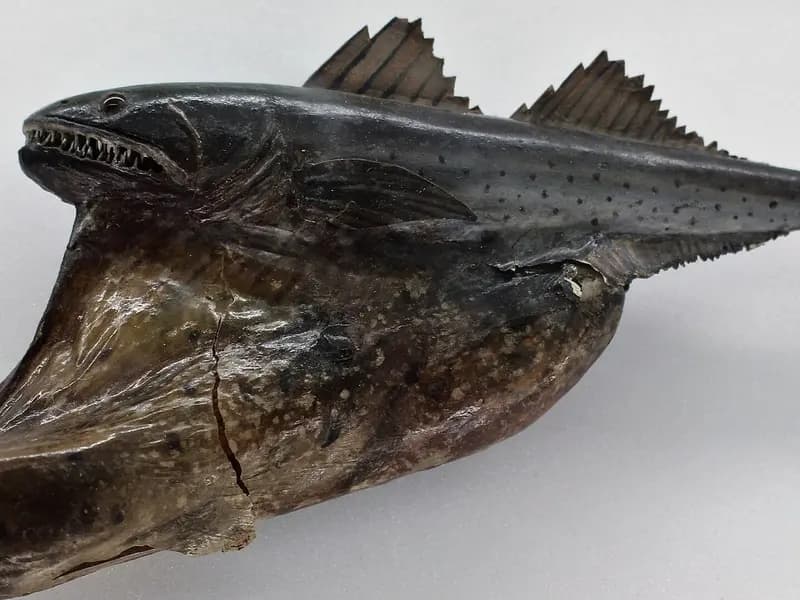
Black Swallower Filmed With a Hugely Swollen Belly 1,259 Metres Down Off Trinidad and Tobago
Oct 13, 2026/2 min read
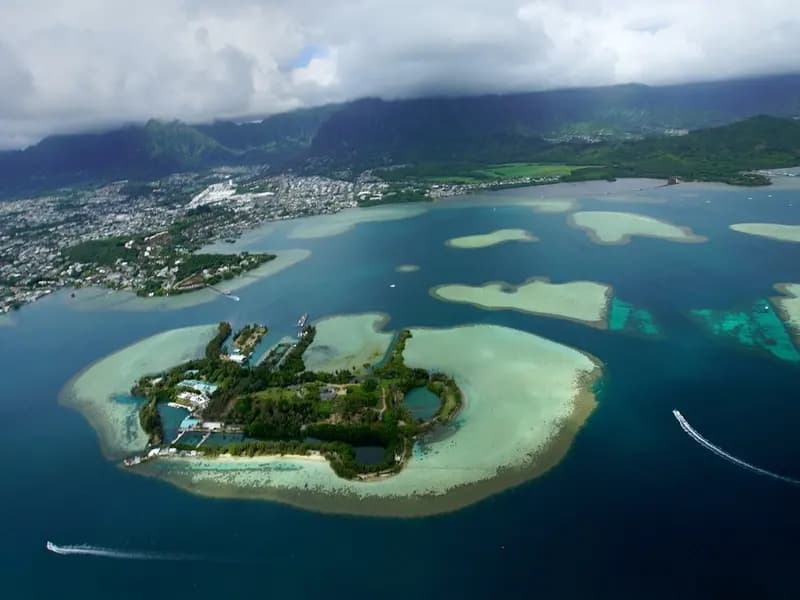
Playing Recordings of a Healthy Reef Drew More Coral and Fish Larvae to Artificial Structures Off Hawaii
Oct 9, 2026/3 min read
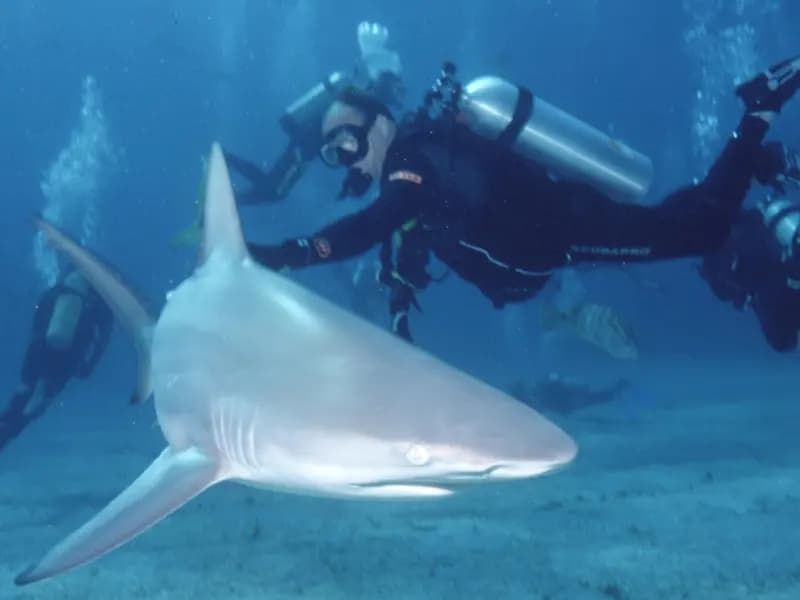
Blacktip Sharks Can Hear a Sound From Nearly 250 Feet Away and Swim Straight Toward or Away From It
Oct 1, 2026/2 min read
A Sea Turtle Species Never Recorded Nesting in the United States Laid Eggs on a Southern California Beach
Oct 1, 2026/2 min read