The UAE's Quietest Business Problem Is How Long It Takes to Get Paid
Persistent payment delays and rising default concerns are squeezing liquidity across the Emirates, in the same half that produced the region's largest volume of new project awards. Both things are connected.
Outspoken Digest Business Desk
Monday, August 17, 2026/3 min read
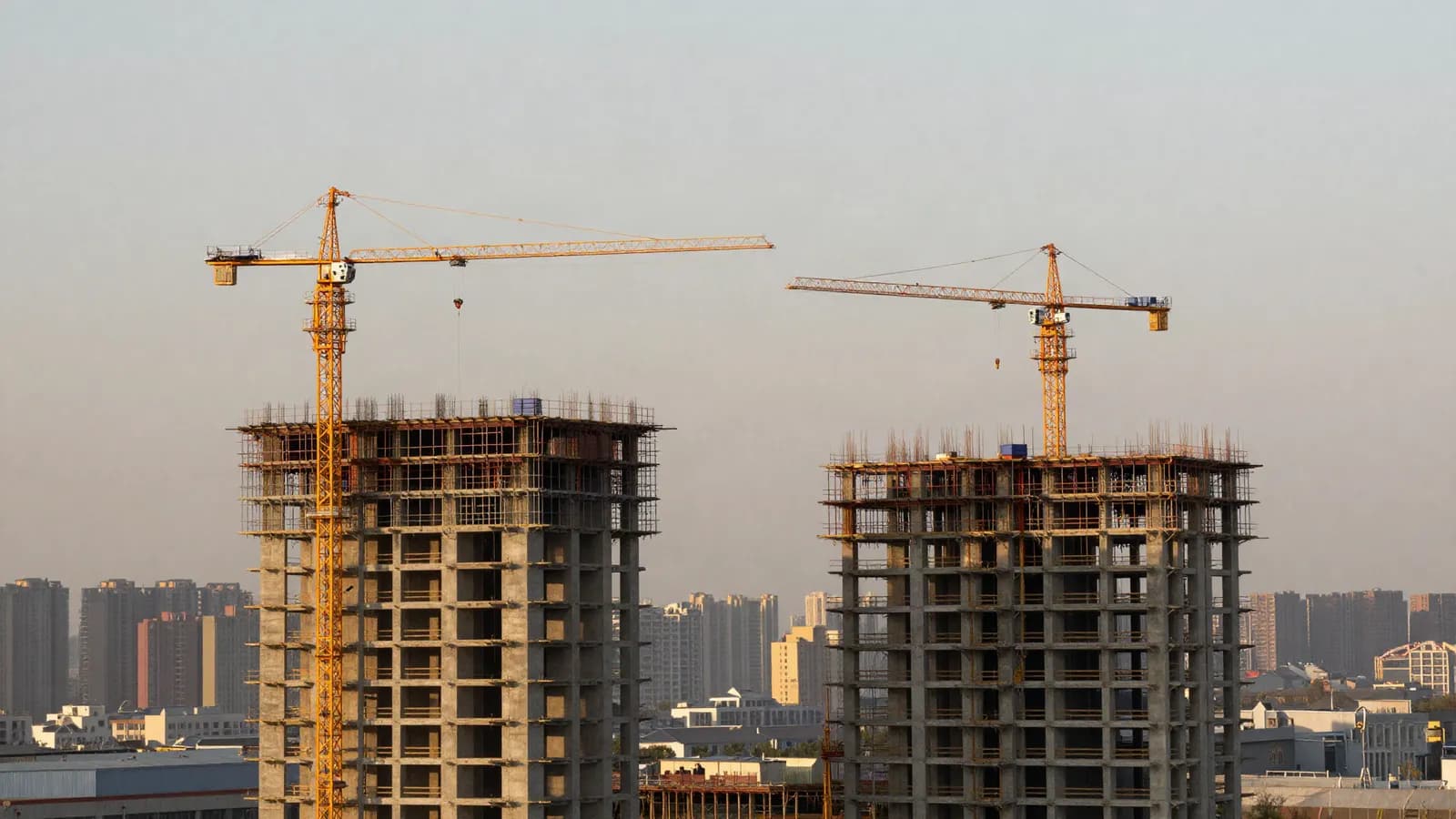
Persistent payment delays and rising concern about defaults are putting increasing pressure on liquidity and cash flow management across the UAE. That is happening in the same year the Emirates recorded the highest absolute value of project awards in the Gulf, with Saudi Arabia and the UAE expected to lead a further wave in the second half.
Those two facts look contradictory. They are the same fact seen from two ends of the contract chain.
Why a boom produces a squeeze
A project award is a promise to pay over several years. The work, the wages and the materials are paid for now.
Every business between the client and the site is financing that gap. A main contractor bills on certified progress, gets paid on terms, and pays subcontractors on terms of its own that are usually longer. A supplier extends credit to the subcontractor. At each step somebody is carrying the cost of work already done, and the length of that carry is set by whoever is furthest upstream.
When award volumes rise quickly, the chain gets longer and the amount of capital tied up in it grows faster than revenue. A company can be winning more work every quarter and running out of money the whole time, which is the specific way profitable businesses fail.
The pressure is worse this year because input costs have moved. Higher shipping, insurance and construction costs linked to regional conflict raise the amount that has to be funded before an invoice is even issued.
The part that is cultural, not financial
Payment delay in the region has a social dimension that a spreadsheet misses. Chasing a client aggressively is understood to cost the relationship, and the relationship is understood to be the asset. So invoices go unchased, ageing quietly, and the first serious conversation happens when the supplier is already in trouble.
The result is that credit is extended by default rather than by decision. Very few of the companies carrying ninety or a hundred and twenty days of receivables ever chose to become a lender to their customers.
This is the same dynamic that makes large regional deals slow to close, which we looked at in why large deals take so long.
What actually works against it
The measures that hold up are unglamorous and mostly happen before the work starts.
- Price the terms, not just the job. Ninety-day terms are a financing product. If a client wants them, the cost of carrying them belongs in the quote rather than in the year-end accounts.
- Invoice on the client's calendar. A large organisation pays in cycles. An invoice that misses the cutoff by a day waits a full period, and nothing about the relationship caused that.
- Make the first follow-up administrative and early. A short confirmation that an invoice has been received and coded, sent a week in, is not a chase and it surfaces the problems that otherwise appear at day sixty.
- Stage the work against payment. The strongest position is structural: milestones sized so that the amount at risk never exceeds what the business can absorb.
- Watch concentration. A receivables book where one client is most of the balance is not a cash flow problem, it is a single point of failure.
What the credit signals are saying
Rising default concern is a forward-looking measure. It reflects what lenders and insurers expect rather than what has already happened, and it feeds back into the real economy quickly, because credit insurance is what allows suppliers to offer terms at all.
When cover is withdrawn from a sector, suppliers move to advance payment, which pushes the financing burden back down the chain onto the smallest companies in it. That transmission is fast and it is the mechanism by which a sentiment indicator becomes a site stoppage.
The broader picture is not weak. Non-oil activity has held up, and the project pipeline is real, as our reading of the Gulf economy against the forecasts and the detail in second-half project awards both show. Liquidity strain in a growing economy is a distribution problem rather than a demand problem.
Is this a sign of a downturn?
Not on its own. Working capital pressure is a normal feature of an expansion, and it usually appears earliest in construction and contracting because those sectors have the longest gap between doing work and being paid for it.
It becomes a downturn signal when delays stop being concentrated in one part of the chain and start appearing at the top, in payments from the entities commissioning the work. That is the number worth tracking through the second half, and it is not the one that gets reported.
Published in The Outspoken Digest
Editorial desk
Outspoken Digest Business DeskCompanies, markets and the money moving through the region.
Newsletter
The Digest, in your inbox
One edition, sent when it is ready. No noise, and your address is never passed on.
Read Next
More Business →
Kospi Plunges Almost 8 Percent and the Nikkei Falls 5 Percent as the Tech Sell-Off Spreads to Asia
Oct 15, 2026/2 min read
Hot September Inflation Report Hands the S&P 500 Its Worst Day Since July as AI Stocks Sink
Oct 15, 2026/3 min read
Jio Platforms Sets IPO Price Band at Rs 1,065 to Rs 1,119, Opening Subscription on 21 October
Oct 14, 2026/2 min read

Starbucks Says It Is Not Buying Chipotle, Ending a Four-Day Takeover Story and Costing Chipotle About 4 Percent
Oct 13, 2026/2 min read