Washington Says It Now Controls 65 Billion Barrels of Venezuelan Oil, on a Hundred Year Lease
President Trump announced a joint venture holding 55 per cent of output across 17 fields, at no cost to American taxpayers. The reserves are real. Turning them into barrels is a decade of capital spending that nobody announced on Friday.
Outspoken Digest Business Desk
Sunday, August 30, 2026/4 min read
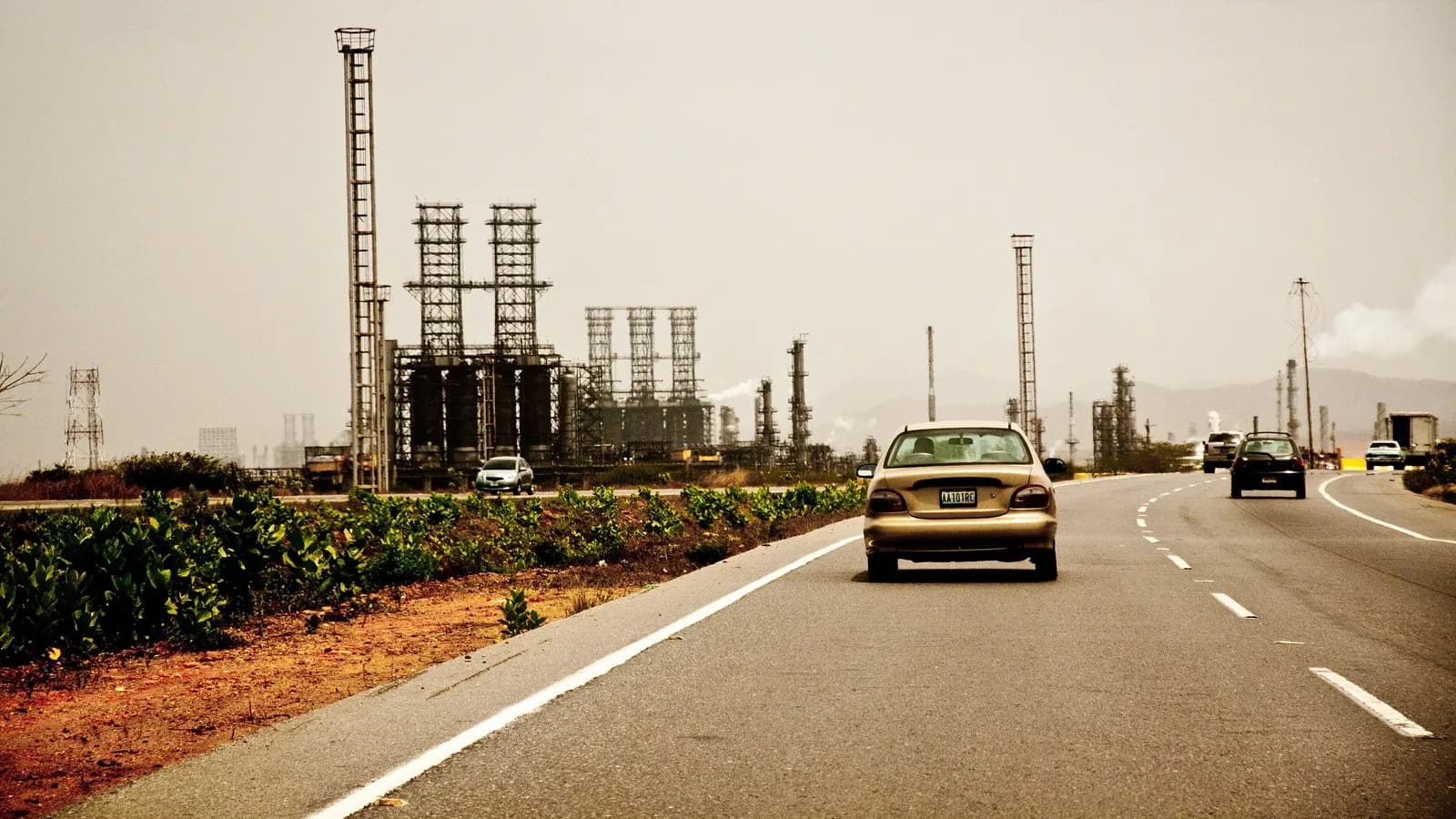
President Trump announced on Friday evening that the United States had entered an agreement giving a joint venture majority control over more than 65 billion barrels of Venezuelan oil reserves. He called it the biggest oil deal in world history and said it came at no cost to American taxpayers.
The reserves number is not the exaggeration people will assume it is. Venezuela genuinely holds the largest proven crude reserves on earth. The exaggeration, if there is one, is hiding in the difference between a reserve and a barrel you can sell.
The stated terms
A joint venture with a private Venezuelan company, in which the American side holds roughly 55 per cent of effective output. Seventeen strategic fields. A concession running one hundred years. More than 100 billion dollars of projected private investment, and a claimed 209 billion dollars in eventual tax revenue.
It was negotiated by the State and Defense Departments, with Secretary of State Marco Rubio and Defense Secretary Pete Hegseth named, and on the Venezuelan side by the interim president, Delcy Rodriguez. Nicolas Maduro was captured in an American military operation in January and faces narcoterrorism and drug trafficking charges, with trial scheduled for 2027.
Chevron declined to comment. That is worth noting, because Chevron is the company with the longest operating history in the country and the most informed view of what these fields actually require.
Reserves are not production
This is the whole story and it is a boring one, which is why it will not travel as far as the headline.
Venezuelan crude is mostly extra heavy oil from the Orinoco belt. It does not flow like Gulf crude. It has to be diluted or upgraded before it can be moved or refined, which means the barrels depend on upgraders, diluent supply, pipelines, power and a refining base that can take heavy sour feedstock. Most of that infrastructure has been running degraded for a decade.
Production has been a fraction of the country's capacity for years, and the constraint has never been the size of the resource. It has been capital, maintenance, skilled labour and the ability to get equipment into the country. A concession changes the ownership of a problem. It does not change the problem.
A hundred billion dollars of investment is the honest part of the announcement, because it is an admission of what the fields need. That money is spent over years before the first incremental barrel arrives, and the people spending it will want a view on the oil price in the 2030s before they commit.
The price context nobody mentioned
This lands in the middle of a war that has been reordering the crude trade for six months.
The conflict with Iran has kept prices elevated and shipping risk high, which is precisely the environment in which a large new supply agreement gets announced and precisely the environment in which nothing gets built quickly. We tracked what the disruption has done to flows in six months of the Hormuz war economy and what it has done to the price path in the demand outlook at 100 dollars.
Trump said the deal would lower prices at the pump. On any realistic development schedule, it cannot lower them this year, and probably not this decade. The mechanism by which an announcement moves fuel prices in the short run is sentiment in the futures market, not supply, and sentiment reverses.
What to be sceptical about, in order
First, the ownership structure. A 55 per cent share of a joint venture with a private company is not the same thing as the United States government owning oil, and the two get conflated fast in the retelling. Read every version of this story for whether the entity taking the stake is a company or a country.
Second, durability. A hundred year concession signed with an interim government, in a country whose previous head of state is awaiting trial in the United States, is a legal instrument with a political dependency. Concessions in the region have been nationalised before, including in this country, and the memory of that is why the risk premium on Venezuelan projects has always been high.
Third, the tax revenue figure. A 209 billion dollar number with no stated time horizon is not a forecast, it is a headline. Ask over how many years, at what oil price, and net of what capital allowances.
Why it still matters
Because if even part of it happens, the barrels are real and they are heavy, and the world's heavy crude balance has been tight since sanctions rewired it.
Refineries on the American Gulf coast were built for exactly this grade and have spent years buying substitutes at a premium. That is the genuine commercial logic underneath the announcement, and it does not depend on any of the larger claims being true. We looked at how that refining bottleneck has been shaping flows in an earlier piece on the return of the barrels.
The thing to watch over the next quarter is not statements. It is rig counts, upgrader restarts and whether any oil major other than the ones already there signs a work programme with its own money.
Published in The Outspoken Digest
Editorial desk
Outspoken Digest Business DeskCompanies, markets and the money moving through the region.
Newsletter
The Digest, in your inbox
One edition, sent when it is ready. No noise, and your address is never passed on.
Read Next
More Business →
Nasdaq Falls 1.25% as the FT Puts OpenAI's Annualized Revenue Near $50 Billion, Not $70 Billion
Oct 9, 2026/2 min read
Treasury Yields Hit a 24-Year High, Waller Says More Fed Rises Are Coming, and the 30-Year Auction Clears at 5.618%
Oct 9, 2026/2 min read

Samsung's 107 Trillion Won Quarter Outearned Nvidia, and Its Shares Fell 2.4 Per Cent Anyway
Oct 8, 2026/3 min read
McKesson and CD&R Agree to Take Option Care Health Private in a $5.8 Billion Home Infusion Deal
Oct 7, 2026/2 min read