A Ten Trillion Dollar Industry Has Started Telling Its Customers to Stop Optimising
The 2026 wellness forecasts describe a pivot away from peak performance and towards something more ordinary. That is a strange message from a sector selling trackers, protocols and longevity clinics, and it is worth taking seriously anyway.
Saturday, August 22, 2026/4 min read
The wellness economy was valued at about 6.8 trillion dollars in 2024 and is forecast to approach 10 trillion by 2029. Within that, the consumer facing part alone is roughly 2 trillion. It is one of the largest categories of discretionary spending in the world.
The 2026 trend reports from inside that industry describe something unexpected: a pivot away from peak wellness and towards something more human, framed explicitly as a backlash against over optimisation.
An industry this size does not usually publish forecasts telling people to do less.
What is the backlash actually against?
Against wellness as a performance metric.
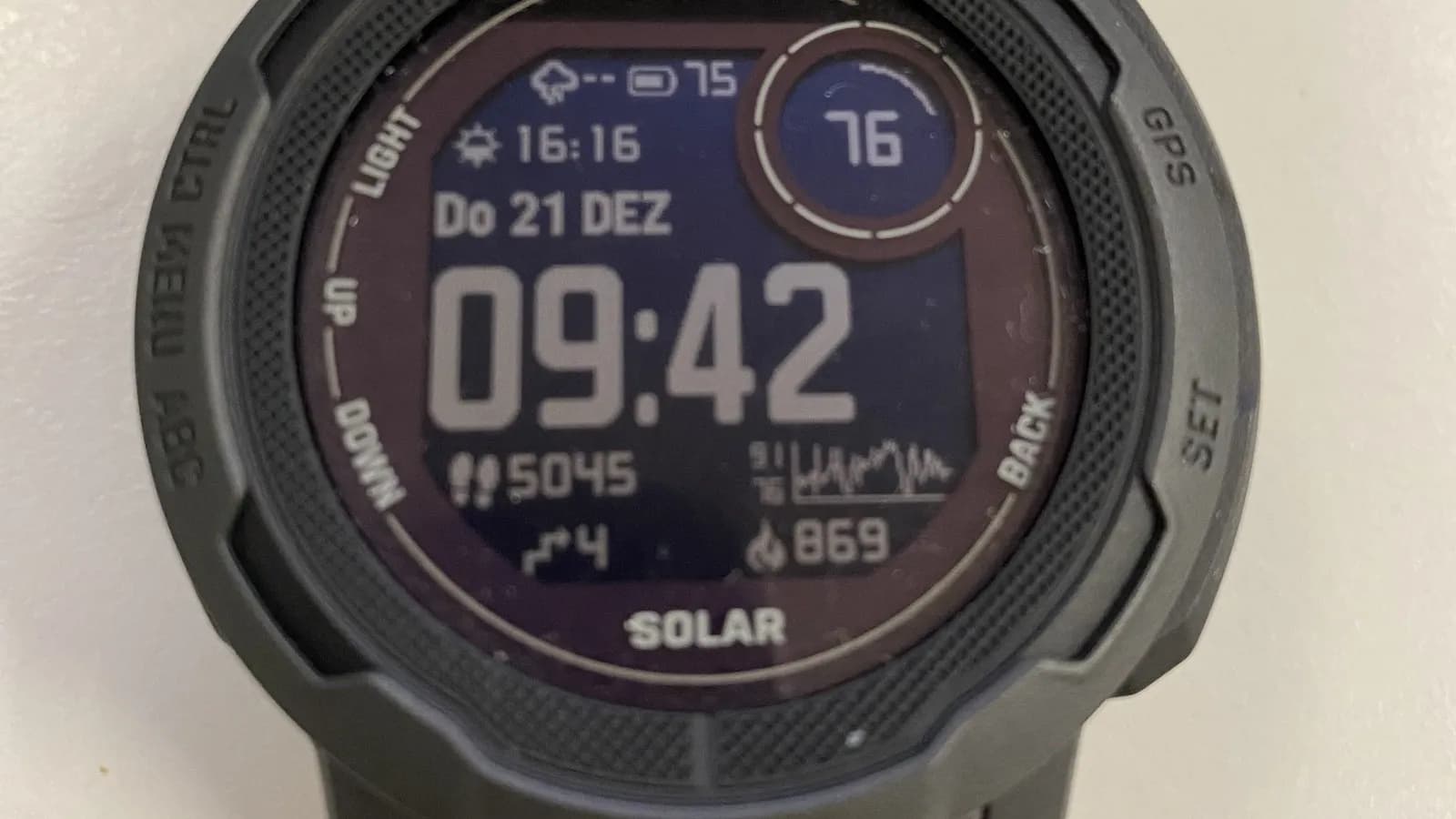
The last decade built a version of health that looks like a dashboard. Sleep scored out of a hundred. Recovery percentages. Readiness. Zone minutes. Protocols with names, stacks with sequences, and a general implication that a body is a system being run below its potential and the shortfall is your fault.
The reported turn is away from that. Not away from health, but away from the idea that health is a project with a scoreboard, and away from the anxiety that a scoreboard reliably produces.
It is worth noticing where this lands. Consumers are described as defining health across six dimensions: sleep, appearance, health itself, mindfulness, fitness and nutrition. Only two of those are things a wearable can measure.
Who is doing the spending?
Younger people, disproportionately.
McKinsey's work finds that younger generations account for more than 41 per cent of wellness spending while making up about 36 per cent of the adult population. Close to 30 per cent of Gen Z and millennial consumers in the United States say they prioritise wellness a lot more than a year ago, against up to 23 per cent among older groups.
That skew is the mechanism behind the backlash rather than a contradiction of it. The people spending most are the people most exposed to the optimisation framing, and therefore the first to tire of it.
Where does sleep fit?
At the centre, which is both correct and commercially convenient.
Sleep is being positioned as the entry point to what the reports call neurowellness, wrapped in products: beds with adaptive systems, circadian lighting, coaching programmes. The underlying claim is sound. Sleep is the single most load bearing health behaviour most people have available, and it affects metabolic health, mood, immune function and cognition in ways that are well documented, including in the research on short sleep and metabolic health.
The awkward part is that the interventions with the best evidence are mostly free. A consistent schedule, a dark and cool room, light in the morning, less alcohol, and not doing anything about it at three in the morning. An industry cannot build a 10 trillion dollar category on that, which is why the products keep arriving, a tension we set out in the business of tracking, hacking and buying sleep.
And longevity?
This is where a reader should be most careful.
Up to 60 per cent of consumers across markets now say longevity is a top or very important priority, and the 2026 reports describe the focus shifting towards women's healthspan, including work on ovarian ageing rather than symptom management alone.
That specific shift is a genuine and overdue correction. Women's mid life health has been under researched for decades, and moving from managing symptoms to understanding the underlying biology is the right direction.
What does not follow is that the products sold under the longevity heading are supported by the same evidence. The gap between a legitimate research field and a retail category using its vocabulary is very wide, and it is where most of the money is being spent. The reasonable test is the same one that applies to any health claim: ask what outcome was measured, in how many people, over how long, and against what comparison.
Is the backlash real or is it marketing?
Both, and the fact that it is marketing does not make it wrong.
Trend reports are produced by organisations that serve the industry they describe, and a pivot to gentleness is also a new product line. Expect restorative to appear on a great deal of packaging.
But the underlying observation is supported by ordinary experience. Turning rest into a performance metric makes rest worse. People who track sleep obsessively often sleep less well, because the tracking introduces exactly the anxiety that prevents it. An industry acknowledging that, even for commercial reasons, is more useful than one that does not.
What is worth carrying away?
Three things.
The dimensions people care about outnumber the ones that can be measured. Any product that scores you is, by construction, working on a subset, and it will make that subset feel like the whole.
The interventions with the strongest evidence remain unglamorous and cheap. Sleep, movement, food, company. Nothing in the 2026 forecasts changes that ranking.
A backlash against optimisation is not a licence to ignore evidence. The failure mode of the last decade was measuring the wrong things obsessively. The failure mode of the next one will be treating evidence itself as part of the problem, which is a worse mistake, and one we have watched play out in which wellness trends actually stick.
Published in The Outspoken Digest
Editorial
Outspoken Digest EditorialThe Digest's own desk: the pieces that do not sit in one section.
Newsletter
The Digest, in your inbox
One edition, sent when it is ready. No noise, and your address is never passed on.
Read Next
More Latest Trends →
France Lines Up an Extra 200,000 Tonnes of Gulf Diesel a Month as Macron Tours the Gulf
Oct 21, 2026/2 min read

More Than 250,000 Have Fled Yemen's Fighting Since July as a Houthi Missile Strike Kills Dozens of Recruits
Oct 21, 2026/2 min read

King Charles Hosts Oman's Sultan at Windsor and Praises Muscat's Role in Reopening Hormuz
Oct 21, 2026/2 min read

NATO Sends More Patrol Planes to the Black Sea After a Run of Drone Strikes on Merchant Ships
Oct 21, 2026/2 min read