YouTube Music Starts Labelling Songs Made With Generative AI, a Day After Deezer Promised an Off Switch
Listeners on the player page will see when a track leans on generative AI, as streaming services split between disclosure and outright filtering of machine-made music.
Outspoken Digest Technology Desk
Wednesday, October 14, 2026/2 min read
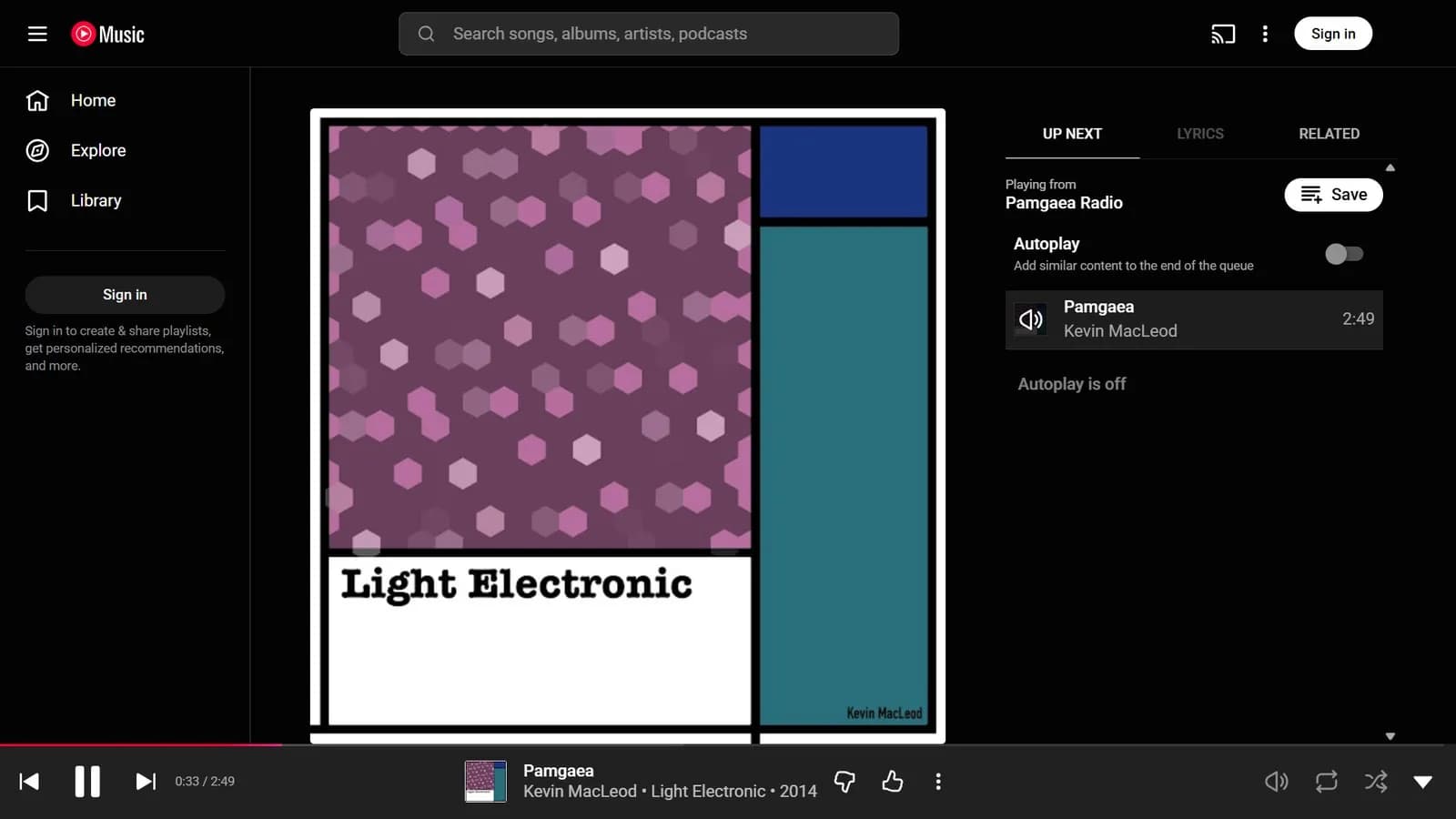
Two of the biggest music services made opposite bets on machine-made songs in the space of 24 hours. On Tuesday Deezer said it would let listeners hide fully AI-generated music altogether. On Wednesday YouTube Music said it would simply tell them when a song was made with generative AI, and leave the choice to the listener.
YouTube's announcement, on its official blog, describes a label that appears on the player page when AI played a significant role in a track, for example when a generative model produced both the composition and the vocals. Tapping the label opens a menu with more detail. The company says the labels will also reach the main YouTube app.
How does YouTube Music decide which songs get a label?
YouTube says it works with music partners and uses its own detection tools, applying the same labelling principles it already uses elsewhere on the platform. Disclosure guidelines and standards sit in its Help Center. The post does not give a rollout date or say which countries come first, and it does not say that labelled tracks will be demoted or removed.
That is the central difference with Deezer. A label is information. A filter is a decision made on the listener's behalf.
What is Deezer doing instead?
Deezer's toggle, reported by Music Week on Tuesday, will remove fully AI-generated tracks, albums and related artists from search results when it is switched on, and bring them back when it is off. It is due worldwide before the end of 2026. Chief executive Alexis Lanternier said the company had seen a clear user demand for the ability to filter out AI-generated music.
The scale explains the urgency. Deezer says it receives nearly 90,000 fully AI-generated tracks a day, and on peak days those make up more than half of everything delivered. Since the start of 2025 its detection tool has kept more than 42 million such tracks out of algorithmic and editorial recommendations and tagged more than 14 million albums. A Deezer and Ipsos survey from November 2025 found that 45 percent of streaming users want to filter out music that is 100 percent AI-generated.
What does the research say about listener demand?
A separate set of Deezer survey results, summarised by AlternativeTo, found that 73 percent of users want to be told whether they are hearing AI-generated music, and 52 percent think AI songs should not compete with human-made ones in the main charts. The same report cites an industry study, which included Deezer, estimating that nearly a quarter of creators' revenues could be at risk by 2028, up to 4 billion euros worldwide.
Those numbers favour both approaches at once: most people want to know, and a large minority want to opt out. Disclosure is cheap to ship. Filtering depends on detection that actually works, and the first real test will be how often either system mislabels a human artist. Watch for YouTube's rollout dates, and for whether other large services follow Deezer's off switch or YouTube's label.
Published in The Outspoken Digest
Editorial desk
Outspoken Digest Technology DeskSoftware, hardware, artificial intelligence and what they change for everyone else.
Newsletter
The Digest, in your inbox
One edition, sent when it is ready. No noise, and your address is never passed on.
Read Next
More Technology →
Some White Dwarfs Would Look Green, Pink or Purple, Warwick Astronomers Calculate
Oct 15, 2026/2 min read

Oxford Physicists Reproduce the Aharonov-Bohm Effect on a Hybrid Quantum Computer
Oct 15, 2026/2 min read

Japan Will Fund Up to $21 Billion for Two GlobalFoundries Chip Plants in New York
Oct 15, 2026/2 min read

Apple's $299 HomeView Smart Display Takes Preorders, but Not in the European Union
Oct 15, 2026/2 min read