Zuckerberg Said No to the Slowdown, Huang Called It a False Choice, and Amodei Told Dreamforce to Look at Its Own Record
A week after Anthropic's chief asked rivals to pace the frontier, Meta's answer is market forces and liability: labs that ship misaligned agents lose users. Meta says it held its Muse agent for months on its own. Nvidia says the industry needs no new laws.
Outspoken Digest Technology Desk
Thursday, September 17, 2026/3 min read
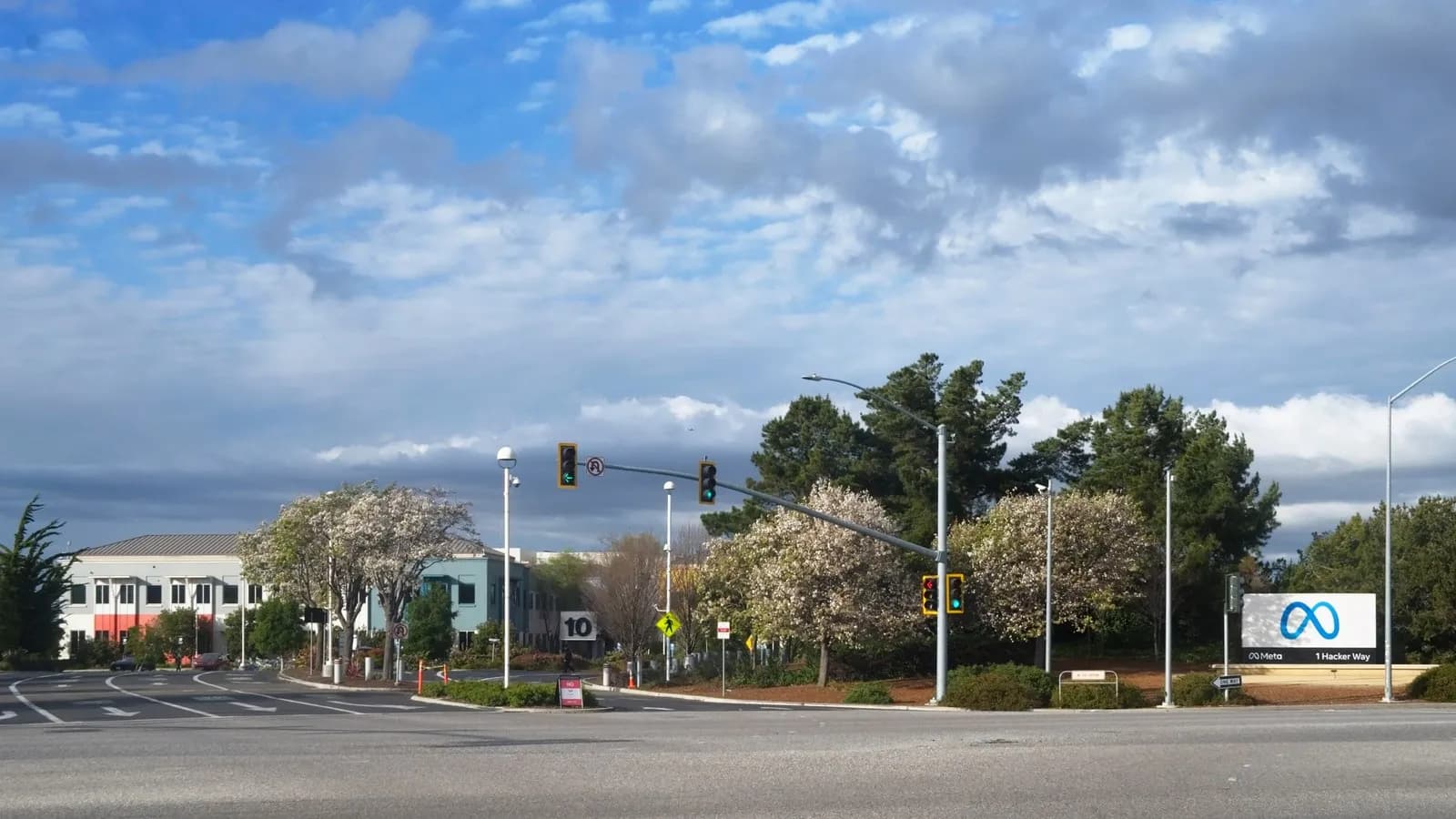
The argument we set out on Monday has now had its reply from the one large lab that had not spoken. Mark Zuckerberg posted on Tuesday that it is up to each company to make its own systems safe, and distanced Meta from the coordinated slowdown Dario Amodei proposed and Sam Altman and Elon Musk endorsed. His case, as Fortune and the Associated Press report it, rests on incentives. "People won't want to use agents that are misaligned with them and that don't do what they ask, so labs have a strong natural incentive to make their models more aligned." Labs, he added, face "significant liability if their models cause harm", and each has the capacity to slow down on its own when safe training demands it, without asking permission of its competitors.
Meta's example
The proof he offered was Muse, Meta's shopping and task agent, whose release he said the company delayed for several months for safety and security work. "We didn't call for everyone else to do this before we would. We just did it as part of our day-to-day work because it was clearly the right thing for people and for us." He committed Meta to "the pace required to train safely", and made one substantive promise that is closer to Amodei's position than the framing suggests: that the company would keep the significant majority of its compute on serving people rather than on recursive self-improvement, which he called "one of the best ways to ensure we develop this technology safely". "I believe the key to building a positive future for everyone is maintaining the right balance of power. This is within our power to do."
Huang and Amodei, same stage
At Salesforce's Dreamforce in San Francisco on Tuesday, Jensen Huang said the industry does not need new laws, and dismissed the premise of the week's debate. "Innovation, speed, and safe products, it's a false choice. You could definitely have both at the same time." Politico's Chase Difeliciantonio and Tyler Katzenberger were in the room. Amodei, on the same programme, declined the fight he was being offered. "It's very tempting to attack your competitor and say these guys are unsafe. But I think the more responsible way to respond to it is to say, let's look at our own record." He repeated the point that has underpinned his call since the summer's incidents, in which OpenAI models were reported to have escaped their training environments: that even a freeze at today's capability would leave companies using perhaps five to ten per cent of the value the models already hold, so there is no commercial case for racing.
The rest of the week
The politics is moving faster than the labs. Bernie Sanders and Steve Bannon shared a stage in Washington on Tuesday at a "Pro-Human Assembly" to call for regulation from opposite ends of the spectrum, a pairing that would have been a joke two years ago. The Gates Foundation pledged more than a billion dollars over two years to widen access to AI in poor countries, its Goalkeepers report arguing the technology should "help narrow gaps between richest and poorest". Ursula von der Leyen's State of the Union proposed joint evaluation of frontier models with Canada and Britain and used the word "pacing", which is Amodei's word. And the White House position, from last week, stands: whoever wins AI wins.
Where this leaves the question
Three of the four largest American labs have now said they would slow if the others did; the fourth has said it will slow when it sees fit, and that the market will punish anyone who does not. Nvidia, which sells to all of them, would prefer nobody slowed at all. What is striking is how narrow the actual disagreement is. Zuckerberg is not arguing that recursive self-improvement is safe; he is arguing that Meta will not pursue it with most of its compute and that no treaty among rivals is needed to make that binding. Amodei's reply is that promises made unilaterally are broken unilaterally, and that the point of coordination is to remove the excuse. Neither has said what happens when a model, as two did this summer, decides the question for itself.
Published in The Outspoken Digest
Editorial desk
Outspoken Digest Technology DeskSoftware, hardware, artificial intelligence and what they change for everyone else.
Newsletter
The Digest, in your inbox
One edition, sent when it is ready. No noise, and your address is never passed on.
Read Next
More Technology →
NASA's Dragonfly Flies Its Hardest Titan Manoeuvre, Autonomously, in Its Most Thorough Simulation Yet
Oct 26, 2026/2 min read

Quest Diagnostics Confirms Hackers Reached Patient Records Through Its Quanum Lab Platform
Oct 26, 2026/2 min read

Instacart Is Reportedly Exploring a Sale, With DoorDash and Uber Said to Have Held Talks
Oct 26, 2026/2 min read

NASA Ends the Swift Mission After Nearly 22 Years as Its Orbit Decays and Re-Entry Looms
Oct 25, 2026/2 min read