Designers Went From Trying AI to Using It Every Week
Weekly use jumped from just over half of designers to nine in ten in a single year. The number that has not moved is the one everyone expected to: almost nobody is hiring fewer designers.
Sunday, August 16, 2026/3 min read
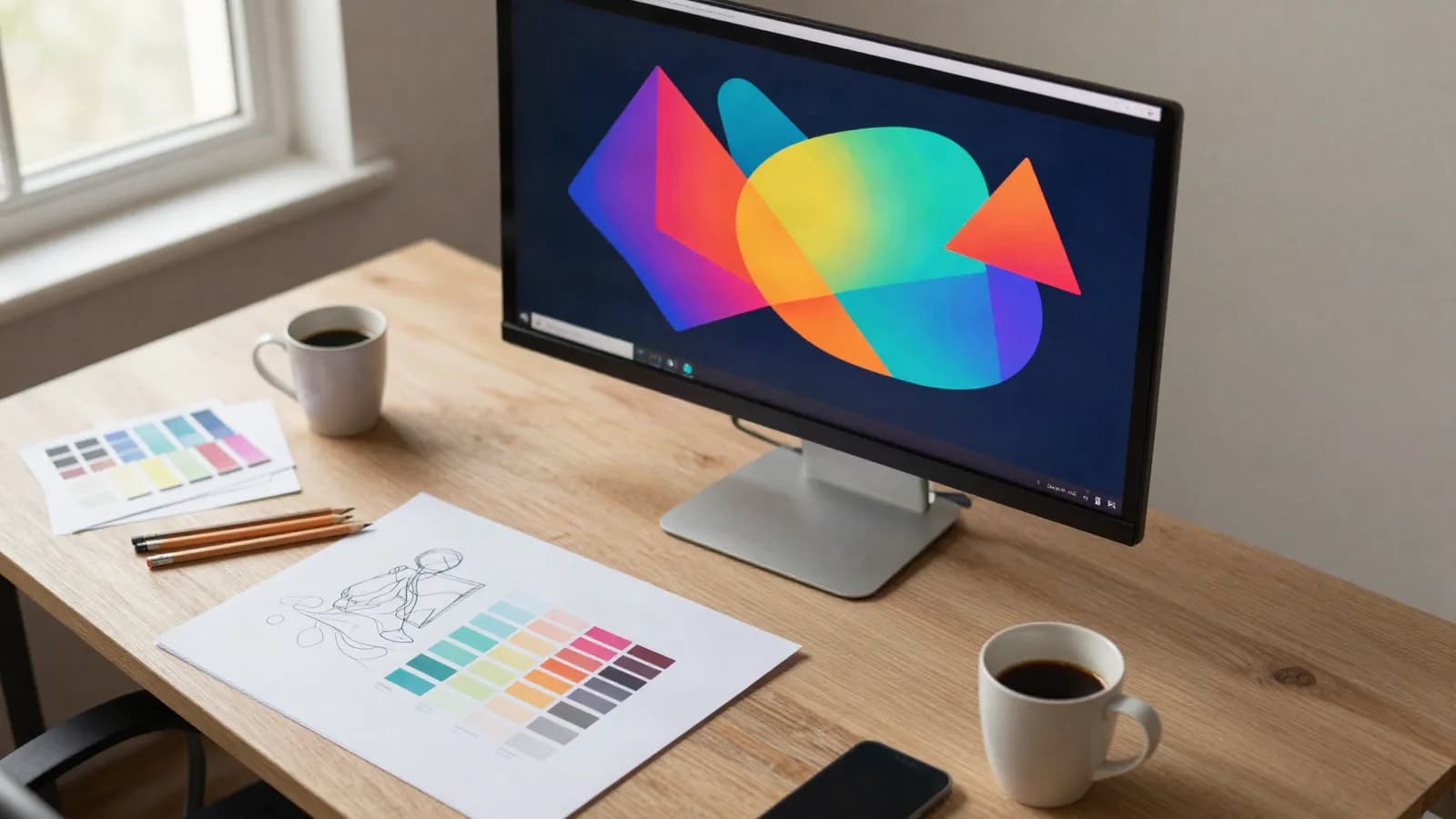
Two years ago the interesting question about AI and design was whether professionals would use it. That question is closed. In 2025 about 54 percent of surveyed designers used AI weekly. In 2026 that figure is around 91 percent, and the average designer reports using roughly seven AI tools regularly, more than double the three they reported a year earlier.
The prediction that came with all of this was that design employment would fall. It has not, and the gap between those two facts is the most useful thing in the current data.
What the employment numbers actually say
Close to nine in ten businesses now use AI design tools in some form. Only about 18 percent say those tools have reduced their need for designers.
Meanwhile 47 percent of surveyed businesses increased their design budgets over the past year, 32 percent held them roughly flat, and 12 percent cut them.
That is not the shape of an industry being automated. It is the shape of an industry whose output got cheaper per unit and whose appetite for output grew faster than the saving.
Why cheaper work has not meant less work
Because design demand was never fixed. Most organisations have always wanted more design than they could afford: more variants, more localisations, more formats, more tests. They rationed it.
When the cost of a first draft collapses, the rationing stops. The same team that produced three concepts now produces twelve, and the client who saw three now expects twelve. Nobody gets a quieter week. They get a wider brief.
This is a well-worn pattern in creative tooling. Desktop publishing did not reduce the number of people making printed matter, it multiplied the amount of printed matter and moved the skill from typesetting to editing.
What the work is now
The reported use is heavily weighted towards the front of the process. Around 60 percent of designers use AI for early concepts, and 67 percent describe it as a complement rather than a replacement.
That distribution makes sense if you think about where the risk sits. A wrong early concept costs nothing, because it is discarded in a review. A wrong final asset costs a client relationship. So the tools get used hardest exactly where being wrong is cheap.
What has genuinely changed about the job is the ratio of making to judging. A designer producing four options spent most of the day making. A designer producing twenty spends most of the day choosing, and choosing well requires a clearer point of view than making competently ever did.
Does this make junior design jobs harder to get?
This is the part the survey numbers do not settle, and it deserves an honest answer rather than a reassuring one.
The traditional junior brief was volume work: resizing, laying out variants, cleaning files, producing the eighth version of something. That is precisely the work these tools do well, and a studio that used to need three juniors to absorb it may now need one.
At the same time the skill that now matters most, editorial judgement, has always been learned by doing the volume work and watching what got picked. Removing the apprenticeship without replacing it is a real risk to the profession, and it will not show up in a budget survey for several years.
Studios that are handling this well seem to be doing one specific thing: putting juniors in the review conversation early rather than the production queue. It is more expensive in the short term and it is the only obvious substitute for the lost repetition.
What should a design team actually change?
Less than the tooling market suggests. Three things are worth deciding deliberately.
Where AI output stops. Most teams that have had a public embarrassment did not have a rule about which assets could ship without a human redraw.
Who owns the point of view. Twenty options need one person willing to say why the third one is right.
What juniors are for. If the answer is still the work the tools now do, the answer needs rewriting.
Our earlier look at how designers were using these tools in practice is a useful marker of how fast this moved, and slow design is the counter-argument gathering pace alongside it.
Published in The Outspoken Digest
Newsletter
The Digest, in your inbox
One edition, sent when it is ready. No noise, and your address is never passed on.
Read Next
More Design →
Jaguar Type 01 Arrives as a 1,030hp Electric Grand Tourer With No Rear Window and the Concept's Look Intact
Oct 13, 2026/2 min read

Drew Henry Reset Courreges for Spring 2027 With a Pared-Back Debut at the Palais de Tokyo
Oct 1, 2026/3 min read

Choosing Light Bulbs: Lumens, Kelvin and Colour Rendering Explained, Room by Room
Sep 21, 2026/3 min read