Choosing Light Bulbs: Lumens, Kelvin and Colour Rendering Explained, Room by Room
Watts tell you what a bulb costs to run, lumens tell you how bright it is, kelvin tells you whether it looks warm or cold, and the colour rendering index tells you whether a tomato still looks like one.
Monday, September 21, 2026/3 min read
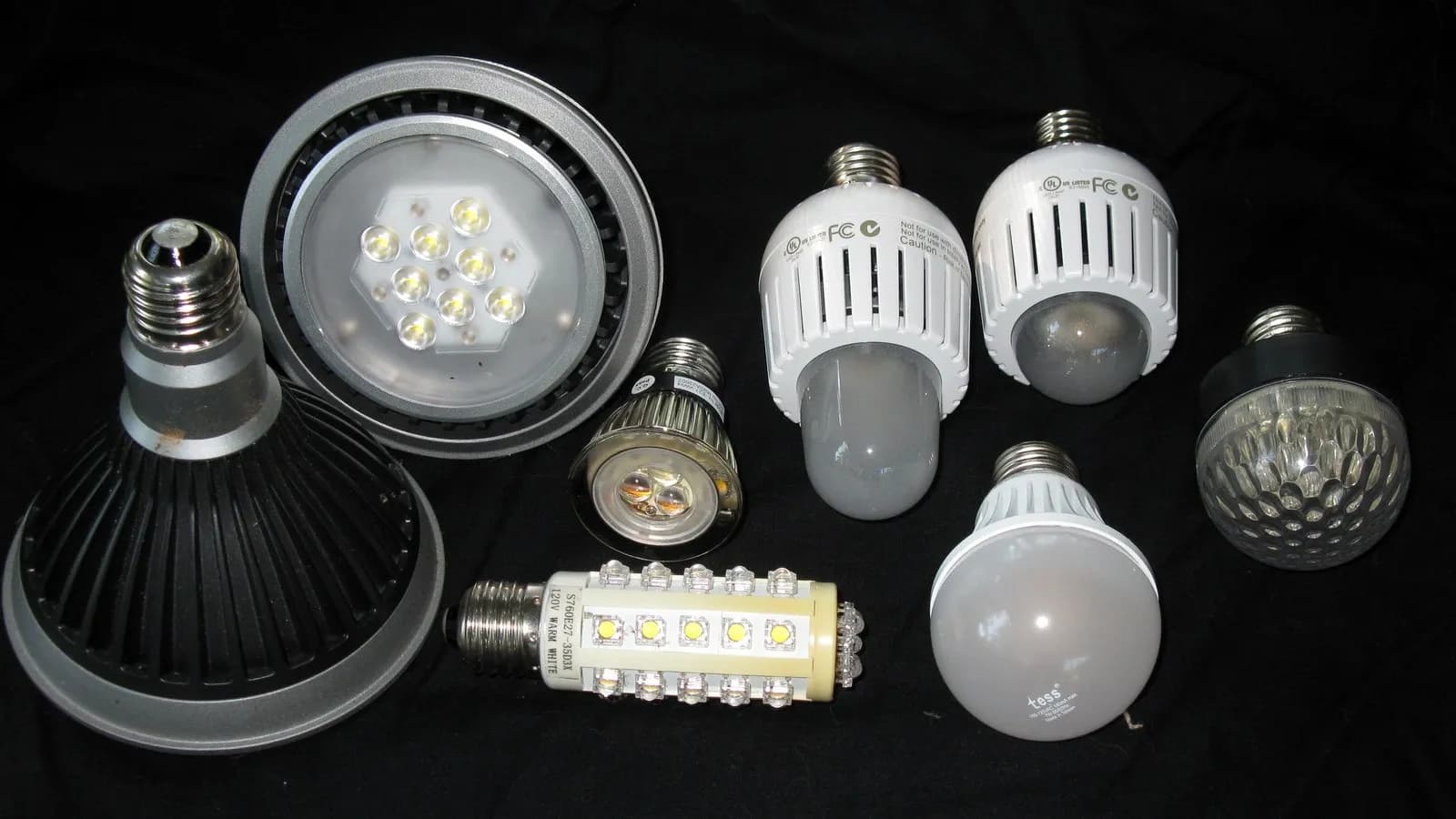
The switch from incandescent to LED has left most buyers choosing from a wall of packaging printed in numbers they were never taught. Watts used to tell you how bright a bulb was; they now tell you only how much it will cost to run. Three other numbers now decide how a room looks, and once you know them, buying a bulb takes a minute and a room never looks wrong again.
Lumens: how bright
The lumen is the unit of light output. For a rough guide to what the old watt numbers meant: about 450 lumens is the output of a 40 W incandescent bulb, 800 lumens of a 60 W, 1,100 of a 75 W and 1,600 of a 100 W. An LED producing 800 lumens uses roughly 8 to 10 W. The Energy Saving Trust's lighting advice sets out how to compare bulbs on this basis and how much running costs fall when you change.
Kelvin: how warm
Colour temperature is measured in kelvin, and it runs the opposite way to what intuition suggests: a lower number is warmer and more yellow, a higher number is cooler and bluer.
- 2,700 K is warm white, close to the glow of an old incandescent, and suits living rooms and bedrooms
- 3,000 K is a soft white and works in kitchens and dining areas
- 4,000 K is neutral white, good for task areas, home offices and utility rooms
- 5,000 K and above is daylight and cool white, which reads as clinical and is best kept for workshops, garages and places where you want to see detail
Colour temperature affects more than mood. Research at Rensselaer Polytechnic Institute's Lighting Research Center has examined how blue-rich light in the evening suppresses melatonin and can delay sleep, which is the argument for warm bulbs in bedrooms and living areas after dark. Our earlier piece on light at night and the heart covers the broader research.
Colour rendering: how true
The colour rendering index, or CRI, runs from 0 to 100 and measures how faithfully a light shows colours compared with natural light. A CRI of 80 or above is the standard for ordinary home use. Choose 90 or above where colour matters: over a bathroom mirror, in a kitchen, in a wardrobe, over a desk where you work with fabric or art. A cheap, low-CRI bulb makes food look dull and skin look grey, even if the lumens and kelvin are perfect.
Room by room
- Living room: 2,700 K, layered between a ceiling light, a lamp or two and accent lighting, all on dimmers where possible
- Kitchen: 3,000 to 4,000 K with high CRI, and brighter task lighting under wall units
- Bathroom: 3,000 to 4,000 K, CRI 90 or above, with light at face height beside the mirror rather than only overhead
- Bedroom: 2,700 K or lower, kept dim in the evening, with a brighter bedside reading light you can aim
- Home office: 4,000 K, with the desk lit from the side to avoid glare on the screen
As a rule of thumb, a living space wants around 100 to 150 lumens per square metre in total, a kitchen or work area two or three times that, spread across several sources rather than concentrated in one. A single bright ceiling bulb is the commonest mistake. Several lower sources at different heights are kinder and more flexible, a principle we cover for tenants in our layered lighting guide.
The practical details
Check the beam angle on spot and directional bulbs: narrow for accent, wide for general light. If you use a dimmer, buy bulbs marked dimmable and check your dimmer is rated for LEDs, or they will flicker or buzz. Buy one bulb of a new type and try it before replacing the whole room. Bulbs of the same colour temperature from different brands can look slightly different, so match within a room. Finally, look at the shade: a dark or heavy shade can swallow half the lumens you paid for.
Published in The Outspoken Digest
Newsletter
The Digest, in your inbox
One edition, sent when it is ready. No noise, and your address is never passed on.
Read Next
More Design →
Jaguar Type 01 Arrives as a 1,030hp Electric Grand Tourer With No Rear Window and the Concept's Look Intact
Oct 13, 2026/2 min read

Drew Henry Reset Courreges for Spring 2027 With a Pared-Back Debut at the Palais de Tokyo
Oct 1, 2026/3 min read


The Bench With the Extra Armrest Is Not Being Thoughtful About Your Posture
Sep 2, 2026/4 min read