The Blue Hole at Dahab: Why Experience Level Decides Everything
Egypt's most famous sinkhole is also its most argued-over dive site. What the Blue Hole actually is, and why so much depends on who is diving it.
Monday, May 20, 2024/4 min read
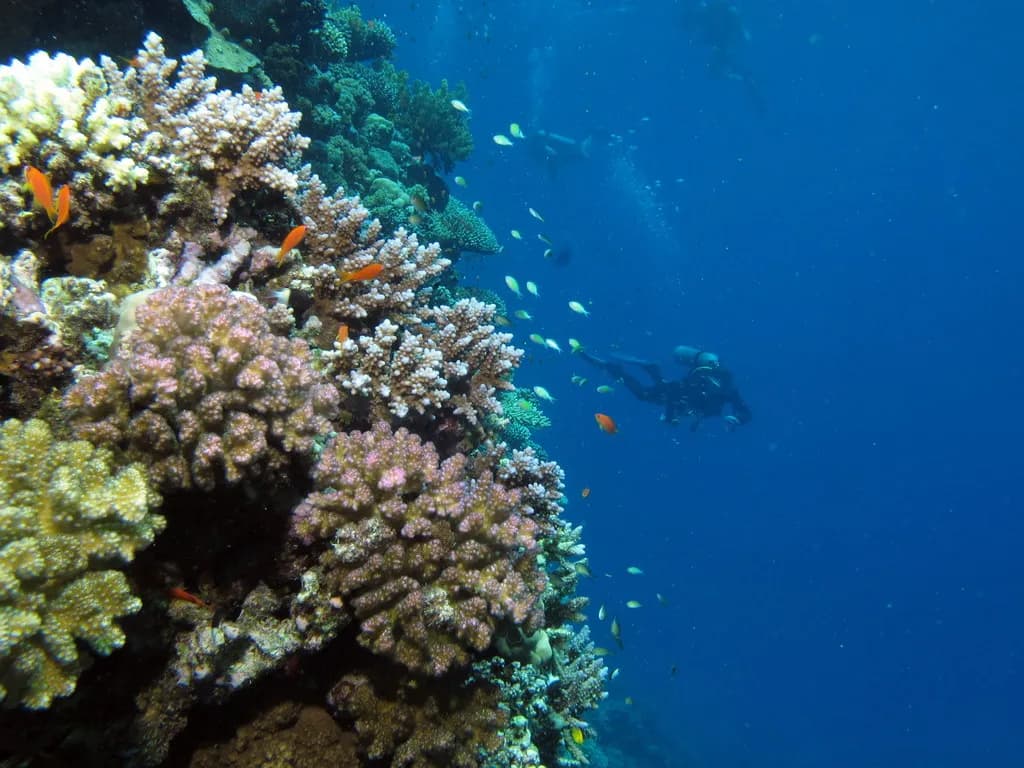
From the shore road in Dahab, the Blue Hole looks almost gentle: a dark circle of water set into the reef, a few metres from café tables and sun loungers. It is one of the most photographed dive sites in Egypt and, by most informal counts, one of the most dangerous stretches of ocean a recreational diver can choose to enter.
Both things are true at once, and understanding why requires separating the geography from the reputation.
What the Blue Hole actually is
The site is a submarine sinkhole in the reef, entered through a shallow section near the shore known locally as the saddle, at around six metres. From there the hole drops, essentially straight down, to depths that a recreational diver has no practical reason to approach. Reporting from Oceanographic Magazine describes the site's central feature, an opening at roughly 55 metres known as the Arch, which connects the hole to the open sea and has been likened to an underwater cathedral by those who have passed through it.
For a diver who stays in the saddle, at recreational depths, with a certified guide, the Blue Hole is simply a beautiful, unusual dive: warm water, good visibility, and one of the most striking natural formations on this coast. The danger enters when the Arch becomes the goal.
Why the Arch has claimed lives
The Arch sits well beyond standard recreational diving limits and requires either technical training, appropriate gas mixes, or both, to approach safely. Coverage from IFLScience and other outlets has attached a grim nickname to the site, the Diver's Cemetery, and various accounts put the toll well into double figures over the decades, though no single official registry tracks an exact, verified total, and readers should treat specific death-count figures circulating online with caution.
What is well documented is the mechanism behind most of the losses: divers, often experienced ones, attempting the Arch on recreational equipment and a single cylinder of ordinary air, at depths where nitrogen narcosis becomes a real factor and the margin for a wrong turn narrows sharply. Local instructors quoted in reporting on the site have repeatedly pointed to a mismatch between ambition and preparation, rather than any flaw in the site itself, as the recurring pattern.
Two names the site's history includes
Two deaths at the Blue Hole are widely documented in international press and diving media. British-Israeli dive instructor Yuri Lipski died at the site in the year 2000 while attempting to film a solo dive toward the Arch, a case that has been reported on extensively in diving publications in the years since. In 2017, Stephen Keenan, an Irish freediving instructor and co-founder of Dahab Freedivers, died at the site during a rescue attempt involving a freediver in difficulty, a loss the diving community still discusses with evident respect, as detailed in the Oceanographic feature on Dahab's freediving scene.
Beyond confirming that these deaths occurred and are part of the site's documented history, this piece will not speculate on final decisions, sequence of events, or state of mind in either case. Families and colleagues of divers lost at any site deserve accounts built only on what is actually confirmed, not reconstruction.
How the site sits within Dahab's wider diving scene
It is easy to forget, given the Blue Hole's reputation, that it is only one stop among many along Dahab's shore-diving coastline. Sites like the Canyon, the Islands and the Lighthouse offer the same clear water, gentle currents and shore access that make Dahab popular in the first place, without any of the depth temptation the Blue Hole carries. Most dive centres in the town treat the Blue Hole as a single dive within a longer itinerary rather than the entire point of a Dahab trip, and many divers who visit specifically to see it also spend most of their week diving elsewhere along the same coast.
Why the Blue Hole remains this popular anyway
Despite, or arguably partly because of, its reputation, the Blue Hole is dived daily and remains one of Dahab's central attractions. A memorial hillside overlooking the water carries plaques for divers lost there, a detail multiple outlets covering the site have noted, functioning as a quiet counterweight to the crowds of snorkellers and shore divers who visit without incident every single day.
What actually separates a safe visit from a risky one
The honest answer, repeated by instructors across Dahab's dive centres, is discipline about depth and purpose. A diver visiting the saddle with a guide, staying within recreational limits and their certification level, faces a very different risk profile than a diver drawn toward the Arch without technical training, appropriate gas planning, and a line.
Before diving the Blue Hole
- Dive with a licensed local operator and never attempt the Arch without technical or cave-specific training and the appropriate gas mix.
- Respect your certification level. The saddle and the surrounding reef offer a full, rewarding dive without approaching depths that require specialist preparation.
- Treat any local guide's refusal to take you deeper as final, not as an obstacle to negotiate around.
This article is journalism, not instruction. Anyone planning to dive the Blue Hole, at any depth, should train and plan that dive with a certified instructor and a recognised training agency, and should confirm current local guidance and marine park rules before travelling, since both can change.
The Blue Hole will likely remain what it has been for decades: one of the most beautiful ordinary dives on the Red Sea coast, and one of the least forgiving extraordinary ones, depending entirely on which dive a diver actually chooses to make.
Published in The Outspoken Digest
Editorial desk
Outspoken Digest Diving DeskCovers freediving, recreational and technical diving, dive medicine and the incidents the sport learns from.
Newsletter
The Digest, in your inbox
One edition, sent when it is ready. No noise, and your address is never passed on.
Read Next
More Diving →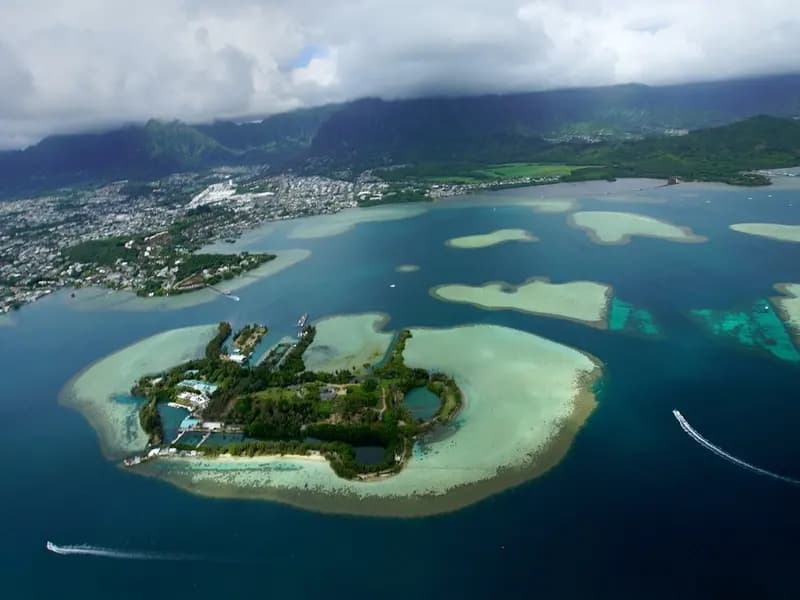
Playing Recordings of a Healthy Reef Drew More Coral and Fish Larvae to Artificial Structures Off Hawaii
Oct 9, 2026/3 min read
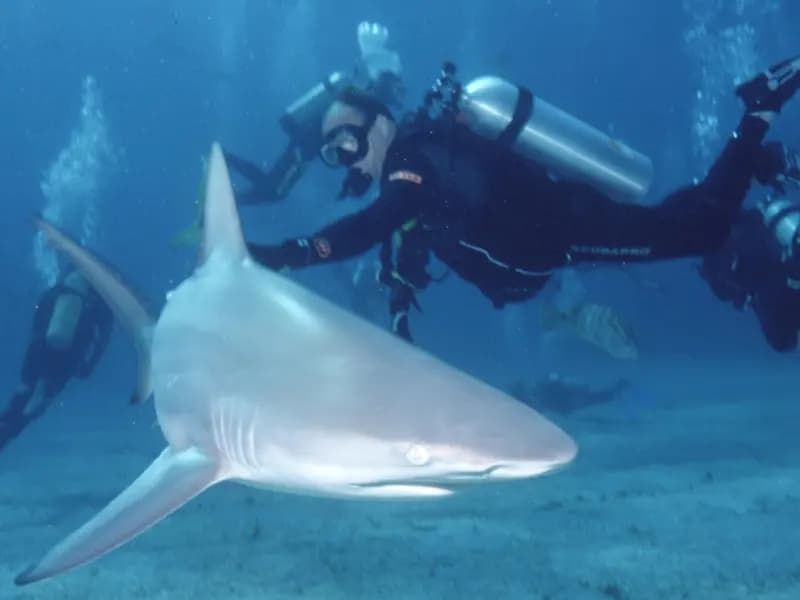
Blacktip Sharks Can Hear a Sound From Nearly 250 Feet Away and Swim Straight Toward or Away From It
Oct 1, 2026/2 min read
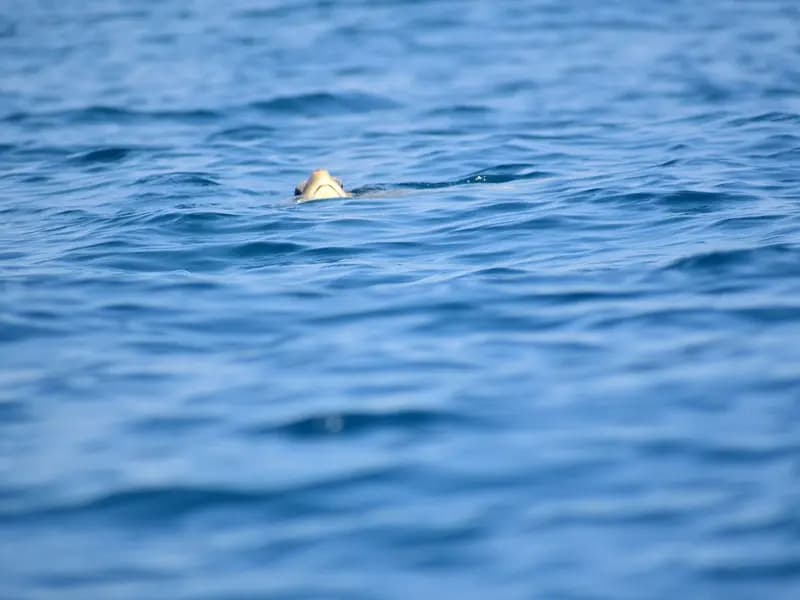
A Sea Turtle Species Never Recorded Nesting in the United States Laid Eggs on a Southern California Beach
Oct 1, 2026/2 min read
Marine Surveyors Confirmed Living Coral Off Benin, More Than Sixty Years After the Reef Was Presumed Dead
Sep 29, 2026/2 min read