Somebody Actually Measured What Five Varieties of Dates Do to Blood Sugar, in the UAE, in People With Diabetes
Dates are sweet, so the assumption is that people with diabetes should avoid them. A study of Fara'd, Lulu, Bo ma'an, Dabbas and Khalas found low glycaemic indices and no significant glucose excursions in the diabetic group.
Outspoken Digest Nutrition Desk
Wednesday, August 12, 2026/3 min read
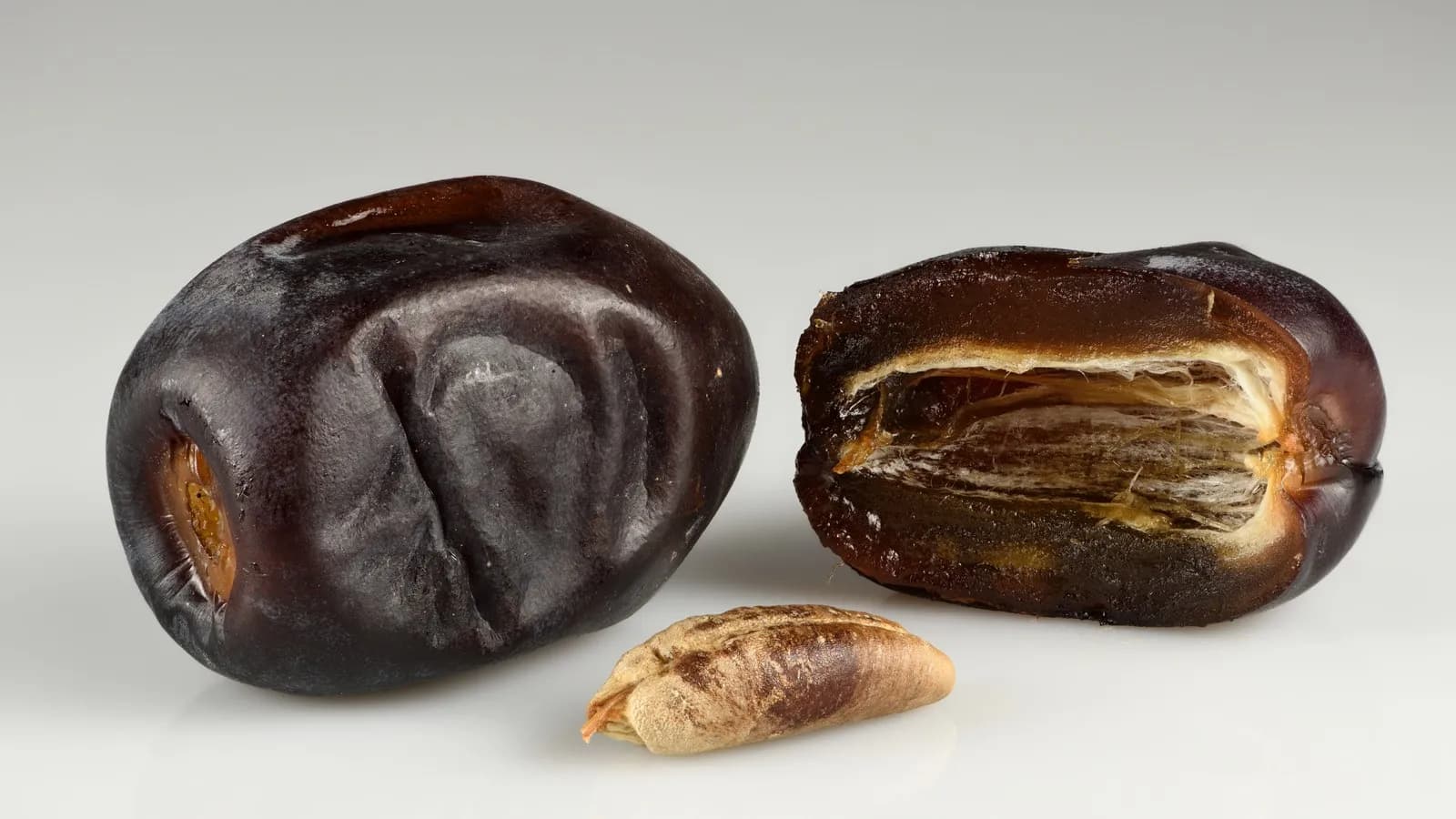
Few foods carry as much cultural weight in this region as dates, and few generate as much confident, evidence-free dietary advice. They are sweet, therefore they are sugar, therefore anyone with diabetes should avoid them. The reasoning is intuitive and it stops at the first step.
The question is answerable, and it was answered here. Researchers measured the glycaemic indices of five varieties commonly eaten in the United Arab Emirates in healthy volunteers, and then looked at what those same dates did to blood glucose in people with type 2 diabetes.
What did the study find?
The mean glycaemic indices in healthy participants came out at 54.0 for Fara'd, 53.5 for Lulu, 46.3 for Bo ma'an, 49.1 for Dabbas and 55.1 for Khalas.
In the participants with type 2 diabetes, controlled on lifestyle measures or metformin with a mean HbA1c of 6.6 per cent, the corresponding figures were 46.1, 43.8, 51.8, 50.2 and 53.0.
Three things stand out.
First, all five sit in the low glycaemic index range, conventionally taken as 55 or below. Dates are not, by this measure, a fast sugar.
Second, there were no statistically significant differences between the healthy group and the diabetic group. The dates did not behave differently in people whose glucose handling was impaired, which is the opposite of what the folk wisdom predicts.
Third, there were no significant differences between the varieties themselves. The endless discussion about which variety is acceptable is, on this evidence, a distinction without a difference.
The authors' conclusion was direct: consumption of these dates by people with diabetes did not result in significant postprandial glucose excursions.
Why do dates behave better than they look?
Because a date is not a spoonful of sugar. It is sugar arriving inside a physical structure.
Dates carry a substantial amount of fibre, and fibre slows how quickly sugars reach the bloodstream. The sugar is bound within a fruit matrix that has to be broken down rather than simply dissolved. They also contain polyphenols and minerals, and the whole package is digested as a package.
This is the same principle that makes whole fruit behave differently from fruit juice. Remove the structure and you get a fast sugar. Leave it intact and you get something considerably slower.
Does that mean dates are unlimited?
No, and this is where the good news needs its boundary drawn clearly.
Glycaemic index describes the quality of the carbohydrate, not the quantity. It is measured using a standard 50 gram carbohydrate portion, which for dates is a meaningful number of them. A low GI food eaten in a large enough amount still delivers a large glucose load, which is the distinction between index and load that our piece on using GI properly sets out.
Dates are energy dense. A handful is not a snack in calorie terms, it is closer to a small meal. Someone eating fifteen in an evening is not protected by a favourable glycaemic index.
The practical version: two or three dates as part of a meal or with something containing protein or fat, such as the traditional pairing with laban or nuts, is a defensible choice for most people with type 2 diabetes. A bowl of them on their own, grazed through an evening, is not.
What about breaking a fast with them?
This is where the finding has real weight in this region.
The traditional practice of breaking a fast with dates has often been questioned by clinicians on glycaemic grounds. On this evidence the dates are not the problem. Two or three dates, taken after many hours without food, deliver a moderate load with fibre attached.
What follows them usually is the problem. The dates are the opening of a meal that frequently continues with fried items, white rice, sweetened drinks and dessert, and the glucose excursion produced by that sequence has very little to do with the fruit at the start. Our piece on planning diabetes care around fasting covers the wider preparation, which belongs weeks before the month starts.
The broader point
Traditional foods get blamed disproportionately in dietary advice, partly because they are visible and easy to name. It is simpler to tell someone to stop eating dates than to address the composition of the meal that follows.
Here, someone did the measurement, in the relevant population, using the varieties people actually eat. The answer was that the dates are broadly fine in sensible quantities. Advice that ignores that is not being cautious, it is being unevidenced, and it costs credibility on the occasions when a genuine restriction is needed.
Published in The Outspoken Digest
Editorial desk
Outspoken Digest Nutrition DeskDiet, food science and the evidence behind claims about what we eat.
Newsletter
The Digest, in your inbox
One edition, sent when it is ready. No noise, and your address is never passed on.
Read Next
More Nutrition →
Small Pilot Trial Finds Meals or an App Slowed Weight Regain After People Stopped GLP-1 Drugs
Oct 15, 2026/2 min read
Potassium-Rich DASH Diet Did Not Raise Blood Potassium to Unsafe Levels in Adults on Blood Pressure Drugs
Oct 13, 2026/2 min read

Matched for Calories and Macronutrients, an Ultra-Processed Meal Still Drew a Bigger Insulin Response in a Small Trial
Oct 9, 2026/3 min read
A Study of 371,000 Americans Found Whole Fruit, Not Juice, Is Linked to Better Heart Health
Oct 1, 2026/2 min read