The Conversation About Fasting With Diabetes Should Happen Two Months Before Ramadan, Not During It
The IDF and Diabetes and Ramadan International Alliance stratify patients into low, moderate and high risk, and updated the calculator for 2026. The assessment is meant to happen six to eight weeks ahead, which is when almost nobody books it.
Monday, August 3, 2026/4 min read
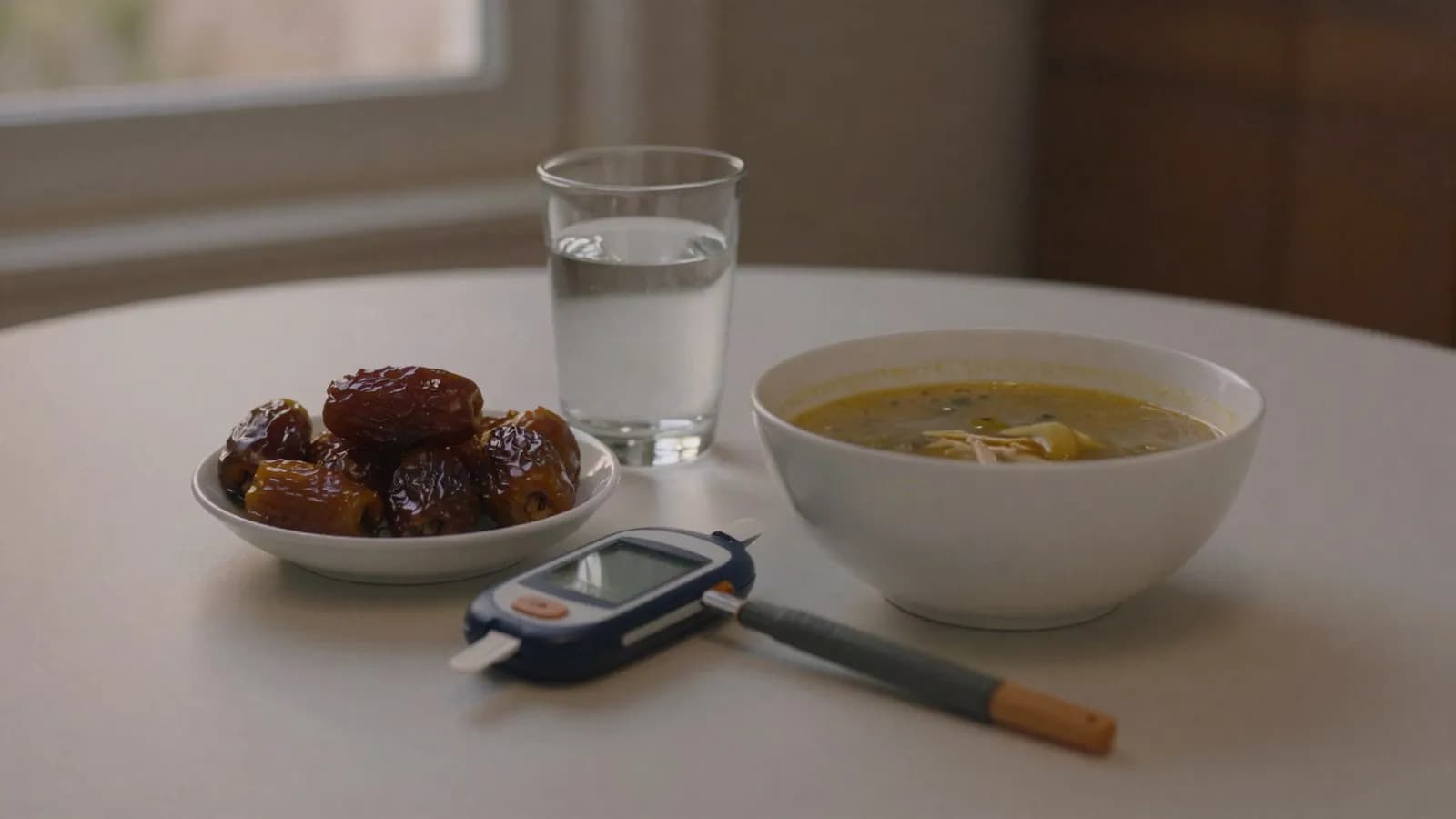
Millions of people with diabetes fast during Ramadan. A large proportion do so without discussing it with anyone who manages their condition, and a meaningful number do so having been told not to.
That last group is often described as non-compliant, which is both unhelpful and a misreading of what is happening. Fasting is a pillar of the faith and a communal experience that people do not wish to sit outside. Islamic jurisprudence exempts the sick, and many patients know this perfectly well, and still want to fast. Advice that ignores that reality gets ignored in return.
The useful approach is the one the International Diabetes Federation and the Diabetes and Ramadan International Alliance have built: assess the individual risk, then plan around it.
What does the IDF-DAR risk assessment do?
It sorts people into low, moderate and high risk of harm from fasting, rather than issuing one blanket instruction to a very varied population.
The calculation weighs the type and duration of diabetes, which medications are involved, how well controlled the condition is, history of hypoglycaemia, presence of complications, kidney function, pregnancy, and the practicalities of the person's work and daily life. The 2026 update refined it further, incorporating newer clinical evidence, hypoglycaemia thresholds and the growing use of diabetes technology, and was developed through a consensus process drawing on the DAR global surveys and regional validation studies.
The output is a category, and the categories carry different advice.
- Low and moderate risk: fasting is generally possible with medication adjustment, dietary education, and regular glucose monitoring, with clear instructions on when to break the fast.
- High risk: fasting is strongly discouraged. This group includes people with a history of severe hypoglycaemia, poor awareness of lows, very poor control, significant kidney disease, and type 1 diabetes in many circumstances.
Why is the timing of the assessment so important?
Because the work is mostly medication adjustment, and adjustment needs testing before it is trusted.
The recommendation is to see people six to eight weeks before Ramadan begins. That window exists so that changes to insulin doses or the timing of glucose-lowering drugs can be made, observed, and corrected while there is still time to correct them.
What happens instead is that people arrive in the first week of Ramadan, already fasting, already having had a difficult few days, asking for advice retrospectively. At that point the clinician is troubleshooting rather than planning.
If you intend to fast, the appointment to book is the one two months out, and it is worth saying explicitly at booking that this is what the appointment is for.
Which medications cause the most trouble?
The risk is not evenly distributed, and this is worth understanding rather than memorising.
Drugs that push insulin out regardless of what you have eaten are the main hazard, because a fasting body still receives the push. Sulfonylureas fall into this group, and often need dose reduction or a switch. Insulin regimens usually need restructuring rather than simply shifting, particularly the basal and mealtime split, since two meals are now compressed into the hours of darkness.
Metformin is generally lower risk but often needs its timing redistributed. Newer agents including the GLP-1 class and SGLT2 inhibitors have their own considerations. The SGLT2 point deserves emphasis: these drugs carry a risk of ketoacidosis that can occur at lower glucose readings than usual, and prolonged fasting with reduced fluid intake is exactly the setting where that becomes relevant.
None of this is a reason to stop medication independently, which is its own hazard. It is a reason to have the plan made by someone who knows the whole regimen.
Does checking glucose break the fast?
No. This is one of the most practically useful things to know and it circulates far less than it should.
A finger-prick blood glucose test does not invalidate the fast, and this position is well established among religious authorities. Nor does wearing a continuous glucose monitor, which for many people is the ideal tool during Ramadan precisely because it gives warning of a fall without any action at all. The ADA's 2026 Standards broadened CGM eligibility considerably, and the technology is more accessible than it was.
Equally, the fast must be broken if blood glucose falls too low or rises dangerously high. Continuing a fast into a severe hypoglycaemic episode is not piety, and every framework on this subject, religious and clinical, agrees.
What does a sensible Ramadan plan look like?
Get assessed six to eight weeks ahead and find out which category you are in. Agree specific medication changes and specific thresholds at which you will break the fast, written down rather than remembered. Monitor more often than usual, not less. Prioritise fluid overnight, because dehydration compounds every other risk here and the heat in this region makes it worse.
At suhoor, favour slowly digested food, which is where glycaemic load genuinely earns its keep. At iftar, the traditional dates are less of a problem than most people assume, a point our piece on dates and glucose covers with the actual data. What follows the dates is usually the issue.
And if you are placed in the high-risk group, take it seriously. The exemption exists for a reason, and there are other ways to observe the month.
Published in The Outspoken Digest
Editorial desk
Outspoken Digest Health DeskMedicine, public health and the research behind the headlines, read carefully.
Newsletter
The Digest, in your inbox
One edition, sent when it is ready. No noise, and your address is never passed on.
Read Next
More Health →
Kenya's Ebola Count Rises to Seven After Three Health Workers Who Treated the First Patient Test Positive
Oct 17, 2026/2 min read
BMJ Analysis Warns Fast-Growing Private Testosterone Prescribing Could Land on the NHS
Oct 14, 2026/2 min read

Cochrane Review Finds Medical Cannabis Has No Clear Benefit for Insomnia, With Weak Evidence Either Way
Oct 13, 2026/2 min read

Lancet Commission Names 17 Threats to Global Health Through 2100, With Obesity the Largest by Burden
Oct 12, 2026/2 min read