Nobody Counts What They Drink, Which Is Where Most of the Sugar Is
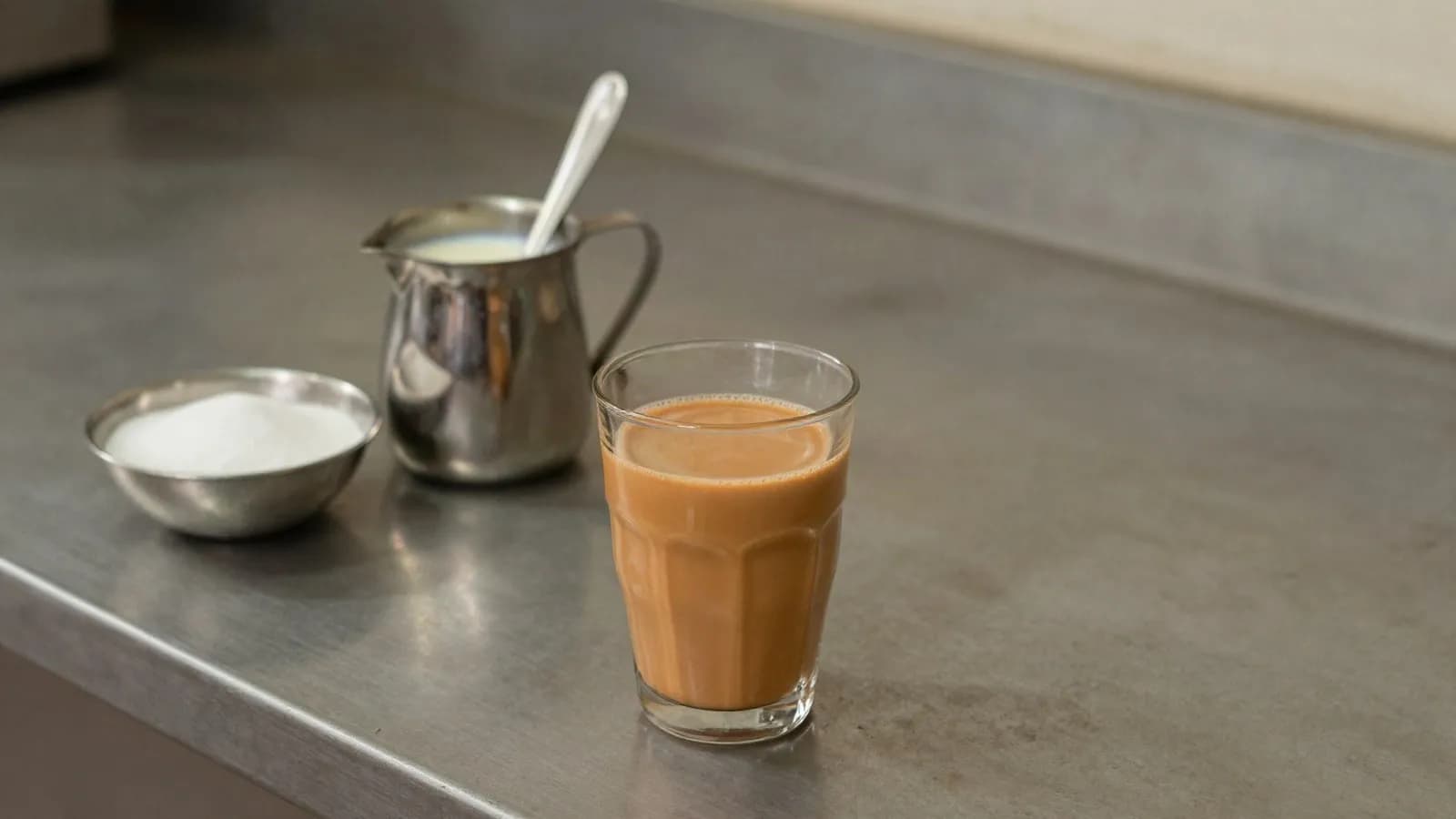
Liquid sugar arrives faster than any solid food, does almost nothing to make you feel full, and is invisible in the mental accounting people do about their diet. Four cups of sweet karak is a dessert nobody counted.
Outspoken Digest Nutrition Desk
Monday, August 17, 2026/3 min read
Ask somebody to describe what they ate yesterday and they will list meals. Almost nobody lists drinks, unless prompted, and even then they tend to forget several.
That blind spot is expensive, because drinks are where liquid sugar enters the day with none of the friction that slows down everything else.
Why is sugar in a drink worse than the same sugar in food?
Three reasons, and they compound.
It arrives fast. There is nothing to chew, nothing to break down, and no structure to dismantle. Sugar in solution is absorbed quickly, producing a sharper glucose rise than the same quantity inside a solid food. It is the same reason juice behaves so differently from the fruit it came from.
It does not fill you up. The mechanisms that register fullness respond poorly to liquid calories. A 250 calorie drink displaces very little of the food eaten afterwards, whereas 250 calories of food would have displaced a good deal.
It is not counted. This is the largest effect and the least physiological. People who carefully consider whether to have dessert will drink three sweetened teas across the same afternoon without registering it as a decision at all.
Where does the sugar actually come from here?
Some honest arithmetic on the drinks that make up an ordinary day in this region.
- Karak and sweet tea. The single largest hidden source for a great many people. Prepared with condensed milk and sugar, a small cup can carry a substantial amount, and the social pattern is several a day. Four cups is not a hot drink habit, it is a dessert distributed across the working day.
- Fresh juice. Marketed as the healthy option, and the assumption is understandable. But a glass contains the sugar of several pieces of fruit with the fibre removed and, crucially, is often ordered alongside a meal rather than instead of anything.
- Sweetened laban and flavoured yoghurt drinks. Plain laban is a genuinely good choice, carrying protein and no added sugar. The flavoured versions frequently carry a great deal, and the packaging is nearly identical.
- Soft drinks and energy drinks. Well understood by everyone and still the default with fast food.
- Speciality coffee. A flavoured iced coffee is closer in composition to a milkshake than to coffee, and is rarely thought of that way.
What should you drink instead?
The answer is boring and it is water, but there are better versions of the answer than simply saying that.
The realistic route is reduction rather than replacement. Palate adapts to sweetness over a few weeks, so someone who takes their karak down by a quarter, waits a fortnight, and takes it down again generally ends up preferring it. Going from four sugars to none in a single day nearly always fails and is then reported as evidence that the change is impossible.
Plain laban, unsweetened tea and coffee, and water with lemon or mint all work. So does sparkling water, which does more than still water for people who miss the sensation of a soft drink rather than the sugar.
Non-sugar sweeteners are a legitimate bridge here for people with diabetes specifically, and the WHO guidance that appeared to rule them out explicitly excluded that group. As a step down from sugar they are defensible. As a permanent endpoint they keep the palate calibrated to a level of sweetness that makes everything else taste wrong.
What about the social problem?
It is the real obstacle and the one nutrition advice usually ignores.
Tea and coffee are offered constantly here, and refusing hospitality is not a neutral act. Advice that requires somebody to decline what a host has prepared is advice that will be quietly abandoned to avoid the awkwardness.
The workable version is to change the specification rather than to refuse. Asking for it without sugar, or with less, is an ordinary request in most settings and produces no social cost at all. Accepting the drink and leaving part of it is another. Both preserve the exchange, which is what the offer was actually about.
The one change worth making
If you do nothing else from this article: count your drinks for three days. Write them down, including the ones taken standing up in somebody's office.
Most people are surprised, and the surprise does more work than any instruction. You cannot reduce something you have not noticed, and in a region carrying one of the world's heaviest diabetes burdens, this is the intervention with the largest gap between effort and effect.
Published in The Outspoken Digest
Editorial desk
Outspoken Digest Nutrition DeskDiet, food science and the evidence behind claims about what we eat.
Newsletter
The Digest, in your inbox
One edition, sent when it is ready. No noise, and your address is never passed on.
Read Next
More Nutrition →
Small Pilot Trial Finds Meals or an App Slowed Weight Regain After People Stopped GLP-1 Drugs
Oct 15, 2026/2 min read
Potassium-Rich DASH Diet Did Not Raise Blood Potassium to Unsafe Levels in Adults on Blood Pressure Drugs
Oct 13, 2026/2 min read
Matched for Calories and Macronutrients, an Ultra-Processed Meal Still Drew a Bigger Insulin Response in a Small Trial
Oct 9, 2026/3 min read
A Study of 371,000 Americans Found Whole Fruit, Not Juice, Is Linked to Better Heart Health
Oct 1, 2026/2 min read