The Federal Reserve Is Arguing About a Rate Rise, and a Shipping Lane Is Casting the Deciding Vote
Governor Christopher Waller said he is inclined to hold in September, and market odds on a rise fell about twelve points to 54.6 percent. With rates at 3.50 to 3.75 percent, the swing variable is how fast energy supply chains normalise.
Friday, September 4, 2026/3 min read
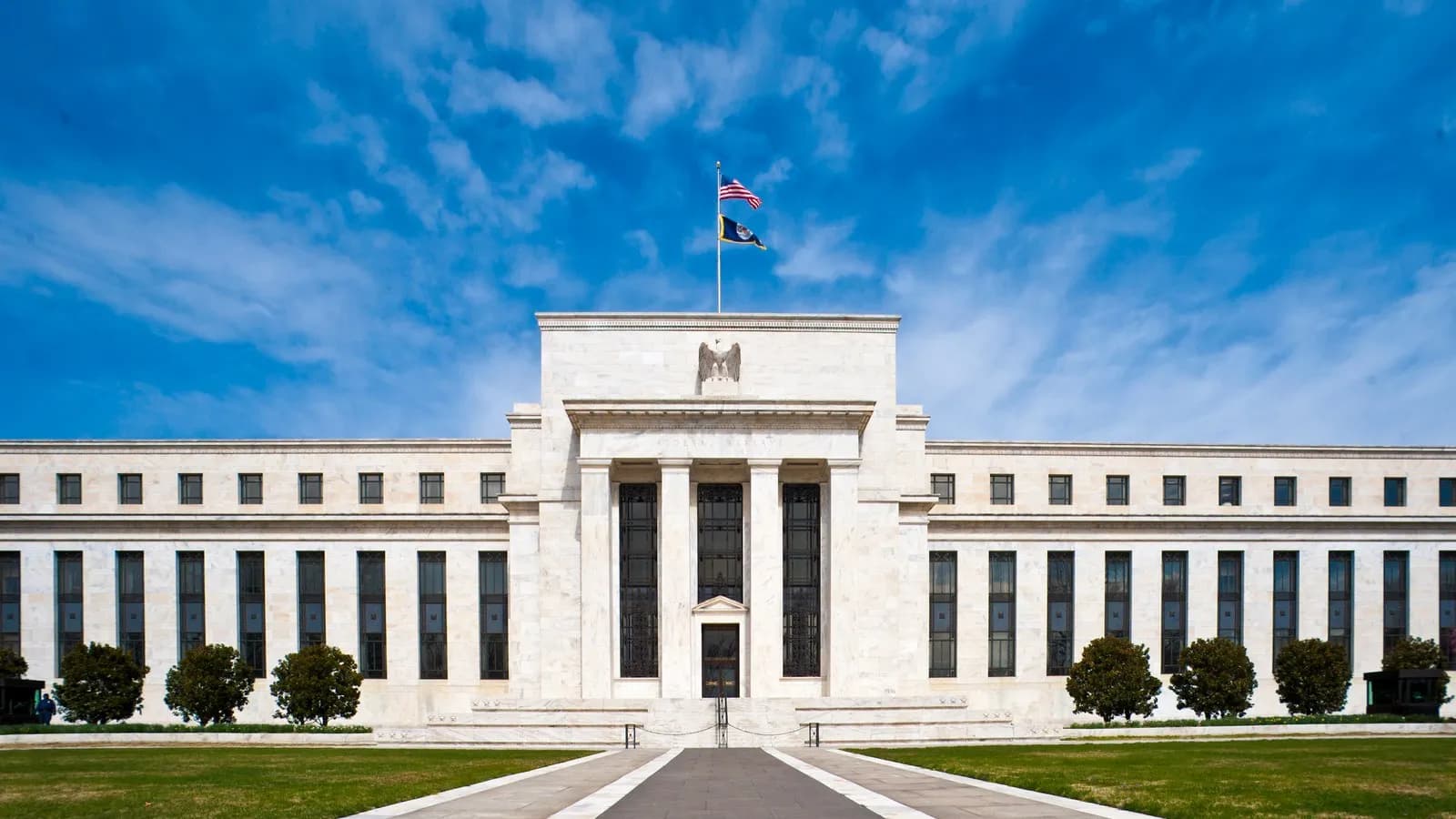
The unusual thing about the Federal Reserve meeting on 15 and 16 September is not how close it is. It is that the argument is about whether to raise rates.
For most of the past two years the question put to the Fed was when it would cut. Six months into an energy shock, with the target range sitting at 3.50 to 3.75 percent, the live question is a quarter point in the other direction.
What moved on Wednesday
Governor Christopher Waller said that recent trends suggest the United States is finally seeing some signs of disinflation, and that if the data holds over the following fortnight he would be inclined to support leaving the target range where it is.
Market implied odds on a rise fell roughly twelve points on the remark, to about 54.6 percent. That number is worth sitting with. After a governor has publicly leaned towards holding, the market still puts the decision at close to a coin toss.
That is not indecision on the market's part. It is an accurate reading of a committee that has told everyone its risks point one way.
The July meeting is the context
The Fed held in July, and three members dissented in favour of a rise.
The minutes of that meeting are unusually plain. Risks to the inflation forecast were seen as skewed to the upside. Participants pointed to higher energy and input costs stemming from the conflict in the Middle East. Several worried that after several years of inflation above two percent, continued elevated rates could begin to affect inflation expectations and the way wages and prices are set.
That last concern is the one central bankers lose sleep over, because it is the point at which an external price shock stops being external. A tanker problem is a supply problem. A tanker problem that changes what workers ask for and what firms charge is a monetary problem, and only one of those two is the Fed's to fix.
The case for raising
It rests on two things, and neither is really about the current inflation print.
The first is duration. Analysts at J.P. Morgan Wealth Management shifted this summer from expecting no change through 2026 to expecting a quarter point rise in September, and the reason they gave was that supply chains around the Strait of Hormuz have normalised more slowly than assumed. A shock priced as temporary that keeps not ending stops being temporary in the models.
The second is credibility. Holding in July against three dissents left a section of the market questioning the Fed's commitment to its target, which is precisely the kind of doubt that makes a later rise larger than an earlier one would have been.
The case for holding
The data is moving the Fed's way, and it has been for months.
Three month core inflation ran at 3.05 percent through July, down from 4.76 percent in February. That is not victory, since the target is two, but it is a clear direction of travel established during the worst of the energy disruption. Raising into a disinflation that is already underway risks tightening into a slowdown you caused.
There is also the plainer argument that interest rates do very little about the price of a barrel. The Fed cannot reopen a strait. It can only decide how much domestic demand to destroy in response to a foreign supply constraint, which is a poor trade unless expectations have genuinely started to slip.
What actually decides it
The August inflation figure, and after that the shipping data.
Waller conditioned his own position on the next two weeks of data, which makes the August print the single most consequential release of the month. A stronger than expected number puts a rise back on, whatever anyone said in early September.
Behind that sits the variable nobody at the Fed controls. Energy costs are the transmission channel here, and energy costs are currently a function of how many ships pass through one waterway. Our count of that traffic is in today's piece on the strait, and the earlier state of this debate is in our August report on the odds. The short version is that the most important input to American monetary policy this month is being set several thousand miles away by people who are not thinking about American monetary policy at all.
Published in The Outspoken Digest
Editorial desk
Outspoken Digest Markets DeskReports for The Outspoken Digest across Business, Crypto.
Newsletter
The Digest, in your inbox
One edition, sent when it is ready. No noise, and your address is never passed on.
Read Next
More Business →
Starbucks Says It Is Not Buying Chipotle, Ending a Four-Day Takeover Story and Costing Chipotle About 4 Percent
Oct 13, 2026/2 min read
Wall Street Ends Mixed Near Records as Chip Stocks Slide, Oil Climbs and Traders Await Wednesday's Inflation Report
Oct 13, 2026/2 min read

Robert Hall and Michael Woodford Win the Nobel Prize in Economics for Models That Steady Economies
Oct 12, 2026/2 min read

Nasdaq Falls 1.25% as the FT Puts OpenAI's Annualized Revenue Near $50 Billion, Not $70 Billion
Oct 9, 2026/2 min read