Gulf Architecture's Bold Decade: GCC Skylines Transform
Neom, Qiddiya, Red Sea Project. The GCC is building at a scale that rewrites the architectural conversation. These aren't buildings. They're competing visions for the future.
Wednesday, January 14, 2026/3 min read
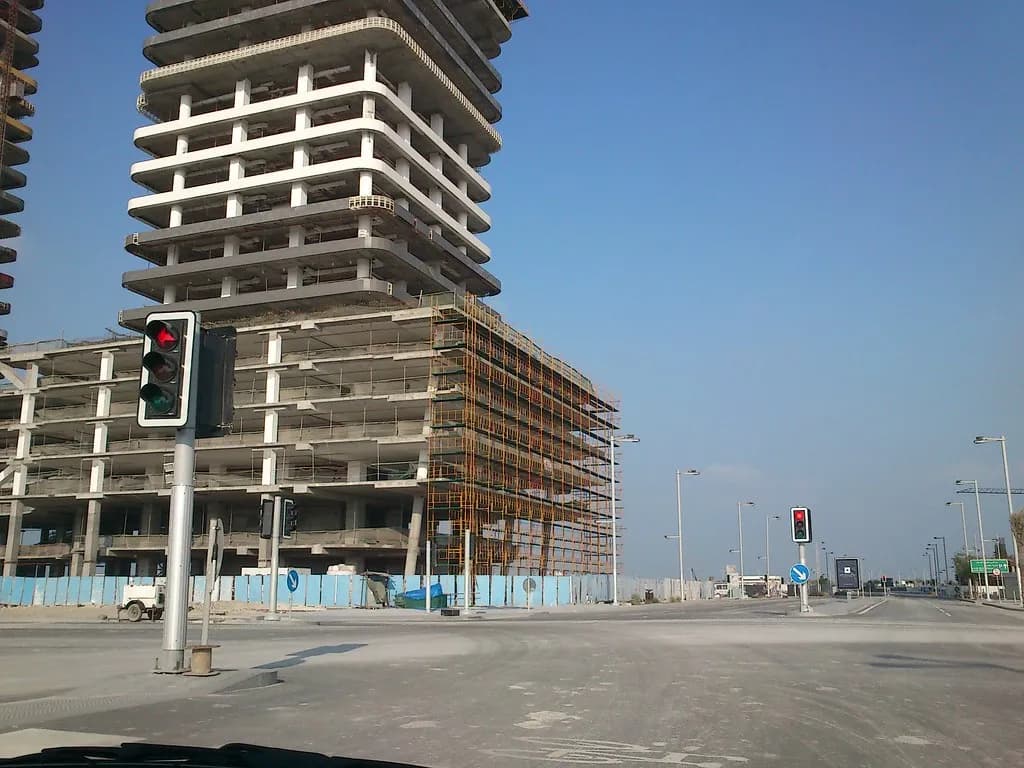
The architectural conversation has moved. For decades, starchitects built signature structures in established cities: New York, London, Tokyo. That's still happening, but the most ambitious projects now cluster in the Gulf Cooperation Council countries, where economic scale meets political will and budget constraints barely exist.
This isn't spectacle for spectacle's sake. The GCC is using architecture as a strategic tool for economic diversification, technological showcase, and geopolitical positioning. The buildings emerging across Saudi Arabia, the UAE, Qatar, and Bahrain represent genuine architectural innovation at unprecedented scale.
Neom: the half-mile skyscraper changes the game
Saudi Arabia's Neom project stands apart for its sheer ambition. Neom will feature skyscrapers up to 500 meters tall, with designers working on half-a-mile structures and towers exceeding 800 meters, surpassing the Burj Khalifa. These aren't aspirational numbers. Architects are legitimately designing structures that tall.
The engineering implications are staggering. Thermal expansion becomes a primary design factor when a building is over half a mile high. Wind load is not a secondary concern. Structural sway requires active management. These buildings will be solved engineering problems in ways current architecture hasn't required.
The project timeline stretches to 2035, but construction phases are already operational. When Neom's first towers open, they won't just be taller than anything built before. They'll operate under different physical rules.
Qiddiya and Red Sea: entertainment and tourism as architectural anchor
Saudi Arabia's diversification strategy hinges on tourism infrastructure. Qiddiya represents a $10 billion entertainment complex spanning 360,000 square meters, designed to accommodate over 600,000 residents upon completion in 2035, featuring theme parks, sports facilities, and cultural venues.
That scale is instructive. This isn't a theme park attached to a city. It's an entire city built around entertainment. That requires rethinking urban architecture from first principles: transportation networks, infrastructure capacity, crowd flow, climate control in outdoor spaces.
The Red Sea Project takes a different approach, emphasizing sustainability in its design. The $16 billion luxury tourism development features six ongoing developments valued at $4.677 billion along the coastline, emphasizing sustainability and renewable energy integration. Luxury tourism development in an environmentally sensitive region forced genuine innovation in sustainable resort architecture.
Lusail City and transportation as architectural philosophy
Qatar's Lusail City gained global attention as the host for the 2022 FIFA World Cup, but the architectural significance extends far beyond stadium design. Lusail City operates as a smart city with advanced infrastructure and technology integration, featuring the iconic Lusail Stadium as its centerpiece. The city itself is the architecture.
Smart city principles fundamentally change how buildings connect. Rather than isolated structures, modern GCC projects design integrated networks where transportation, utilities, and information systems connect at architectural scale.
Transportation infrastructure as architectural statement
The Bahrain Metro, a $9.31 billion transportation network expected to complete by 2030, and the Etihad Rail at $13.334 billion represent something overlooked in architectural discourse: infrastructure as architecture. These aren't utilitarian systems hiding under the ground. They're designed experiences.
The scale speaks to a fundamental commitment to regional integration. When a railway project costs $13 billion and connects multiple nations, its architectural design becomes a statement of regional ambition and technical capability.
What this means for global architecture
The GCC building wave forces architectural reckoning. These projects operate at scales that challenge existing design methodologies. The problems they solve in structural engineering, climate response, and urban integration will generate solutions that eventually filter into global practice.
It also represents a shift in architectural authority. For a century, architectural innovation clustered in Europe and North America. That conversation now includes the Gulf, where budget and political will align to build visions that Western cities debate but rarely execute.
Published in The Outspoken Digest
Newsletter
The Digest, in your inbox
One edition, sent when it is ready. No noise, and your address is never passed on.
Read Next
More Design →
Drew Henry Reset Courreges for Spring 2027 With a Pared-Back Debut at the Palais de Tokyo
Oct 1, 2026/3 min read

Choosing Light Bulbs: Lumens, Kelvin and Colour Rendering Explained, Room by Room
Sep 21, 2026/3 min read
The Bench With the Extra Armrest Is Not Being Thoughtful About Your Posture
Sep 2, 2026/4 min read