Your HbA1c Is an Average of Your Red Blood Cells, Which Is Why It Sometimes Lies
The test everyone treats as the verdict measures sugar stuck to haemoglobin over the life of a red cell. Anything that changes how long those cells live changes the result, and several of those conditions are common across this region.
Monday, July 13, 2026/4 min read
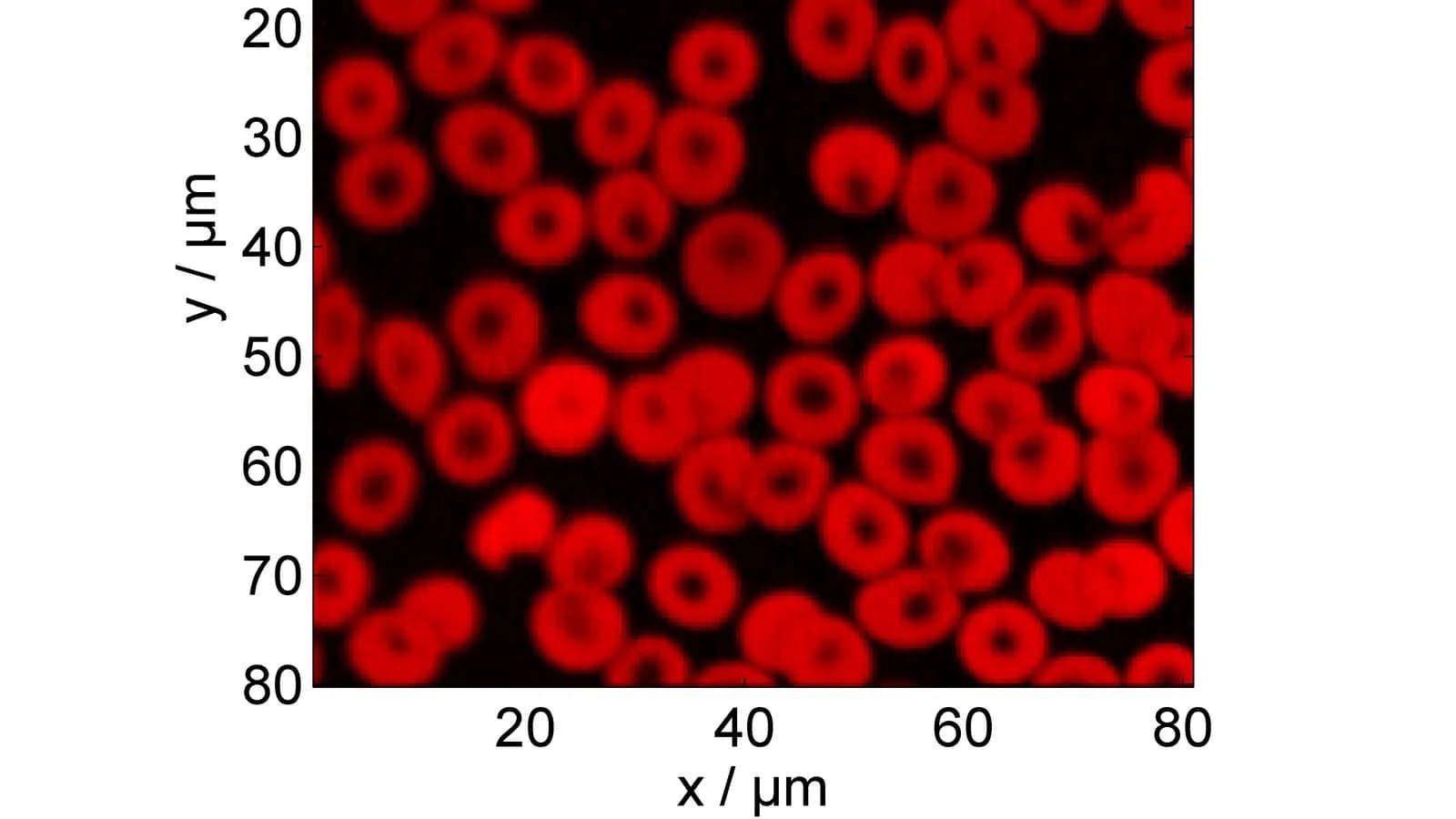
HbA1c has become the number that defines people. It sets the diagnosis, drives the medication decision, and in many clinics is the only figure discussed in a ten minute appointment. Patients describe themselves by it.
For most people, most of the time, it deserves that authority. But it is worth understanding what it physically measures, because once you do, the situations where it goes wrong stop being trivia and start being a list you should check yourself against.
What is HbA1c actually measuring?
Sugar stuck to haemoglobin, and nothing else.
Glucose in your blood attaches to the haemoglobin inside red blood cells. The reaction is slow and essentially permanent for the life of the cell, so the more glucose there has been, the higher the proportion of haemoglobin carrying it. HbA1c is that proportion.
A red blood cell lives around 120 days, so the test reflects roughly the previous two to three months. It is not evenly weighted across that period, which people rarely realise. The most recent few weeks contribute far more than the earliest ones, which is why a determined month before a clinic appointment does move the number, if less than the patient hopes and more than the doctor admits.
You will see it in two units. The older DCCT-aligned percentage, where 7 per cent is a common target, and the IFCC unit in mmol/mol, where the equivalent is 53. Same measurement, different scale.
When does HbA1c mislead?
Whenever something interferes with red blood cells or with the assay itself. There are two distinct failure modes and they are worth separating.
The cells live too long or too short. HbA1c assumes a normal 120-day lifespan. If cells are cleared early, they have less time to accumulate glucose and the result reads falsely low. If they survive longer than usual, it reads falsely high.
- Falsely low: haemolytic anaemia, recent significant blood loss, recent transfusion, pregnancy in the later stages, and treatment with erythropoietin, all of which put younger cells into circulation.
- Falsely high: iron deficiency anaemia and vitamin B12 deficiency, where cells hang around longer, and some cases of advanced kidney disease.
The haemoglobin itself is a different shape. This is the one with real regional weight. Haemoglobin variants including HbS, HbC, HbD and HbE, along with the thalassaemias, can interfere with certain HbA1c assay methods and produce results that are simply wrong rather than merely shifted.
Thalassaemia trait and sickle cell trait are not rare across the Gulf, the wider Middle East, the Mediterranean and South Asia. Neither is G6PD deficiency, which can shorten red cell survival. A test designed around a population where these are uncommon is being applied daily to populations where they are not.
How would you know if yours is unreliable?
The tell is disagreement between sources of information about the same thing.
If your home glucose readings or continuous monitor consistently suggest one story and your HbA1c reports another, the HbA1c is not automatically the winner. That mismatch is a clinical finding in itself and worth raising rather than explaining away.
The other tell is a known haematological condition or a family history of one. Anyone with thalassaemia trait, sickle cell trait, or a history of anaemia should establish whether their laboratory's assay method is affected, because some methods handle variants well and others do not. It is a question the laboratory can answer and the patient almost never thinks to ask.
What should be used instead?
Not instead. Alongside, and this is where the 2026 guidance helps.
The ADA Standards of Care for 2026 broadened continuous glucose monitoring considerably, recommending it for adults with type 2 diabetes even on non-insulin glucose-lowering therapies. That matters here for a reason beyond convenience: CGM measures glucose directly rather than inferring it from haemoglobin, so it sidesteps every failure mode described above.
It also produces information HbA1c structurally cannot. Time in range tells you what proportion of the day you spent between targets. Two people can share an HbA1c of 7.5 per cent when one is stable all day and the other is swinging between hypoglycaemia and high readings that average out. The average conceals the swings, and the lows are the part that puts people in hospital.
Where CGM is not available, fructosamine or glycated albumin measure a shorter window using proteins other than haemoglobin, which makes them useful precisely when haemoglobin is the problem.
Does this mean the test is unreliable?
No, and that is the wrong lesson to take.
For the large majority of people HbA1c is robust, cheap, does not require fasting, and predicts complications well. It earned its place. The point is narrower: it is an inference, not a direct measurement, and inferences have conditions attached.
If you belong to one of the groups above, say so, and ask whether your number should be interpreted differently. That is a two-sentence conversation, and the alternative is years of treatment decisions built on a figure that was never describing you. Our companion piece on what changed in diabetes technology this year covers what the alternatives now look like in practice.
Published in The Outspoken Digest
Editorial desk
Outspoken Digest Health DeskMedicine, public health and the research behind the headlines, read carefully.
Newsletter
The Digest, in your inbox
One edition, sent when it is ready. No noise, and your address is never passed on.
Read Next
More Health →
Kenya's Ebola Count Rises to Seven After Three Health Workers Who Treated the First Patient Test Positive
Oct 17, 2026/2 min read
BMJ Analysis Warns Fast-Growing Private Testosterone Prescribing Could Land on the NHS
Oct 14, 2026/2 min read
Cochrane Review Finds Medical Cannabis Has No Clear Benefit for Insomnia, With Weak Evidence Either Way
Oct 13, 2026/2 min read

Lancet Commission Names 17 Threats to Global Health Through 2100, With Obesity the Largest by Burden
Oct 12, 2026/2 min read