Nobody Ever Found the Study Behind Eight Glasses of Water a Day, Because There Is Not One
A physiologist went looking for the origin of the rule in 2002 and came back empty. What the reference intakes actually say, why food and coffee count, how much the number varies between people, and when in a Gulf summer it genuinely matters.
Sunday, September 6, 2026/4 min read
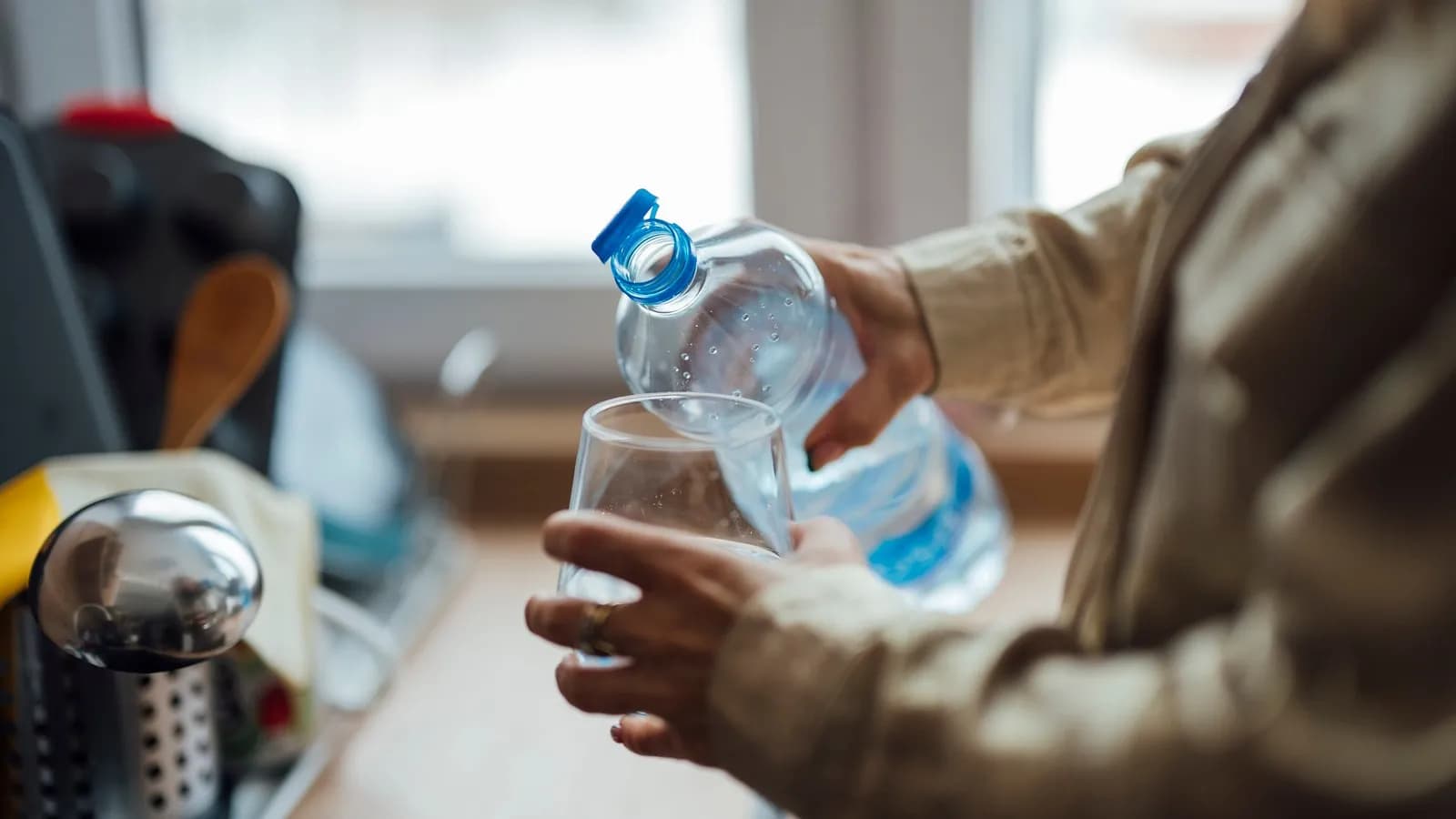
Drink eight glasses of water a day. Coffee does not count. If you are thirsty you are already dehydrated. Three of the most repeated pieces of health advice in circulation, and none of them survives contact with the literature. The truth about water is less quotable and considerably more reassuring.
The search for eight by eight
In 2002 Heinz Valtin, a kidney physiologist at Dartmouth Medical School, published a review in the American Journal of Physiology with the title: Drink at least eight glasses of water a day. Really? He had searched the electronic databases, the older printed literature and the memories of the nutritionists who specialised in thirst, looking for the scientific basis of the rule. He found none. No study supported it. The surveys of what healthy adults actually drank suggested such quantities were not needed, and the evidence that caffeinated drinks count towards fluid intake, rather than against it, was already clear. His conclusion was carefully limited to healthy adults in temperate climates leading sedentary lives, and he explicitly excluded hot climates and heavy exertion, where more is needed. Nobody has since produced the missing study.
What the reference intakes say
The figures most often quoted as the official answer come from the US National Academies' 2004 dietary reference intakes, which set an adequate intake for total water of about 2.7 litres a day for women and 3.7 litres for men. Two things about those numbers are routinely dropped when they are repeated. They are for total water, which includes the water in food, typically a fifth of the total, and the water in every drink including tea, coffee, milk and juice. And they are adequate intakes derived from what healthy populations were observed to consume, not a threshold below which harm occurs. The report itself said that healthy people regulate their water intake by thirst and that a single daily requirement could not be set.
Britain's NHS advice is six to eight cups or glasses of fluid a day, of any kind, with the more useful instruction that urine should be a pale yellow. That is the practical test, and it has the advantage of adjusting itself automatically to climate, exertion, body size and diet.
How much people actually vary
The reason no single number works was quantified in 2022 in a study in Science that measured water turnover directly, using isotope-labelled water, in more than five thousand people across twenty-three countries. Turnover ranged from about one litre a day to six. It was higher in men, in the young, in people with more lean mass, in hot and humid climates, in high altitude, in athletes and in pregnancy, and it varied with the season. Two healthy adults in the same city can have a genuine daily requirement that differs by a factor of two. A rule that gives them the same number is wrong for at least one of them.
The Gulf exception
Everything above applies to a temperate climate and an ordinary day. A Gulf summer is neither, and it is where Valtin's exclusion becomes the main point. A person walking outside at forty-five degrees can lose more than a litre of sweat an hour, and with it salt. Thirst lags behind losses at those rates, particularly in older people, in whom the thirst response is blunted, and in children, who do not notice. This is the one setting where drinking ahead of thirst is sound, and where what is drunk matters: plain water in large volumes without food or salt can, in prolonged exertion, dilute blood sodium dangerously, a condition called hyponatraemia that kills a handful of marathon runners and military recruits every year. Anyone sweating heavily for hours needs salt with the water, whether from food, an oral rehydration solution or a sports drink.
For the other eleven hours of the day, indoors in air conditioning, the temperate rules apply again. Our guide to what actually helps in extreme heat covers the practical side, and the piece on sleeping through a Gulf summer covers the night.
What holds up
- Thirst is a reliable guide for healthy adults in normal conditions. Being thirsty does not mean you are already harmed; it means the system is working.
- Coffee, tea and other drinks count towards fluid intake. The diuretic effect of caffeine is small and habituates.
- Food supplies a meaningful share of daily water, more so on a diet rich in fruit, vegetables and soup.
- Pale yellow urine is the test. Dark means drink more; clear all day means you can stop.
- Older adults, small children, people who are ill and anyone working in the heat are the exceptions who should drink to a schedule rather than to thirst.
There is no evidence that drinking beyond thirst improves skin, clears toxins, sharpens thinking or speeds weight loss in people who are not dehydrated. The kidneys of a healthy adult handle surplus water within an hour or two, which is the fate of most of the eighth glass.
Published in The Outspoken Digest
Editorial desk
Outspoken Digest Health DeskMedicine, public health and the research behind the headlines, read carefully.
Newsletter
The Digest, in your inbox
One edition, sent when it is ready. No noise, and your address is never passed on.
Read Next
More Health →
BMJ Analysis Warns Fast-Growing Private Testosterone Prescribing Could Land on the NHS
Oct 14, 2026/2 min read
Cochrane Review Finds Medical Cannabis Has No Clear Benefit for Insomnia, With Weak Evidence Either Way
Oct 13, 2026/2 min read

Lancet Commission Names 17 Threats to Global Health Through 2100, With Obesity the Largest by Burden
Oct 12, 2026/2 min read