Two Rocket Launchers on a Small Island, and Oil Moved Three Per Cent
American forces hit Iranian launchers on Larak after the Guard was seen preparing to fire rockets carrying sea mines into the Strait of Hormuz. Iran answered at bases in Jordan and the UAE. It is the first exchange in over a month.
Outspoken Digest Business Desk
Tuesday, September 1, 2026/3 min read
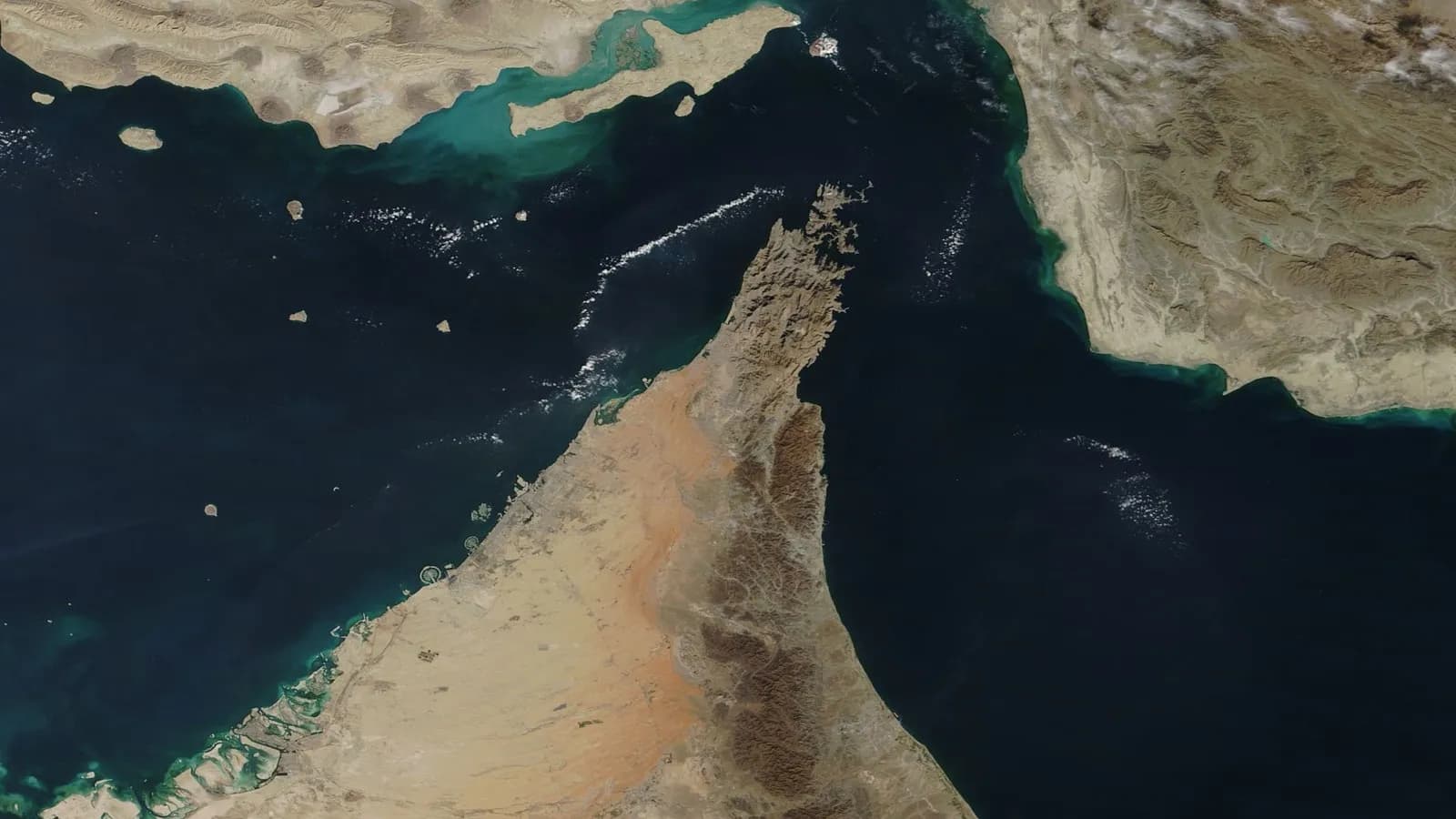
United States forces struck two Iranian rocket launchers on Larak Island on Sunday. Iran fired at American military targets in Jordan and the United Arab Emirates in reply. Oil rose almost 3 per cent and American stock indexes fell on Monday.
It is the first publicly acknowledged exchange between the two since late July, and it happened days after President Trump said the Strait of Hormuz was clear of mines.
Why two launchers matter
Because of what was reportedly on them.
The stated reason for the strike is that the Islamic Revolutionary Guard Corps was observed preparing to fire rockets carrying sea mines into the strait. That is a different category of act from firing at a ship. A mine is not aimed. It is left behind, it does not care whose hull finds it, and it keeps working long after whoever laid it has stopped wanting it to.
Larak is a small island inside the strait that the Guard uses to watch traffic through it. Two launchers on Larak is a modest military target and a large economic one, and the gap between those two descriptions is the whole story of this conflict.
The three per cent is the part to read carefully
A move of that size on a day like this is not a supply story. Nothing stopped flowing on Sunday.
It is a risk premium: the market repricing the probability that something will stop flowing later. Roughly a fifth of the world's seaborne oil passes through a channel whose navigable width is a couple of miles in each direction, and there is no route around it for the Gulf producers who use it.
Mines are the specific fear because of what they do to insurance rather than what they do to ships. A single confirmed mine in the channel raises war risk premiums for every hull behind it, and rates can make a voyage uneconomic without a single vessel being hit. We set out how that mechanism has already reshaped the trade in six months of the Hormuz war economy.
The declaration that aged badly
Days before this, the strait was declared free of mines.
Whether or not that was accurate at the moment it was said, it created a standard the situation is now being measured against, and Sunday's stated justification was a preparation to lay more. Announcing that a waterway is clear is a claim with a short shelf life when the party laying mines is still in position to lay them.
For anyone reading this as a market participant rather than a citizen, the operational point is that clearance statements are not the same as clearance, and shipping insurers have been pricing that distinction for months.
Why the retaliation went to Jordan and the UAE
Because that is where the American forces are, and this is the part of the pattern that most concerns everyone living in the Gulf.
An exchange between Washington and Tehran does not stay between Washington and Tehran. It lands on the territory of states that host American bases, are not party to the quarrel, and have spent two years trying to stay out of it while keeping their airspace open and their economies running. We wrote about what happens to that airspace when it goes wrong in the twelve days the Gulf was closed.
The practical consequence for residents and travellers is not usually damage. It is disruption: rerouting, cancellations, insurance exclusions and the hours of uncertainty that follow any incident near a hub. Our guidance on booking through this is in the piece on planning around disruption, and none of it has changed.
What to watch
Not the rhetoric. Three specific things.
Whether any mine is actually confirmed in the channel, because that is the trigger for insurance rather than for headlines. Whether traffic volumes through the strait fall in the shipping data over the next fortnight, which is the only honest measure of whether commerce believes the risk. And whether the exchange stops here, as the July one did, or continues.
The oil price will tell you what traders think will happen. The traffic data will tell you what shipowners are actually doing. When those two disagree, the second one is usually right, because it is made of decisions rather than opinions.
Published in The Outspoken Digest
Editorial desk
Outspoken Digest Business DeskCompanies, markets and the money moving through the region.
Newsletter
The Digest, in your inbox
One edition, sent when it is ready. No noise, and your address is never passed on.
Read Next
More Business →
Nasdaq Falls 1.25% as the FT Puts OpenAI's Annualized Revenue Near $50 Billion, Not $70 Billion
Oct 9, 2026/2 min read
Treasury Yields Hit a 24-Year High, Waller Says More Fed Rises Are Coming, and the 30-Year Auction Clears at 5.618%
Oct 9, 2026/2 min read

Samsung's 107 Trillion Won Quarter Outearned Nvidia, and Its Shares Fell 2.4 Per Cent Anyway
Oct 8, 2026/3 min read

McKesson and CD&R Agree to Take Option Care Health Private in a $5.8 Billion Home Infusion Deal
Oct 7, 2026/2 min read