Nitrox Buys You Bottom Time and Costs You Depth, and It Will Not Make You Less Tired
Enriched air extends no-decompression limits at recreational depths by reducing the nitrogen you take on. It also imposes a hard ceiling on how deep you can take it, and the claim about post-dive fatigue has never held up.
Saturday, September 5, 2026/3 min read
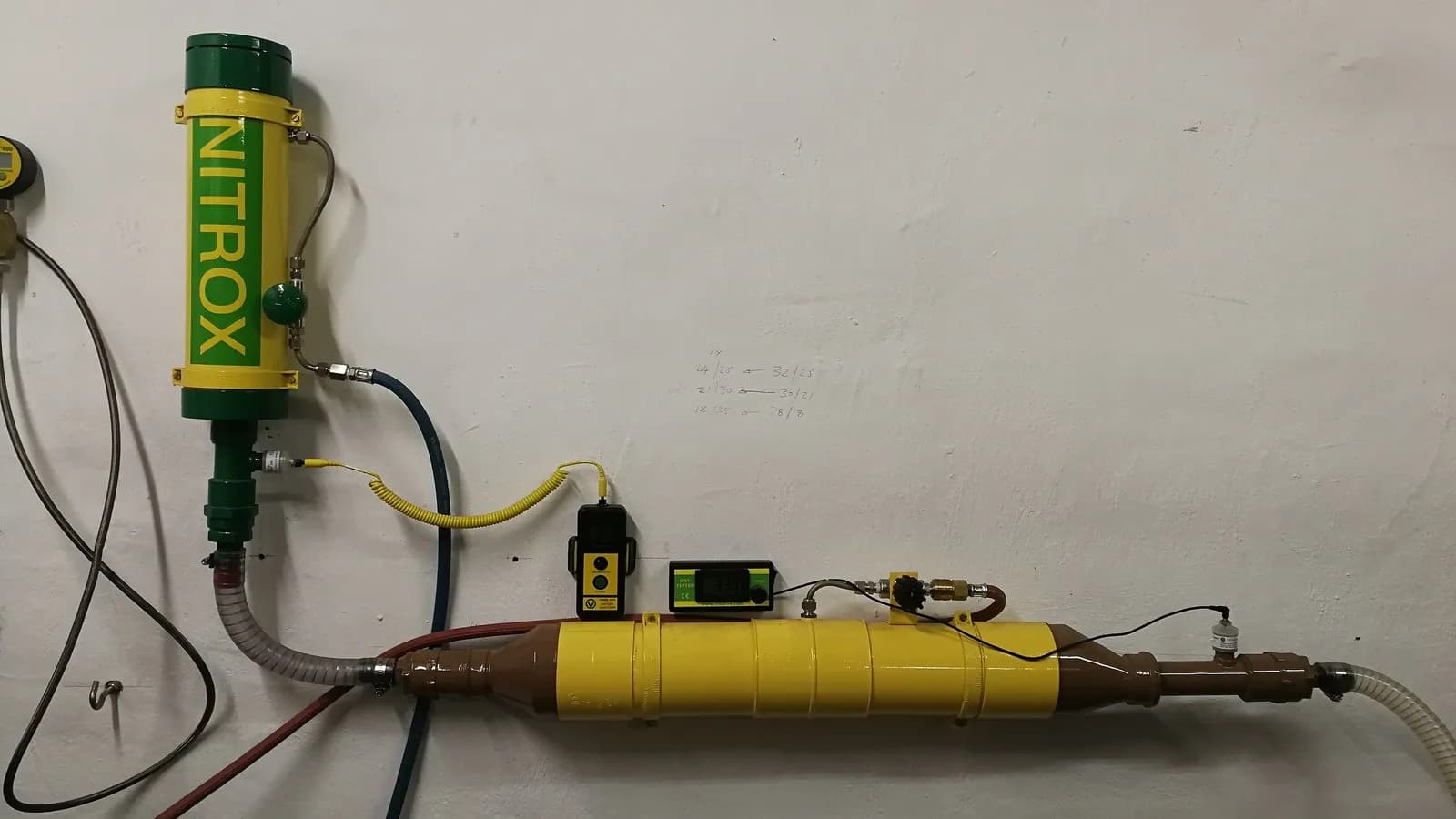
Enriched air nitrox is the most widely taken speciality course in recreational diving and the one most often explained badly. It is worth being precise, because the trade it offers is genuinely useful and the way it is usually sold is not.
What it is
Air is about 21 percent oxygen and 79 percent nitrogen. Nitrox is any breathing gas with more oxygen than that, and in recreational diving it almost always means EAN32 or EAN36, which are 32 and 36 percent oxygen respectively.
Less nitrogen in the mix means you absorb less nitrogen at a given depth for a given time. Since no-decompression limits are set by nitrogen loading, that buys you longer.
What it actually buys, in numbers
At 18 metres on air, a typical recreational table or computer gives somewhere around 55 to 60 minutes of no-decompression time. On EAN32 at the same depth, that extends to well over an hour, often past the point where your gas supply runs out first.
That last clause is the honest framing. On a single cylinder at moderate depth, nitrox frequently converts a dive limited by nitrogen into a dive limited by air consumption, which for most divers means the benefit is real but smaller than the marketing implies. Where it pays properly is on repetitive dives: a second and third dive of the day, where the accumulated nitrogen from earlier dives is what is squeezing your limits.
Liveaboards are where nitrox earns its money, which is why they sell it.
What it costs you
Depth. Absolutely and non-negotiably.
Oxygen becomes toxic to the central nervous system at raised partial pressure, and the practical consequence is a convulsion underwater, which is very likely to be fatal because a convulsing diver loses the regulator. The recreational working limit is a partial pressure of 1.4 bar, with 1.6 reserved as a contingency ceiling rather than a plan.
Run the arithmetic and you get a maximum operating depth. On EAN32 at 1.4 bar that is about 33 metres. On EAN36 it is about 28 metres. On air the equivalent figure is around 57 metres, which is deeper than any recreational limit, which is why nobody talks about MOD on air.
So the richer the mix, the more bottom time and the shallower the ceiling. EAN36 on a 30 metre wall is not a conservative choice. It is an accident.
The fatigue claim
Ask ten nitrox divers why they use it and several will say they feel less tired afterwards.
This has been tested and has not held up. Blinded comparisons, where divers did not know which gas they were breathing, have not shown the effect. The likeliest explanations are expectation, and the fact that people diving nitrox are frequently also diving more conservative profiles.
None of which means those divers are lying about how they feel. It means the gas is probably not the reason, and it is a poor basis for choosing one.
The two rules that get people hurt
Analyse your own gas, personally, every time. Not the fill station's word, not the label on the tank. You put the analyser on the valve yourself, you read the oxygen percentage, and you write it in the log with the maximum operating depth you have calculated from it. A mislabelled cylinder is the classic nitrox fatality, and the analysis takes thirty seconds.
Set your computer to the gas you are actually breathing. A computer left on air while you breathe EAN32 will simply be conservative. A computer set to EAN36 while you breathe air will tell you that you have far more no-decompression time than you do, and that is the dangerous direction of the same mistake.
What it does not do
It does not extend your air supply. You breathe the same volume per minute regardless of what is in the cylinder.
It does not meaningfully reduce narcosis. Oxygen is narcotic too, and the small reduction in nitrogen fraction does not buy the clarity people expect at depth. Our piece on narcosis and judgment covers what actually helps.
And it does not make a dive safe. It changes one variable in a plan that still has to account for gas, depth, ascent rate and the rest, as our piece on the physics of mixed gas sets out at greater depth.
Published in The Outspoken Digest
Editorial desk
Outspoken Digest Diving DeskCovers freediving, recreational and technical diving, dive medicine and the incidents the sport learns from.
Newsletter
The Digest, in your inbox
One edition, sent when it is ready. No noise, and your address is never passed on.
Read Next
More Diving →
Bleached Corals Recovered After Touching a Healthy Clone, Stanford Lab Study Finds
Oct 15, 2026/2 min read
Black Swallower Filmed With a Hugely Swollen Belly 1,259 Metres Down Off Trinidad and Tobago
Oct 13, 2026/2 min read
Playing Recordings of a Healthy Reef Drew More Coral and Fish Larvae to Artificial Structures Off Hawaii
Oct 9, 2026/3 min read

Blacktip Sharks Can Hear a Sound From Nearly 250 Feet Away and Swim Straight Toward or Away From It
Oct 1, 2026/2 min read