Retatrutide's Third Receptor Is the Hormone That Raises Blood Sugar. Adding It On Purpose Is the Whole Idea
Semaglutide hits one receptor and tirzepatide hits two. The third one retatrutide adds is glucagon, which does the opposite of what a diabetes drug is supposed to do. It is also where the liver results and the safety questions both come from.
Thursday, August 20, 2026/4 min read

Here is something that sounds like a mistake. Retatrutide is being developed for obesity and type 2 diabetes, and one of the three receptors it deliberately switches on is the glucagon receptor. Glucagon is the hormone your body releases to raise blood sugar. It is the hormone in the emergency injection you give someone whose glucose has crashed.
A drug for high blood sugar that activates the hormone for low blood sugar is either a serious error or the most interesting design decision in metabolic medicine this decade. It is the second one, and understanding why explains both the results everyone is excited about and the risk nobody should skip past.
What does the glucagon receptor actually do here?
Glucagon has a reputation built entirely on one job, and it turns out to have several others.
Yes, it tells the liver to release glucose. But the liver is dense with glucagon receptors, and activating them also drives the liver to mobilise and burn its own fat. Glucagon signalling raises energy expenditure and promotes lipolysis, the breakdown of stored fat, even at rest.
So the design bet is this: pair glucagon with two hormones that lower blood sugar hard, and you can keep the fat-burning and the energy expenditure while the GLP-1 and GIP arms more than cancel out the glucose-raising effect. You get the accelerator and the brake, and you tune the ratio.
That ratio is not even. Published potency figures put retatrutide as most potent at the GIP receptor, with a half-maximal effective concentration around 0.0643 nanomolar, less potent at GLP-1 at about 0.775, and least potent at glucagon at about 5.79. The glucagon arm is deliberately the quietest of the three. It is a seasoning, not the main ingredient, and the entire safety case depends on that being the right dose of it.
What happened to liver fat?
This is where the glucagon arm earned its place, and the numbers are genuinely striking.
In phase 2 work led by Arun Sanyal, the 12 mg dose produced a relative reduction in liver fat of around 86 per cent at 48 weeks. Ninety-three per cent of participants on that dose reached normal liver fat, defined as under 5 per cent, against none on placebo.
Put that in context. Metabolic dysfunction-associated steatotic liver disease, the condition formerly called non-alcoholic fatty liver disease, affects a very large share of people with type 2 diabetes and has been remarkably resistant to drug treatment. A compound that clears liver fat in most people who take it is not a weight loss side story. In a region where fatty liver tracks the same curve as diabetes prevalence across the Gulf, it may end up mattering more than the scale does.
The 2026 ADA Standards of Care already moved GLP-1 therapy to first line for adults with type 2 diabetes and liver fibrosis. A drug with a dedicated hepatic mechanism is arriving into a guideline that has just been rewritten in its favour.
So why is anyone worried?
Because the same receptor that produces the liver result also carries most of the heart rate rise, and that is not a footnote.
All the incretin drugs raise heart rate somewhat. The glucagon arm appears to carry the bulk of it in this one. Increased heart rate is a recognised adverse effect, and reviewers have flagged occasional mild arrhythmias alongside it. There have also been transient rises in the liver enzyme ALT, which is an odd thing to see in a drug that is dramatically improving the liver, and it is exactly the sort of signal that needs years rather than months to interpret.
The reassuring data point so far comes from TRIUMPH-3, which enrolled 1,949 adults with severe obesity and established cardiovascular disease. Its five-component major adverse cardiac event analysis produced a hazard ratio of 0.82, with 44 events on retatrutide against 52 on placebo. That is a point estimate favouring the drug in exactly the population most vulnerable to a heart rate problem.
It is not proof. Those are small event numbers and the trial was not powered as a cardiovascular outcomes study. But if the glucagon arm were doing meaningful cardiac harm, this is the trial where you would have expected to see the first hint of it, and the hint went the other way.
Is a third receptor always better than two?
No, and this is where the marketing will get ahead of the evidence.
More receptors means more weight lost, on the current numbers. It also means more of everything else. Discontinuation because of adverse events in TRIUMPH-3 ran between 9.8 and 13.5 per cent depending on dose, against 4.8 per cent on placebo. Roughly one in eight people on the higher dose stopped because they could not tolerate it.
There is also a question the trials have not really answered. Reviewers have pointed out that studies assessing the quality of the weight loss, rather than the quantity, are lacking. When someone loses a quarter of their body mass, how much of that was fat and how much was muscle and bone? We have written about what the evidence shows on lean mass with the existing drugs, and the honest position is that this is understudied for the whole class and least studied for the newest member of it.
When can anyone actually get it?
Not soon, and this is the part that gets lost.
Retatrutide is not approved for any indication anywhere. Eli Lilly has said it plans to submit a Biologics License Application to the FDA in the first quarter of 2027. Approval, if it comes, follows a review after that.
Which means every vial currently being sold under this name is not the drug from these trials, a gap we examine in a companion piece on what the grey market is actually shipping. The mechanism described here is elegant. Nothing about that elegance survives being made by someone unaccountable and injected without supervision.
Published in The Outspoken Digest
Editorial desk
Outspoken Digest Health DeskMedicine, public health and the research behind the headlines, read carefully.
Newsletter
The Digest, in your inbox
One edition, sent when it is ready. No noise, and your address is never passed on.
Read Next
More Health →
Kenya's Ebola Count Rises to Seven After Three Health Workers Who Treated the First Patient Test Positive
Oct 17, 2026/2 min read
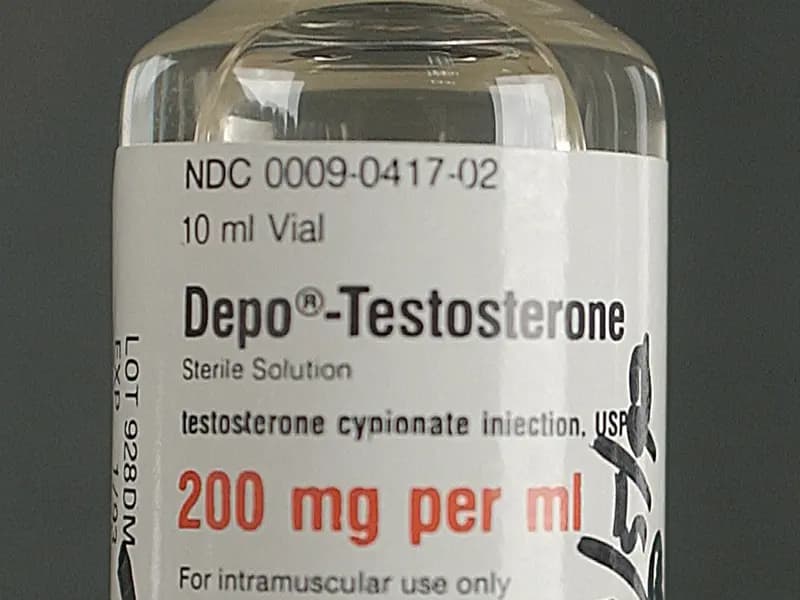
BMJ Analysis Warns Fast-Growing Private Testosterone Prescribing Could Land on the NHS
Oct 14, 2026/2 min read

Cochrane Review Finds Medical Cannabis Has No Clear Benefit for Insomnia, With Weak Evidence Either Way
Oct 13, 2026/2 min read

Lancet Commission Names 17 Threats to Global Health Through 2100, With Obesity the Largest by Burden
Oct 12, 2026/2 min read