Retatrutide Is Not Approved in Any Country. It Is Also for Sale in Most of Them
Lilly does not expect to file for approval until the first quarter of 2027. Search the drug's name today and you can have a vial by the weekend. The gap between those two facts is where the harm happens.
Thursday, August 20, 2026/4 min read
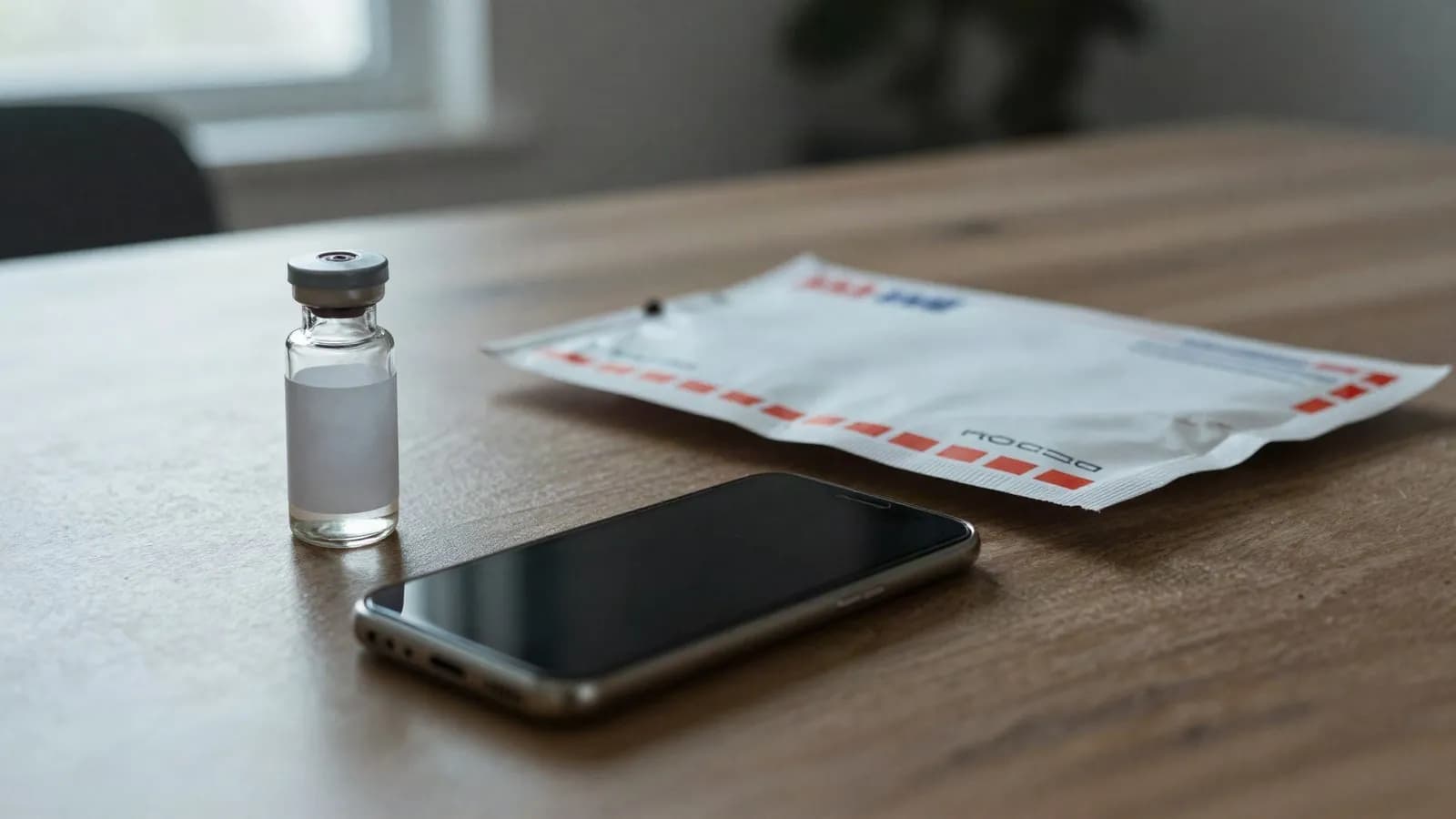
Retatrutide has not been approved by any regulator on earth. Eli Lilly has said it plans to submit a Biologics License Application to the FDA in the first quarter of 2027, and a review takes time after that. No pharmacy anywhere can legally dispense it as a medicine today.
It is, nonetheless, extremely easy to buy. It has been for two years.
The usual response to this is a warning about counterfeits, which is fair and which we have covered in our reporting on what testing actually finds in grey-market vials. But counterfeiting is not the most interesting problem here, because it assumes the danger is getting the wrong molecule. Assume for a moment you get the right one. That is when this becomes genuinely instructive.
Why is an unapproved drug so easy to buy?
Through a phrase doing enormous legal work: research use only.
Sellers label the vial as a research chemical, not for human consumption, and that sentence is what keeps them outside the medicines framework. It is a jurisdictional shield, not a description of the product and certainly not a quality standard. Nobody buying retatrutide from a website is conducting research, and everybody in the transaction knows it.
The result is a market with the vocabulary of pharmacology and none of its obligations. No batch release testing you can audit. No stability data for a peptide that has probably crossed several borders at uncertain temperatures. No adverse event reporting, so nothing that goes wrong for you ever teaches anybody anything. No recall mechanism, because there is nobody to issue one.
But it passed phase 3. Is that not good enough?
This is the argument that persuades intelligent people, and it is the one worth taking apart properly.
The trials were genuinely impressive. TRIUMPH-1 produced around 30.3 per cent weight loss at 104 weeks. TRIUMPH-3, in 1,949 adults with severe obesity and established cardiovascular disease, produced 22.6 per cent at the top dose. Those are the largest figures any obesity drug has posted.
Now look at what else those trials contained, because the drug was never the whole intervention.
- A titration schedule. Participants did not start at 12 mg. Doses were escalated slowly and deliberately, because the gastrointestinal effects are dose-related and starting high is how you make someone violently ill.
- Clinicians who could stop it. In TRIUMPH-3, between 9.8 and 13.5 per cent of participants discontinued because of adverse events, against 4.8 per cent on placebo. Roughly one in eight people could not tolerate this drug with a medical team, a titration plan and someone to call.
- Monitoring for the things that do not hurt. The glucagon arm carries a heart rate rise, and there have been transient elevations in the liver enzyme ALT. Neither of those announces itself. You find them because somebody ordered the test.
- Exclusion criteria. Trials screen people out. A website does not ask whether you have a personal or family history of medullary thyroid carcinoma, pancreatitis, or an eating disorder.
So the honest summary is that phase 3 demonstrated the safety and efficacy of a supervised protocol, and the vial reproduces exactly one component of it. Citing the trial result to justify unsupervised use is quoting the outcome of an experiment while discarding its method.
What are the specific risks of self-administering this one?
Some are shared with the whole class and some are particular to a triple agonist.
The gastrointestinal effects are not trivial at trial doses under supervision. In TRIUMPH-2, diarrhoea affected between 27.4 and 33.6 per cent of participants against 13.2 per cent on placebo, nausea between 13.7 and 28.0 per cent, and constipation between 14.0 and 16.8 per cent. Someone who guesses their own dose upward, as people reliably do when results are the goal, is walking into the top of that range without the titration that made it survivable.
Then there is dosing arithmetic. These vials arrive as lyophilised powder requiring reconstitution, and the user calculates their own concentration. A decimal error here is not like taking two paracetamol instead of one. It is a tenfold overdose of a drug with a six-day half-life, which means you cannot undo it by waiting an hour.
And there is the problem of not knowing what normal feels like. Sustained vomiting on a GLP-1 class drug can mean the dose is too high, or it can be pancreatitis. Telling those apart requires a clinician and usually a blood test. It is the kind of distinction that people making their own medical decisions at 2 am tend to resolve optimistically.
Does the coming approval change any of this?
It changes it completely, and that is the argument for waiting rather than for abstaining forever.
Approval brings a manufacturer with legal liability, a known dose in a device designed to deliver it, a label listing who should not take it, pharmacovigilance that notices patterns across thousands of people, and a prescriber who has met you. None of those are bureaucratic obstacles between you and the molecule. They are most of what makes the molecule useful.
The mechanism itself is genuinely elegant, and we have set out why the glucagon arm is doing something no approved drug currently does. That is a reason to be interested in 2027. It is not a reason to buy a vial from an unaccountable seller in 2026.
For anyone whose actual problem is weight or glycaemic control today, the unglamorous answer is that several drugs in this class are already approved, already studied and already prescribable. They are less exciting. They also come with somebody whose job it is to notice if something goes wrong.
Published in The Outspoken Digest
Editorial desk
Outspoken Digest Health DeskMedicine, public health and the research behind the headlines, read carefully.
Newsletter
The Digest, in your inbox
One edition, sent when it is ready. No noise, and your address is never passed on.
Read Next
More Health →
Kenya's Ebola Count Rises to Seven After Three Health Workers Who Treated the First Patient Test Positive
Oct 17, 2026/2 min read
BMJ Analysis Warns Fast-Growing Private Testosterone Prescribing Could Land on the NHS
Oct 14, 2026/2 min read

Cochrane Review Finds Medical Cannabis Has No Clear Benefit for Insomnia, With Weak Evidence Either Way
Oct 13, 2026/2 min read

Lancet Commission Names 17 Threats to Global Health Through 2100, With Obesity the Largest by Burden
Oct 12, 2026/2 min read