One Receptor, Two, or Three: Comparing Semaglutide, Tirzepatide and Retatrutide
Ozempic, Mounjaro and the drug that has not arrived yet are not three versions of the same thing. They hit different receptors, produce different results, and suit different people.
Tuesday, August 11, 2026/3 min read
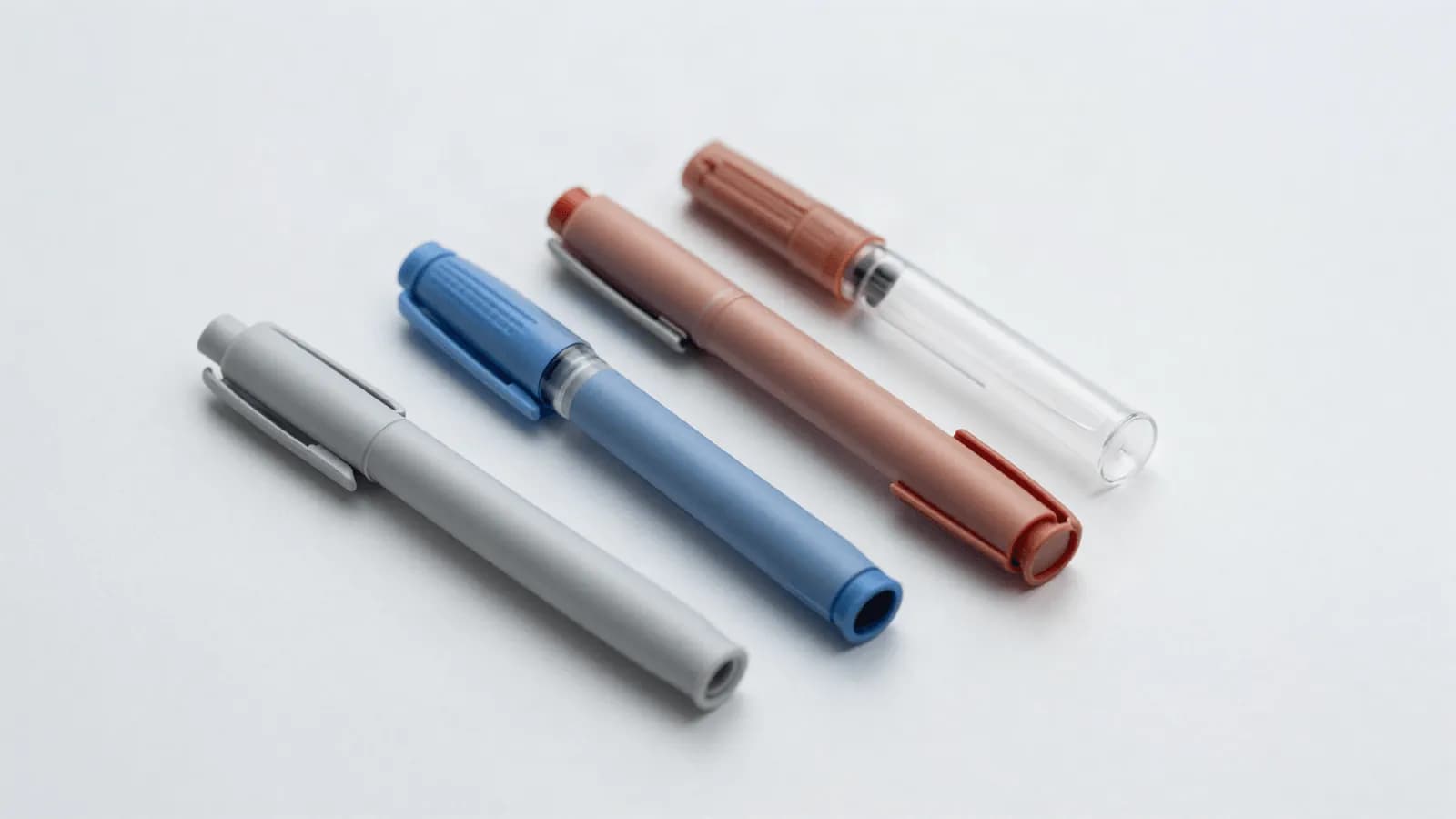
The brand names have travelled further than the pharmacology. Most people know Ozempic and Mounjaro as competing weight loss injections, and increasingly hear retatrutide described as the next one. In fact the three differ in a specific and consequential way: how many hormone receptors each engages.
The mechanism, briefly
All three are peptides that imitate gut hormones released after eating. Those hormones slow gastric emptying, signal fullness to the brain, and improve insulin response. The differences are in which hormones.
Semaglutide: GLP-1 only
Sold as Ozempic for type 2 diabetes and Wegovy for obesity. One receptor, the most studied of the three, with the longest safety record and the largest completed cardiovascular outcomes evidence. Trial weight loss at obesity doses sits around the 15 per cent mark.
Tirzepatide: GLP-1 and GIP
Sold as Mounjaro for diabetes and Zepbound for obesity. Adding GIP produced consistently larger weight loss than semaglutide in head-to-head work, generally in the 20 to 22 per cent range at higher doses. We covered the dual agonist story in our piece on tirzepatide.
Retatrutide: GLP-1, GIP and glucagon
Not approved. Phase 3 complete or nearly so, with a filing expected in early 2027. Adds glucagon receptor activity, which appears to raise energy expenditure and act on liver fat, and has produced the largest numbers in the class, around 25 per cent at 80 weeks and up to 30 per cent at 104 weeks in escalated patients. Detail in our summary of the TRIUMPH results.
The comparison that matters
More receptors has so far meant more weight loss. That is the clean part of the story, and it is the part that gets reported.
The messier part is that more receptors also means more physiological systems being altered at once, and the long-term consequences of that are established only for the oldest drug in the group. Semaglutide has years of post-approval data across millions of patients. Retatrutide has trial data.
This is why the newest drug is not automatically the best drug for a given person. The relevant questions are usually not about maximum efficacy.
- Do you have type 2 diabetes? Different approvals, different reimbursement, sometimes different dosing.
- Do you have established cardiovascular disease? Semaglutide has the deepest outcomes evidence here.
- How well do you tolerate it? The most effective drug you cannot stay on is not the most effective drug.
- Can you actually get it, and afford it, continuously? The single most decisive factor in practice.
Side effects are shared, not distinct
The profile is broadly common to the class: nausea, vomiting, diarrhoea, constipation, and in a small number of cases pancreatitis and gallbladder problems. Gastrointestinal effects are dose-limiting for all three and are why every one of them is escalated slowly.
Contraindications also run across the class, including a personal or family history of medullary thyroid carcinoma. The full picture, including who should not take these drugs at all, is in our guide to side effects and exclusions.
One point deserves emphasis with retatrutide specifically. Glucagon receptor activity is a genuinely new element at scale, and while trial safety has been acceptable, it is the component with the least real-world exposure behind it.
The muscle question applies to all three
Large weight loss is not purely fat loss. The proportion of lean mass lost matters, particularly for people over sixty, and it is the reason resistance training and adequate protein are not optional extras alongside these drugs. The evidence is summarised in what these drugs do to lean mass.
The larger the weight loss, the more this matters, which means the newest and most effective drug carries the largest version of the problem.
Cost, which decides most of it
In the United States the list price of a month of Mounjaro runs above 1,100 dollars and Ozempic above 1,000, with self-pay and manufacturer programmes bringing the real figure down substantially for some patients. Gulf pricing follows its own logic, covered in our regional access piece.
Since stopping brings the weight back, the relevant number is not the price of a month. It is the price of a decade, and that arithmetic is what actually determines who is treated.
The short version
Semaglutide is the most proven. Tirzepatide is currently the most effective approved option. Retatrutide is the most effective full stop, and is not available.
None of that resolves what any individual should take, which depends on their conditions, their tolerance, their insurance and their prescriber. What it does establish is that this is now a class with real internal differences, and treating the three as interchangeable brand names misses the point entirely.
Published in The Outspoken Digest
Editorial desk
Outspoken Digest Health DeskMedicine, public health and the research behind the headlines, read carefully.
Newsletter
The Digest, in your inbox
One edition, sent when it is ready. No noise, and your address is never passed on.
Read Next
More Health →
Cochrane Review Finds Medical Cannabis Has No Clear Benefit for Insomnia, With Weak Evidence Either Way
Oct 13, 2026/2 min read

Lancet Commission Names 17 Threats to Global Health Through 2100, With Obesity the Largest by Burden
Oct 12, 2026/2 min read


FDA Approves Pritelivir for Herpes Lesions That Resist Standard Antivirals in Immunocompromised Adults
Oct 10, 2026/2 min read