Slow Breathing Made People Take More Risks, Not Fewer, in a Berlin Brain-Scan Study
Forty-one volunteers who breathed with a long exhale accepted riskier bets for money in an MRI scanner, and those whose heart rhythm responded most showed the strongest reward activity in the brain. A neat result, a small sample, a lesson about calm.
Tuesday, September 8, 2026/3 min read
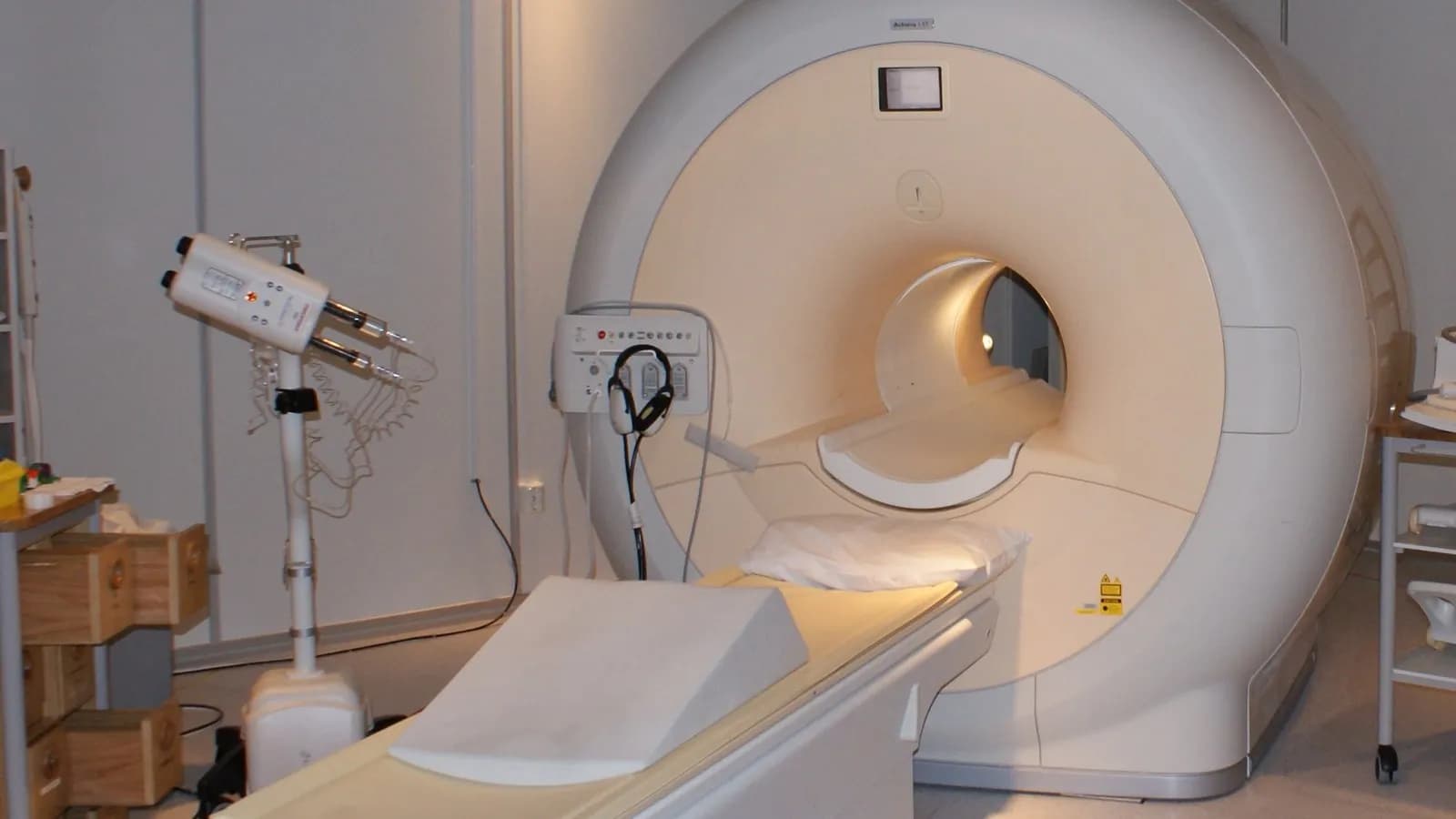
The advice to take a deep breath before a big decision assumes that calm makes you careful. A study published in Neuron this month suggests it may do the opposite. Volunteers who slowed their breathing and stretched out the exhale became more willing to gamble, and the mechanism the researchers traced runs through the heart to the parts of the brain that weigh reward.
The experiment
The work comes from the German Institute of Human Nutrition in Potsdam and the Charité university hospital in Berlin, led by Wenhao Huang with Soyoung Q Park as senior author, with colleagues at the Freie Universität and the German Naval Institute of Maritime Medicine. Forty-one healthy adults, average age about twenty-five, lay in a functional MRI scanner and made a series of choices between a safe outcome and a gamble with a possible monetary gain or loss. Throughout, they followed a visual breathing guide. In one condition they breathed at their own natural pace; in the other they slowed down and extended the exhalation, breathing in for two counts and out for eight. Breathing, heart activity, skin conductance and pupil size were recorded alongside the brain scans.
Under the long-exhale condition participants accepted the risky option significantly more often. The change was driven by heightened sensitivity to the potential reward rather than by reduced concern about the potential loss; the volunteers were not becoming reckless about downside so much as more drawn to upside. Those whose heart rate variability rose most during slow breathing, a marker of the parasympathetic branch of the nervous system taking over, also showed the strongest reward-related activity in two regions: the ventromedial prefrontal cortex, which assigns value to options, and the precuneus, which is involved in integrating bodily signals into self-referential thought. The authors' interpretation is that the interplay between breathing and cardiac rhythm makes the brain more receptive to rewards.
What to make of it
It is a well-designed study and a small one. Forty-one young, healthy volunteers making laboratory bets in a scanner is a long way from a trader on a desk or a driver on a motorway, and the authors say so, noting that future work will need to test broader populations. The finding also cuts against a good deal of the folk wisdom sold with breathing practices, which promise composure and imply prudence. What the data shows is composure without prudence: the body relaxes, the threat system quietens, and the reward system, no longer competing with anxiety for attention, gets louder.
That is not necessarily bad. Anxiety makes people avoid choices they would benefit from taking, and a technique that restores appetite for a reasonable risk is useful to someone who freezes. It is a reason to be precise about what slow breathing is for. It is a tool for reducing arousal. It is not a tool for improving judgement, and the two are not the same thing, a distinction that matters for anyone using it before a negotiation, a trade or a difficult conversation.
The paper is one of a small number of controlled studies of what slow breathing actually does inside the body, as opposed to what it is claimed to do. Our review of that evidence, including the blood pressure data and the limits of the trials behind it, is in the piece on pranayama and the research; the broader question of what meditative practice can and cannot be shown to deliver is in our piece on meditation's benefits and harms. This study adds a genuinely new finding to that file, and a caution: when you feel calmer after a long exhale, you may also feel more like saying yes. Decide whether that is what you wanted before you breathe.
Published in The Outspoken Digest
Editorial desk
Outspoken Digest Health DeskMedicine, public health and the research behind the headlines, read carefully.
Newsletter
The Digest, in your inbox
One edition, sent when it is ready. No noise, and your address is never passed on.
Read Next
More Health →
Kenya's Ebola Count Rises to Seven After Three Health Workers Who Treated the First Patient Test Positive
Oct 17, 2026/2 min read
BMJ Analysis Warns Fast-Growing Private Testosterone Prescribing Could Land on the NHS
Oct 14, 2026/2 min read
Cochrane Review Finds Medical Cannabis Has No Clear Benefit for Insomnia, With Weak Evidence Either Way
Oct 13, 2026/2 min read

Lancet Commission Names 17 Threats to Global Health Through 2100, With Obesity the Largest by Burden
Oct 12, 2026/2 min read