Slow Design Is Killing the Flat Pack Refresh Cycle
Handmade ceramics, woven blinds and vintage frames are displacing furniture bought to last three years. Designers say the grey rental box interior is finally over.
Tuesday, August 4, 2026/3 min read
For fifteen years the default interior was disposable by design. Buy the grey sofa, keep it three years, replace it when it sags, photograph the result against a white wall.
Designers are now describing the end of that cycle, and the replacement is not another look. It is a different relationship with the objects.
What slow design actually means
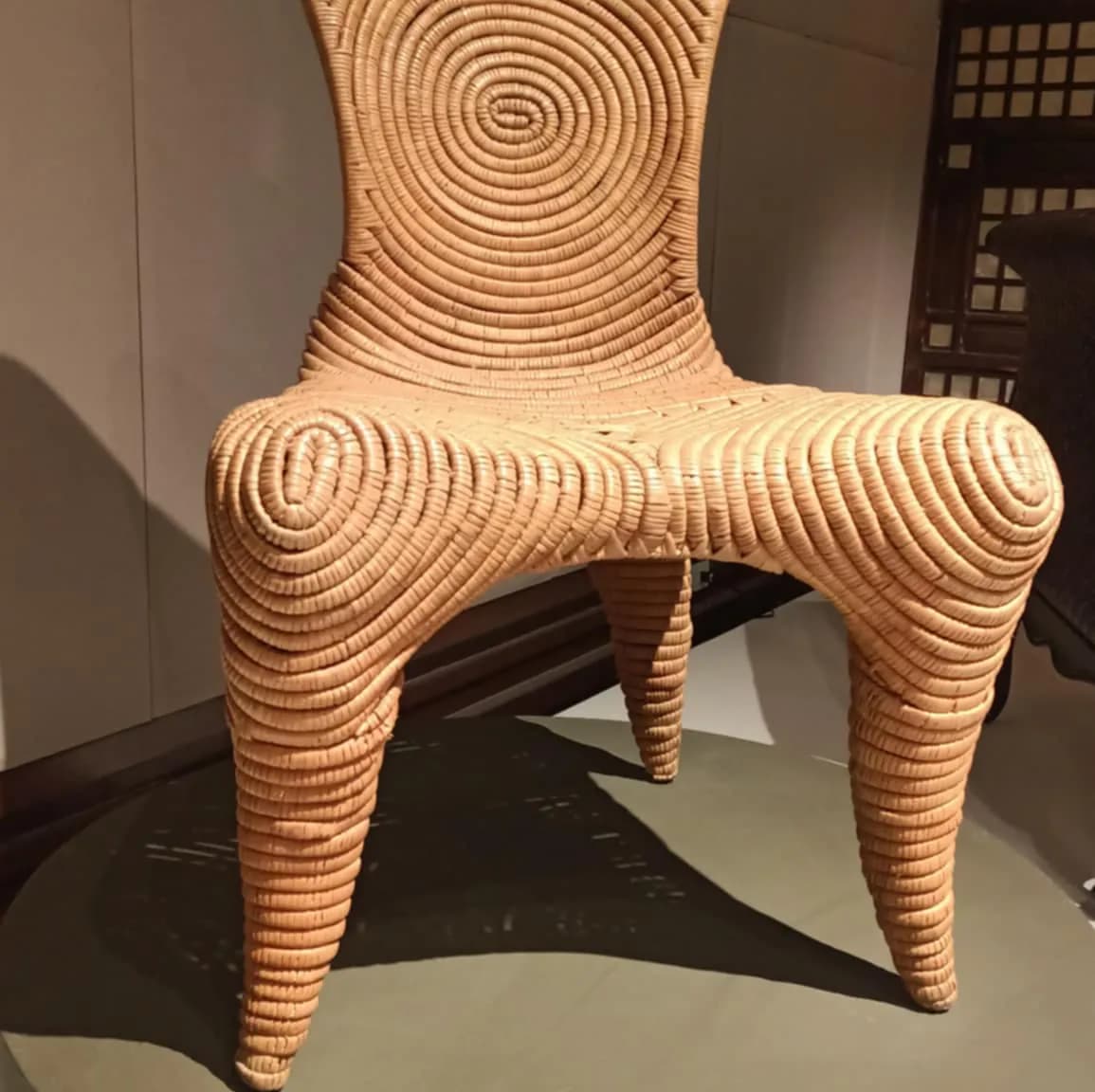
The term covers a straightforward preference: fewer things, made by identifiable people, kept longer. Handmade ceramics, woven blinds, vintage frames, pieces with some evidence of a hand in them.
The contrast is with fast furniture, which is priced to be replaced rather than repaired. A chair that costs less than its own delivery charge is not built to be reupholstered, and nobody expects it to be.
Reporting from Forbes places this among the defining directions of the year, alongside a broader move away from stark minimalism toward layered rooms and natural materials.
The grey is going
The clearest casualty is millennial grey. What is arriving in its place is being called modern heritage: contemporary comfort with some historical character, rather than a showroom reproduced in a rental flat.
Maximalism is returning too, though with an edit. Homes and Gardens describes the year in terms of personality, pattern and patina, which is a more precise summary than maximalism suggests. The point is curation, not accumulation.
The distinction matters. Buying more objects to look less minimal is just fast furniture with a different silhouette.
Why now
Three pressures arrived together.
Cost is the obvious one. When money is tight, replacing a sofa every three years stops looking like taste and starts looking like waste, and a repairable expensive chair beats four cheap ones over a decade.
Environmental awareness is the second, since furniture is bulky, hard to recycle and heavy to ship. The third is simple fatigue. A decade of identical interiors optimised for photographs produced rooms that were pleasant to look at and slightly anonymous to live in.
The obvious objection
Slow design is easier to admire than to afford. Handmade ceramics and artisanal joinery cost more up front, and telling someone furnishing a first flat on a deposit to buy fewer, better things is advice with a price tag attached.
The honest version of the trend acknowledges that secondhand is the entry point. Vintage frames and inherited furniture are the affordable route into the same idea, and they carry the patina the look is chasing anyway.
Why grey took over in the first place
Millennial grey was not a failure of imagination so much as a rational response to circumstances. A generation renting rather than owning, moving frequently, and often needing to return a property to neutral condition had strong reasons to avoid commitment in a colour.
Grey also photographs consistently under almost any lighting, which mattered enormously during the decade when interiors were shared online at volume. It was the safest possible choice, and safety at scale produces uniformity.
What changed is partly that people stopped moving quite so often, and partly that the aesthetic became so ubiquitous that it stopped signalling taste and started signalling default.
The repair problem
Slow design's real test is whether the supporting infrastructure exists, and mostly it does not. Buying a chair intended to last thirty years assumes somebody will reupholster it in year fifteen, and the trades that do that work have thinned out considerably.
The same applies to appliances and to anything with adhesive rather than mechanical joints. A piece can be beautifully made and still be unrepairable if it was assembled in a way that cannot be reversed.
This is where the trend either becomes substantial or stays decorative. Buying handmade ceramics is easy and pleasant. Rebuilding a repair economy is neither, and it is the part that would actually reduce what gets thrown away.
Secondhand is doing the heavy lifting
The most consequential part of this shift is not artisanal production, which remains small, but the normalisation of buying used.
Vintage furniture carries the patina the aesthetic wants, costs less than new, and diverts something from disposal. It is the rare case where the cheapest option and the most sustainable one are the same object.
The constraint is availability and effort. Secondhand requires searching, waiting and collecting, which is precisely the friction that made flat pack retail dominant in the first place.
What to watch next
Watch whether the big volume retailers adopt the language without the substance, because the fastest way to neutralise slow design is to mass produce a distressed finish and call it heritage.
The test is repairability. If a piece can be fixed, it belongs to the trend. If it can only be replaced, it is the old cycle wearing better marketing.
Published in The Outspoken Digest
Newsletter
The Digest, in your inbox
One edition, sent when it is ready. No noise, and your address is never passed on.
Read Next
More Design →
Jaguar Type 01 Arrives as a 1,030hp Electric Grand Tourer With No Rear Window and the Concept's Look Intact
Oct 13, 2026/2 min read

Drew Henry Reset Courreges for Spring 2027 With a Pared-Back Debut at the Palais de Tokyo
Oct 1, 2026/3 min read
Choosing Light Bulbs: Lumens, Kelvin and Colour Rendering Explained, Room by Room
Sep 21, 2026/3 min read