Four Months After Its Founder Died, Nizam al-Tayyibat Is Bigger. That Is the Part Worth Studying.
Diaa al-Awady died on 19 April. Egypt banned his content on 3 May. The system spread faster afterwards. What that reveals about religious vocabulary, distrust of doctors and the cost of a health panic is more useful than another round of the argument.
Saturday, August 22, 2026/5 min read
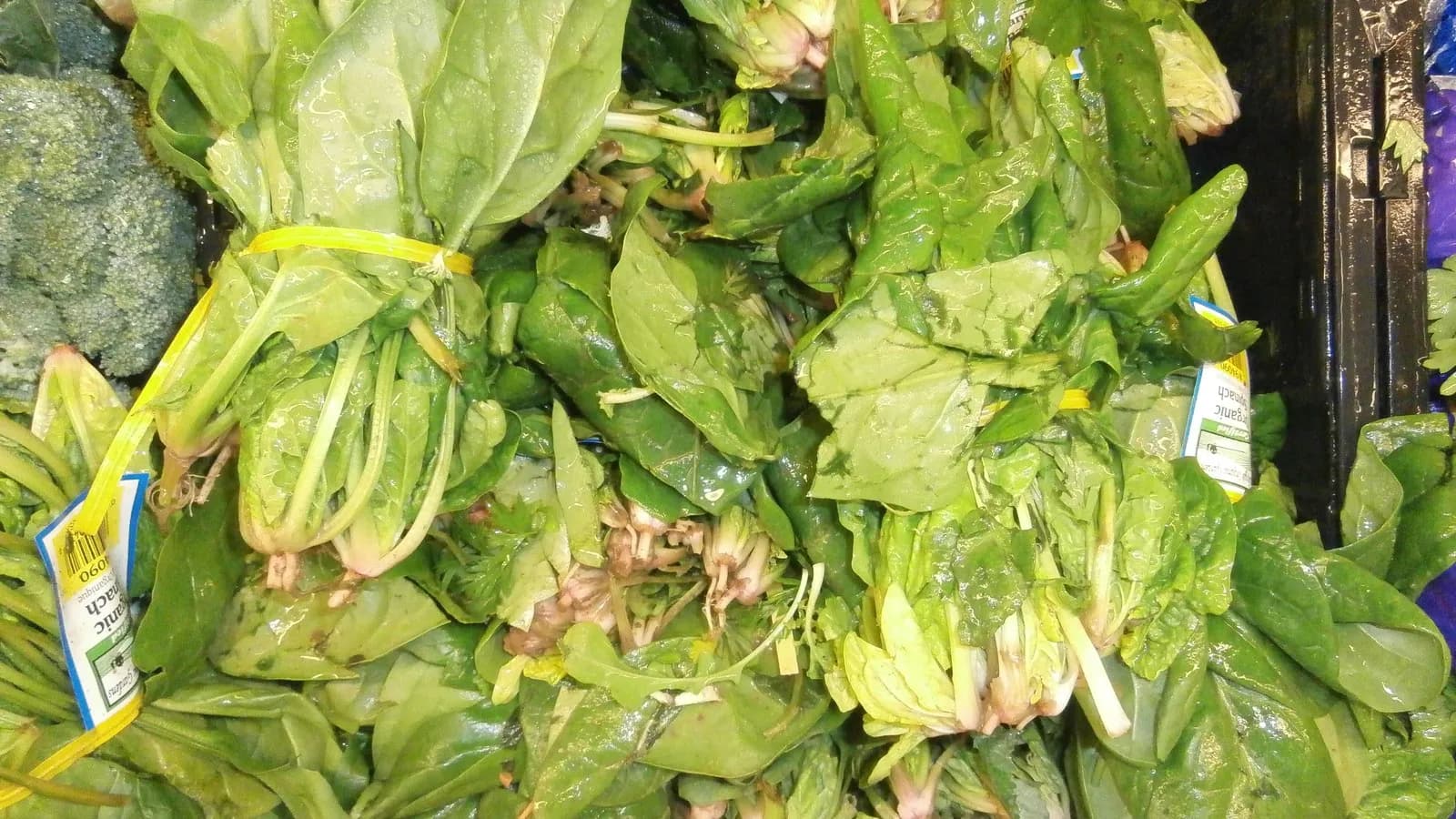
The usual shape of a health craze is a spike and a collapse. Someone makes a claim, the claim spreads, the evidence catches up, and the thing fades into the archive of diets people used to follow.
Nizam al-Tayyibat has not done that. Its founder was struck off the Egyptian medical register in March, died on 19 April at 47, and had all his content banned from Egyptian media on 3 May as harmful to public health. By June, Arabic health coverage was reporting that the system had spread further after his death than before it.
That is the interesting fact, and it is a fact about society rather than about nutrition.
Where does the system actually stand?
Widely followed, formally prohibited in one country, and unresolved everywhere else.
Diaa al-Awady was an Egyptian physician specialising in anaesthesia, intensive care and pain management. The Egyptian Medical Syndicate removed his membership in March 2026, citing the dissemination of misleading and scientifically unproven medical information through social media, and describing it as a danger to citizens' health. He died the following month in the United Arab Emirates. Egypt's foreign ministry said the death was natural with no criminal suspicion.
On 3 May, Egyptian authorities banned media circulation of his dietary content outright. The system continued to spread through private groups, reposted video, and translated material, which is roughly what we anticipated when we asked in June whether a diet can be banned from the internet. Four months later, the answer is available rather than theoretical.
Why did prohibition make it stronger?
Because the ban confirmed the story the system already told about itself.
The central claim of Tayyibat was never only dietary. It was that established medicine is compromised, that treatment exists to sustain the pharmaceutical business rather than to cure, and that a suppressed simple answer is available. A state instructing the media not to carry the material is, inside that frame, not a correction. It is the prediction coming true.
This is the structural trap in every regulatory response to health claims. The instrument available to a government is silencing, and silencing is the one action that a persecution narrative can absorb as evidence.
What did the religious vocabulary do?
More work than any of the nutritional claims, and it is the most consequential thing the episode leaves behind.
The system is built on two Quranic words. Tayyibat means the good and wholesome. Khaba'ith means the foul. Dr Taib Hamdi, a Moroccan physician and health policy researcher, has made the sharpest observation about this: the terminology creates a moral and spiritual framework in which disagreeing with a food list starts to feel like disagreeing with a religious value rather than a debatable protocol.
That reframing is very hard to undo. A nutritionist arguing that leafy greens are beneficial is making an empirical claim. A follower hearing it inside the tayyibat frame may receive it as an argument about what is pure. The two people are not having the same conversation, which is a large part of why, as we noted earlier, the two camps never converged.
Hamdi identifies two further drivers worth naming. The system functions partly as a food protest against economic conditions people are already unhappy with, which is why it flourished in a period of visible price pressure on eggs and poultry. And it trades on genuine disappointment with medical institutions, offering something fast and cheap in place of something slow and expensive.
Why does it survive its own failures?
Because the design places every failure on the follower.
Egyptian outlets have carried a series of accounts from families. In one, reported by Masrawy in April, a lupus patient stopped corticosteroid treatment abruptly. Her recorded blood counts, described by Professor Abdel-Qawi Moghazi, a rheumatology professor at Kasr al-Aini, fell from a white cell count around 4,000 and platelets of 154,000 to a white cell count near 300 and platelets around 7,000. He called stopping that class of drug suddenly a medical disaster, because it requires gradual tapering under supervision. In another account, a kidney patient whose enzyme readings had been stable for years deteriorated to the point of ongoing dialysis.
These are testimonial accounts carried in the press rather than findings from a completed inquiry, and they should be read that way. What is consistent across them is the response the families describe receiving when they reported deterioration: a question about what the patient had eaten. Cheese. Courgettes. Something.
That is the mechanism. If the system works, the system is vindicated. If it fails, the follower cheated. A claim built that way cannot be contradicted by any outcome, which is exactly what makes it unfalsifiable and therefore unscientific, whatever else it is. The most dangerous expression of it, the advice that led people to stop insulin, is covered separately in our account of how that turned into emergencies.
Has the medical establishment changed tactics?
Yes, and this is the most encouraging development of the summer.
In July, Professor Mohamed Ali Ezz El-Arab, professor emeritus and founder of the Liver Tumour Unit at Egypt's National Liver Institute, published a detailed reading of the system that neither mocked it nor banned it. He conceded what it gets right: reducing ultra-processed food is genuinely associated with lower risk of obesity, diabetes and heart disease, it aligns with World Health Organization guidance, and limiting processed meat is supported by the international cancer agency's classification.
Then he took the exclusions one at a time. There is no basis for removing leafy vegetables from the diet of healthy adults, against WHO advice to eat at least 400 grams of fruit and vegetables daily, and against evidence on folate, vitamin K and the vascular effects of dietary nitrates. There is no high-quality evidence for a blanket exclusion of dairy. Modern meta-analyses do not support excluding eggs for healthy people. Guidance recommends moderating poultry, not eliminating it.
Conceding the strong part of an opponent's case before dismantling the weak part is the only approach that has ever moved people who feel condescended to, and it is the approach we took in taking the system's better arguments seriously.
What has the hype actually cost?
Three things, in ascending order of how long they will last.
Individual harm, concentrated among people with chronic conditions who stopped supervised treatment. This is the immediate cost, and it is the smallest number of people.
Damaged consultations. Physicians across the region now spend part of their appointments negotiating with a food list. Every patient who arrives having already decided that prescriptions are a business model makes the next consultation harder, including for doctors who never heard of any of this.
A proven playbook. The episode demonstrated that a credentialed doctor, sacred vocabulary, a simple food rule and a grievance about institutions can reach millions, outlast a professional striking-off, survive a state ban, and grow after the founder's death. Nothing about that combination was specific to this man or this list. The next one will not need to invent it.
The practical defence is not a better ban. It is the habit of asking, before adopting any regimen, what evidence would have to appear for its advocates to change their minds. That question is set out in full in our guide to judging a diet claim, and it is the one thing the tayyibat frame has no answer to.
Published in The Outspoken Digest
Editorial
Outspoken Digest EditorialThe Digest's own desk: the pieces that do not sit in one section.
Newsletter
The Digest, in your inbox
One edition, sent when it is ready. No noise, and your address is never passed on.
Read Next
More Latest Trends →
France Lines Up an Extra 200,000 Tonnes of Gulf Diesel a Month as Macron Tours the Gulf
Oct 21, 2026/2 min read

More Than 250,000 Have Fled Yemen's Fighting Since July as a Houthi Missile Strike Kills Dozens of Recruits
Oct 21, 2026/2 min read

King Charles Hosts Oman's Sultan at Windsor and Praises Muscat's Role in Reopening Hormuz
Oct 21, 2026/2 min read

NATO Sends More Patrol Planes to the Black Sea After a Run of Drone Strikes on Merchant Ships
Oct 21, 2026/2 min read