Traditional Emirati Food: What It Is, and Why You Rarely See It
A cuisine built by pearl divers, date farmers and traders across the Indian Ocean. The spicing came by dhow, the technique came from scarcity, and almost none of it is served in restaurants.
Monday, August 10, 2026/3 min read
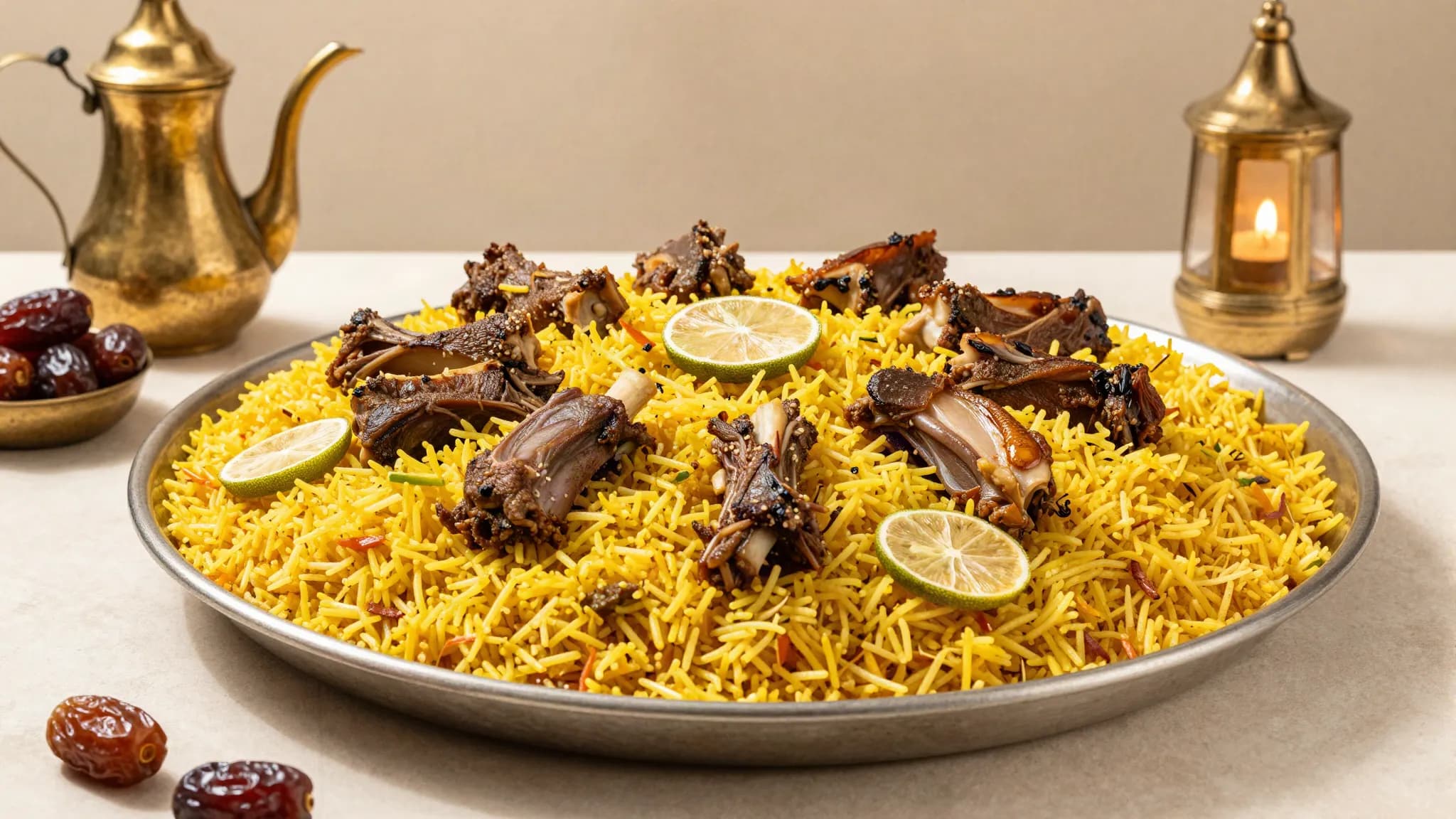
Visitors to the Emirates eat extremely well and frequently leave without encountering Emirati food once. The restaurant landscape is Lebanese, Indian, Iranian, Filipino, Japanese and everything else, because that is who lives here. Emirati cooking stayed largely domestic.
Which is a pity, because it is a distinctive cuisine with a clear logic, and the logic is written into the geography.
Where the flavours came from
Three influences, in order of weight.
The Indian Ocean trade. Dhows ran between the Gulf, the Malabar coast, Zanzibar and Basra for centuries, and they carried spice. Cardamom, cinnamon, cloves, turmeric, saffron and black lime arrived that way, which is why Emirati food tastes closer to a mild Indian or Persian dish than to Levantine cooking.
Scarcity. Before oil this was a hard place to feed a family. The cuisine reflects it: dishes that stretch a small amount of meat across a lot of grain, that use every part of an animal, and that rely on preservation. Dried fish, dried limes, dates, ghee.
The sea and the date palm. Fish and dates were the two reliable local foods, and both appear constantly.
The spice mixes to know
Bezar is the house blend: cumin, coriander, turmeric, cinnamon, black pepper and often dried rose or fennel. Every family's is slightly different and it goes into most savoury dishes.
Loomi, dried black lime, is the flavour that most distinguishes Gulf cooking from its neighbours. Limes boiled in salt water and dried in the sun until hard and hollow, then pierced and dropped whole into a pot. They give a sour, smoky, slightly fermented bitterness that nothing else replicates.
The dishes
Machboos
The national dish in practice. Rice cooked in a spiced broth with meat, chicken or fish, dried lime and bezar, until the grains take on the colour and the flavour of the pot. Related to Indian biryani and Iraqi quzi but distinct from both, cooked in one pot rather than layered.
Harees
Wheat and meat cooked for hours then beaten until the two are indistinguishable, finished with ghee. Ramadan and wedding food, and one of the oldest dishes in the region. The beating is the technique and it cannot be rushed: the full method is here.
Thareed
A rich stew of lamb or chicken with vegetables, poured over thin rigag bread so the bread collapses into it. Often called the Emirati lasagne, which undersells it. Our version is here.
Madrouba
Literally beaten. Rice cooked far past done with chicken and milk until it becomes a thick savoury porridge, then beaten smooth. Comfort food and invalid food: the recipe is here.
Salona
The everyday stew, tomato-based with vegetables and whatever protein is around, sharpened with dried lime. This is what a normal weeknight actually looks like.
Balaleet
The one that surprises people. Sweet vermicelli with cardamom, saffron and rose water, topped with a plain savoury omelette. Breakfast. The sweet and savoury combination is the point rather than an accident.
Bread and sides
Rigag is the paper-thin bread cooked on a domed griddle, often with egg and cheese cracked over it. Khameer is a soft, slightly sweet date-and-cardamom bread. Chebab is the saffron pancake, eaten with date syrup and cream cheese.
Dates are not dessert here but infrastructure: eaten with coffee before a meal, cooked into breads, and reduced to dibs, the thick date syrup that goes on everything.
Coffee, which has rules
Gahwa is light, unroasted or lightly roasted, heavy with cardamom and often saffron, served without sugar in small handleless cups. It is poured a third full, never to the brim. You are offered more until you shake the cup gently side to side to signal you have had enough.
Refusing coffee outright when offered is genuinely rude. Taking at least one cup is the expected minimum.
Where to eat it
The honest answer is that the best Emirati food is in homes. Failing an invitation, a small number of dedicated restaurants and heritage venues in Dubai, Sharjah and Abu Dhabi serve it properly, and cultural centres run meals designed for exactly this gap.
Ramadan is the other route: iftar is when harees, thareed and the rest reliably appear, including in hotels that ignore the cuisine for the other eleven months.
If you would rather cook it, start with machboos for the spicing, then thareed for the technique, then harees when you have an afternoon and some patience.
Published in The Outspoken Digest
Editorial desk
Outspoken Digest Food DeskCooking, ingredients, restaurants and the economics of what ends up on the table.
Newsletter
The Digest, in your inbox
One edition, sent when it is ready. No noise, and your address is never passed on.
Read Next
More Recipes →
Swangy Tamarind Glazed Chicken Wings for the Flavour Replacing Swicy on Fast Food Menus
Sep 29, 2026/3 min read

Baked Apple Cider Doughnuts for a Cider Season That Peaked Earlier Than the Calendar Says
Sep 29, 2026/3 min read
An Obatzda Bavarian Beer Cheese Dip for the Final Stretch of Oktoberfest 2026
Sep 29, 2026/3 min read