Vegan Baklava Works, Because the Butter Was Never the Hard Part
Most filo is already vegan. Swap clarified butter for a blend of coconut oil and olive oil, use sugar syrup instead of honey, and the result is genuinely crisp rather than merely acceptable.
Friday, August 14, 2026/5 min read
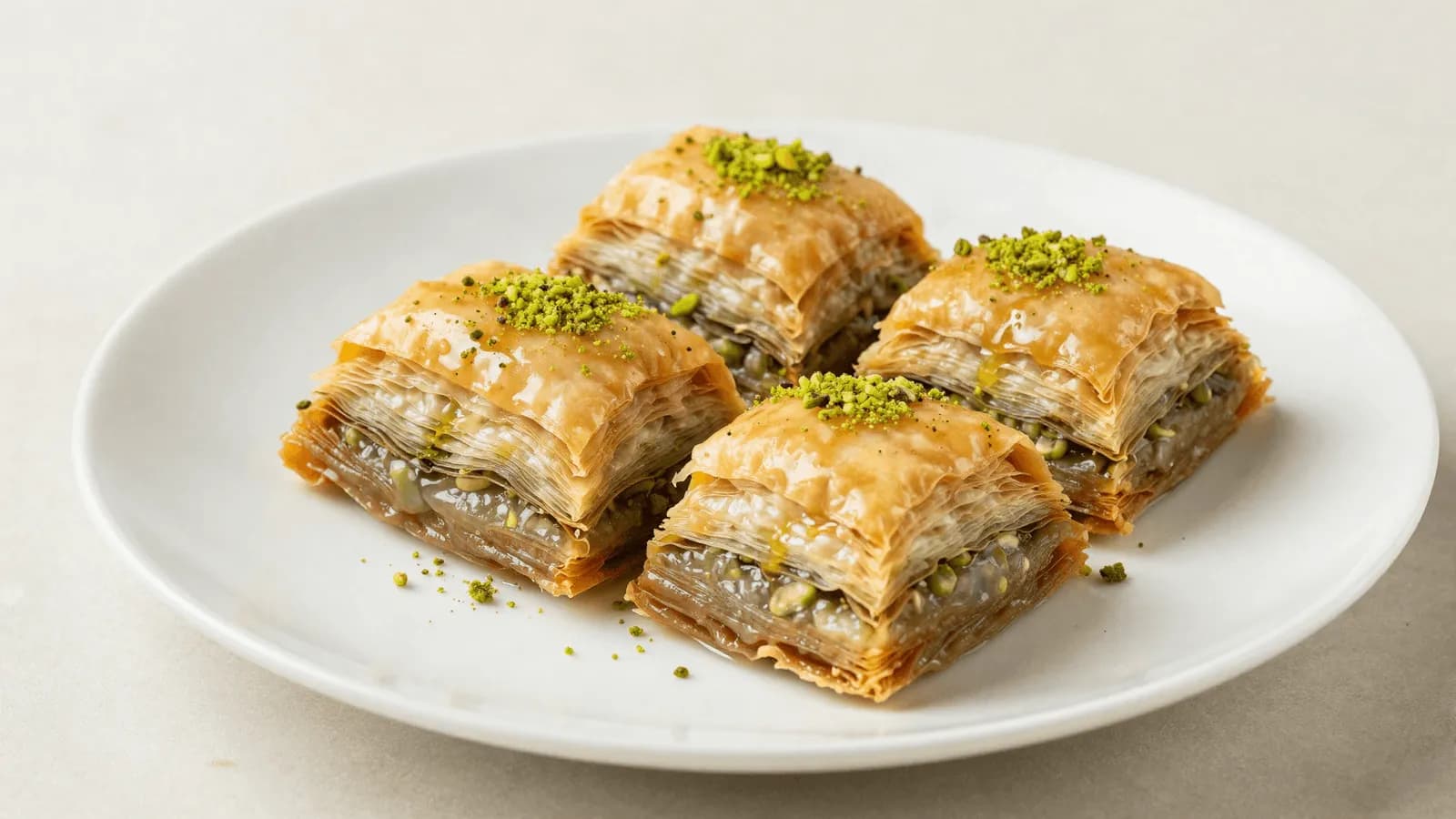
Baklava is one of the easier famous desserts to make vegan, and this surprises people who assume anything that rich must be built on dairy. It contains four things: pastry, fat, nuts and syrup. Only one of them is normally animal, and the traditional Levantine syrup was never honey in the first place.
Filo pastry is usually flour, water, a little oil and vinegar, which means most supermarket brands are already vegan. Check the box, because a minority contain egg or butter, but the default is fine.
That leaves the butter, and it is worth being honest about what it does before replacing it.
What the butter is actually for
Clarified butter in baklava does three jobs. It keeps the sheets from fusing into a single slab. It fries each layer during the long bake, which is where the shattering crispness comes from. And it contributes a specific rich, slightly nutty flavour.
Any replacement has to handle the first two. The third is the one you compromise on, and how much depends on what you choose.
A crucial technical point: whatever you use must be solid or semi-solid at room temperature, or at least high in saturated fat. Butter is around 63 per cent saturated, which is why it sets between the layers rather than draining through them. A pure liquid oil runs to the bottom of the tin during baking, leaving the top dry and the base greasy. This is the single reason most vegan attempts fail.
What to use instead
Refined coconut oil is the best structural match, at roughly 90 per cent saturated fat. Use refined rather than virgin unless you actively want the dessert to taste of coconut, which fights pistachio badly.
Vegan block butter, the firm kind sold in a wrapper rather than a tub, works well and tastes closest to the original. Tub spreads are too high in water and will steam the pastry.
A blend is what actually gives the best result: about three parts refined coconut oil to one part good olive oil. The coconut provides the structure, the olive oil brings back some of the savoury depth the butter is no longer supplying. Olive oil in Levantine sweet baking is not a modern compromise; it appears in the fasting traditions of the region's Christian communities, which is exactly the same problem being solved centuries earlier.
Ingredients
Makes about 35 pieces in a 30 x 20 cm tin. Around 1 hour 30 minutes plus cooling.
- 500 g filo pastry, thawed (check the ingredients list)
- 270 g refined coconut oil, melted
- 90 ml olive oil, mild rather than peppery
- 400 g shelled pistachios, or walnuts
- 2 tablespoons caster sugar
- For the syrup: 400 g caster sugar
- 240 ml water
- 1 tablespoon lemon juice
- 1 tablespoon orange blossom water
Check the sugar if you are strict: some refined white sugar is filtered through bone char, and unrefined or beet sugar avoids the question. It has no effect on the result.
Method
1. Make the syrup first and cool it
Simmer the sugar, water and lemon juice for ten minutes, take it off the heat, stir in the orange blossom water, and leave it to cool completely.
Sugar syrup rather than honey is not a substitution here. It is what Turkish and Levantine baklava has always used, and honey is the regional variation. The full method is in the syrup guide, including why the lemon juice stops it going gritty.
2. Blend the fats and keep them warm
Melt the coconut oil gently and stir the olive oil into it. Keep the bowl somewhere warm, near the oven or over a pan of hot water.
Coconut oil sets solid below about 24C, and a bowl that stiffens halfway through layering is genuinely annoying to work with. If it starts to cloud, warm it briefly.
3. Grind the nuts coarsely
Pulse the pistachios to the texture of coarse breadcrumbs with some visible pieces remaining, and stir in the sugar. Stop before it becomes a paste; released oils will steam between the layers instead of staying dry.
4. Layer, working faster than usual
Brush the tin, then lay and brush ten sheets of filo. Scatter a third of the nuts. Five sheets, a third of the nuts, five sheets, the last third, then ten sheets on top.
Keep the unused filo under a barely damp cloth throughout. You need to move a little quicker than with butter because coconut oil cools and sets faster on contact with cold pastry, so brush generously and do not linger.
5. Cut it before baking
Cut all the way through to the base of the tin in diamonds or squares. This is not optional and it cannot be done afterwards without shattering the whole tray.
6. Bake low and slow
Bake at 160C for 50 to 60 minutes until deep golden throughout. Coconut oil browns slightly faster than butter, so start checking at 45 minutes and cover loosely with foil if the top is running ahead.
7. Cold syrup, hot tray
Pour the cooled syrup over the moment it comes out of the oven, into the cuts as well as over the surface. Leave it uncovered for at least four hours, ideally overnight.
Is filo pastry vegan?
Usually yes. Standard filo is flour, water, oil, vinegar and salt, with no dairy or egg, and most major supermarket and frozen brands qualify. The exceptions are some fresh chilled filo and certain premium or homemade-style versions that include butter or egg. Read the box rather than assuming either way, and note that kataifi, the shredded pastry used for knafeh, follows the same pattern.
Does vegan baklava taste different?
Yes, though less than you would expect and not necessarily worse. It is slightly cleaner and less rounded on the palate, because butter contributes dairy notes that no plant fat reproduces exactly. The olive oil in the blend restores some savoury depth, and after a night under syrup the difference narrows considerably. Served alongside the conventional version, most people identify a difference but not reliably which is which.
Can you use only olive oil?
You can, and some traditional fasting-day pastries do exactly that, but the result is a different texture: softer, denser, less shattering, because liquid oil migrates downwards during the long bake rather than setting between the layers. If you want that, use it, and expect something closer to a rich layered cake than to classic baklava. For crispness you need a fat that is solid at room temperature.
The rest of the vegan sweet table
Most of the syrup desserts in this tradition are either already vegan or close to it. Luqaimat are yeasted dough fried and dipped in date syrup, with no dairy involved at all. Basbousa usually contains yogurt but takes a plant yogurt without complaint.
Knafeh is the genuine holdout, because the entire point of it is stretchy salted cheese, and no current substitute pulls the same way. Our cultured cashew labneh handles the yogurt-shaped problems elsewhere on the table, and the wider map of the category is in the desserts guide.
Published in The Outspoken Digest
Editorial desk
Outspoken Digest Food DeskCooking, ingredients, restaurants and the economics of what ends up on the table.
Newsletter
The Digest, in your inbox
One edition, sent when it is ready. No noise, and your address is never passed on.
Read Next
More Recipes →
Swangy Tamarind Glazed Chicken Wings for the Flavour Replacing Swicy on Fast Food Menus
Sep 29, 2026/3 min read
Baked Apple Cider Doughnuts for a Cider Season That Peaked Earlier Than the Calendar Says
Sep 29, 2026/3 min read
An Obatzda Bavarian Beer Cheese Dip for the Final Stretch of Oktoberfest 2026
Sep 29, 2026/3 min read