Middle Eastern Desserts, and the Syrup Rule That Governs All of Them
Knafeh, baklava, luqaimat, basbousa. Nearly all of them are pastry plus sugar syrup, and there is one rule about temperature that decides whether yours is crisp or soggy.
Friday, August 14, 2026/3 min read
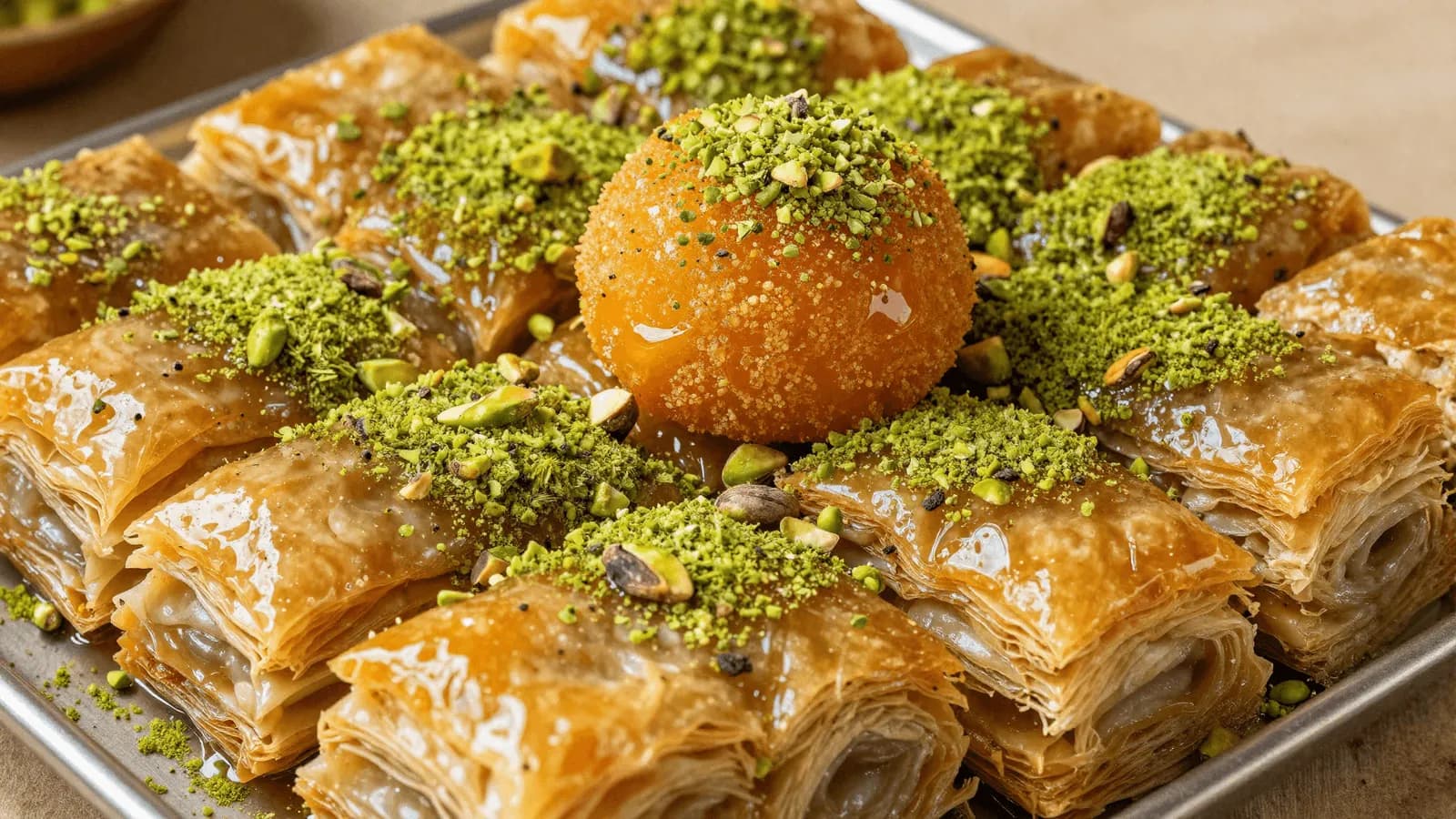
Most Middle Eastern desserts are a pastry or a batter soaked in a sugar syrup scented with orange blossom or rose water. Once you understand the syrup, you understand the category, and there is one rule that decides whether the result is crisp or a soggy mess.
The rule: one of them must be cold
Hot syrup on hot pastry gives you a soggy dessert. Cold syrup on cold pastry gives you a wet, unabsorbed one.
What works is a temperature difference. Cold syrup poured over hot pastry, or hot syrup poured over cooled pastry. The difference drives the syrup into the pastry while the steam escaping outward keeps the surface from waterlogging.
The Levantine convention is cold syrup onto hot pastry, which is why syrup is made first and left to cool while the baking happens. Make the syrup before anything else. There is no recovering a dessert where both were hot.
Making the syrup
Called ater or qatr, it is roughly two parts sugar to one part water, boiled briefly with lemon juice, then scented off the heat. The full method, and the quantities, are in the syrup guide.
The lemon juice is not for flavour. It inverts some of the sucrose, which stops the syrup crystallising in the jar and on the finished pastry. Leave it out and you will find grainy sugar crystals a day later.
The blossom waters go in after the heat is off. Orange blossom and rose water are volatile and boiling them away is why some homemade versions taste of nothing. Use less than you think: they turn soapy quickly, and this is the single most common fault in home baking of this kind.
The desserts
Knafeh
The great one. Salty stretchy cheese under a crisp orange crust, drowned in syrup, eaten hot so the cheese pulls. Two shells exist: na'ameh, made from fine semolina, and khishneh, made from shredded kataifi pastry. Recipe, and a gluten-free version for anyone who has been told they cannot eat it.
Luqaimat
Emirati yeasted dumplings, deep fried until hollow and crisp, then dipped in date syrup. Ramadan food, and the crispness lasts about twenty minutes, which is the point. Recipe.
Baklava
Layered filo, butter, nuts, syrup. Pistachio in the Levant, walnut in Turkey and further north. The technical demand is buttering every sheet and cutting it before it bakes, not after. Recipe, and the regional split is set out in Turkish versus Greek baklava.
Basbousa
Semolina cake soaked in syrup, sometimes called harissa or namoura depending on where you are. The easiest entry point to this whole category and almost impossible to ruin.
Balaleet
The outlier: sweet vermicelli with cardamom and rose water, topped with a savoury omelette, eaten at breakfast. Sweet and savoury on one plate, which sounds wrong and is excellent. Recipe.
Why pistachio, and why it now costs so much
Pistachio is the prestige nut of the region, and the price has risen sharply, driven substantially by the demand created by Dubai chocolate, which put pistachio cream and kataifi into a viral bar and pulled a serious volume of the global crop into it. We covered the market effect in the pistachio squeeze.
For home baking, buy raw unsalted pistachios and grind them yourself. Pre-ground pistachio goes stale fast and is frequently cut with other nuts.
What to make first
Basbousa, because the syrup rule is the only thing to learn and the cake itself is forgiving.
Then knafeh, because it is the one worth learning properly, and because the moment the syrup hits the hot pastry and hisses is the best moment in this kind of cooking.
Baklava last. It is not difficult so much as tedious, and filo punishes impatience.
Published in The Outspoken Digest
Editorial desk
Outspoken Digest Food DeskCooking, ingredients, restaurants and the economics of what ends up on the table.
Newsletter
The Digest, in your inbox
One edition, sent when it is ready. No noise, and your address is never passed on.
Read Next
More Recipes →
Swangy Tamarind Glazed Chicken Wings for the Flavour Replacing Swicy on Fast Food Menus
Sep 29, 2026/3 min read

Baked Apple Cider Doughnuts for a Cider Season That Peaked Earlier Than the Calendar Says
Sep 29, 2026/3 min read
An Obatzda Bavarian Beer Cheese Dip for the Final Stretch of Oktoberfest 2026
Sep 29, 2026/3 min read