The Syrup Is the Recipe: Ater for Baklava and Everything Else
Two parts sugar, one part water, a squeeze of lemon and a restrained hand with the blossom water. Get this right and most Middle Eastern desserts stop being difficult.
Friday, August 14, 2026/5 min read
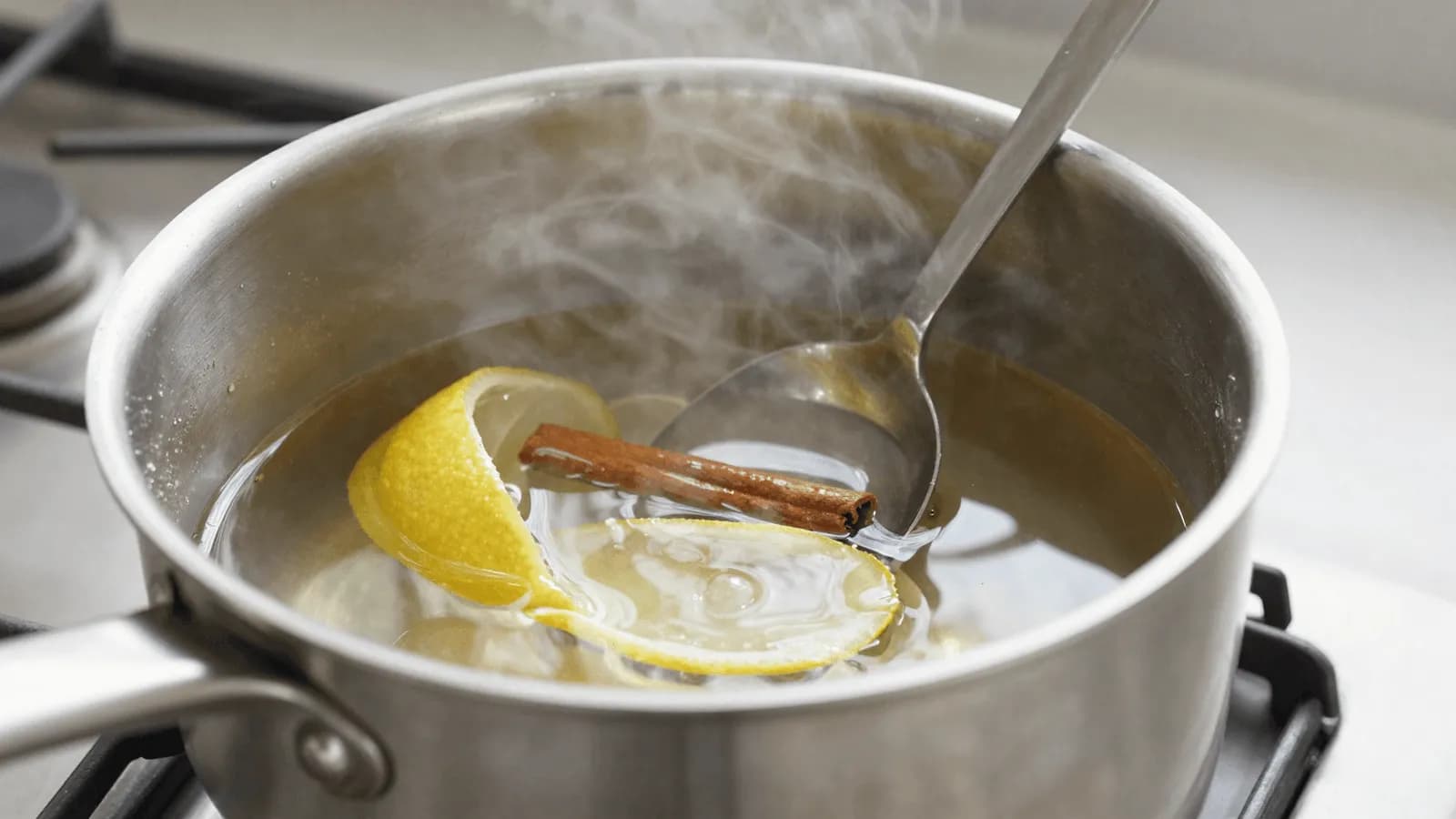
There is a single sugar syrup underneath most of the sweet cooking of the Levant, Turkey and the Gulf. It is called ater in Arabic, or qatr, and it is poured over baklava, knafeh, basbousa, luqaimat, awameh and a dozen other things.
Learn it once and a whole category of dessert opens up, because in most of these recipes the pastry is the easy part and the syrup is where things go wrong.
The ratio, and why it is not one to one
Two parts sugar to one part water by weight is the working standard. That produces a syrup thick enough to coat and cling without being so heavy it sits on the surface refusing to soak in.
Equal parts sugar and water, which some recipes give, makes a thin syrup that runs straight through the pastry and pools in the bottom of the tin. You end up with a wet base and a dry top.
The other error is over-reducing. Boiled past about ten minutes it thickens towards a caramel that sets hard and gluey as it cools, and it will not penetrate anything. Ten minutes at a steady simmer is enough.
Why lemon juice is not optional
Every good version of this syrup has lemon juice in it and it is not there for flavour. You will not taste it.
The acid inverts a proportion of the sucrose into glucose and fructose, and those simpler sugars physically get in the way of sucrose molecules trying to line up into crystals. Without it, a syrup this concentrated will recrystallise: you find a gritty, sandy surface on your baklava a day later, and sugar crystals forming in the jar.
One tablespoon per 400 g of sugar is plenty. More than that and you will start to taste it and the syrup turns thin.
The blossom water problem
Orange blossom water and rose water are what make this syrup smell like the region rather than like a sweet shop, and they are also the most common way home cooks ruin it.
Two rules. They go in off the heat, always, because both are volatile and simmering drives the aromatics off, which is exactly why some homemade syrup tastes of nothing but sugar. And use less than the recipe tempts you to. The line between fragrant and soapy is narrow, and once crossed it cannot be walked back.
Start with a tablespoon per batch. You can add more; you cannot remove it.
Ingredients
Makes about 450 ml, enough for one 30 x 20 cm tray of baklava. 15 minutes plus cooling.
- 400 g caster sugar
- 240 ml water
- 1 tablespoon lemon juice, fresh
- 1 tablespoon orange blossom water, or rose water
- 1 strip of lemon peel (optional)
- 1 small cinnamon stick (optional, for Turkish and Greek styles)
Caster sugar dissolves faster than granulated but either works. Bottled lemon juice is acceptable here because you are using the acid rather than the flavour, which is one of the few places that is true.
Method
1. Dissolve before boiling
Put the sugar, water and lemon juice in a heavy saucepan over a low heat and stir gently until the sugar has completely dissolved and the liquid is clear.
Do this before the pan gets properly hot. Undissolved crystals hitting a rolling boil are exactly what seeds crystallisation later, and this thirty seconds of patience prevents it.
2. Simmer, and stop stirring
Bring it up to a boil, then reduce to a steady simmer for ten minutes. Do not stir it from this point.
If crystals form on the side of the pan, brush them down with a wet pastry brush rather than stirring them in. The syrup should thicken only slightly and stay completely clear; it will look thinner than you expect while hot, and that is correct.
3. Add the aromatics off the heat
Take the pan off the heat. Stir in the blossom water, and add the lemon peel or cinnamon stick now if you are using them.
Let those sit in the syrup as it cools and fish them out before using. Ten minutes of steeping in hot syrup extracts plenty.
4. Cool it completely
Leave it to cool to room temperature, or refrigerate it. This takes an hour or more, which is why the syrup gets made before anything else.
For the Levantine method you need this syrup cold when it meets pastry straight from the oven. That temperature gap is what drives it into the layers. The full explanation, and what happens when you get it backwards, is in the baklava recipe.
How do you know when the syrup is thick enough?
Coat the back of a cold metal spoon and draw a finger through it: the line should hold rather than closing up immediately. If you have a thermometer, around 105C is the mark. Judging by eye while it is hot is unreliable, because syrup at this concentration looks watery until it cools and then thickens substantially. When in doubt, under-reduce; a slightly thin syrup soaks in fine, while an over-reduced one sets to toffee.
Can you make the syrup in advance?
Yes, and it is the sensible way to work. It keeps in a sealed jar in the fridge for at least a month, and having a jar ready removes the main scheduling problem from every syrup dessert. It thickens in the cold and will look almost solid straight from the fridge; leave it out for twenty minutes or warm the jar briefly in hot water before using, then let it come back to cool.
Why did my syrup turn grainy?
Either the lemon juice was omitted, or the sugar had not fully dissolved before the syrup came to the boil, or it was stirred during simmering. All three seed crystallisation. Once a batch has gone grainy you can rescue it by adding a splash of water, reheating gently until every crystal has dissolved, adding the acid, and starting the ten-minute simmer again.
Where else it goes
The same syrup, made in the same way, finishes knafeh, luqaimat and basbousa. Only the scenting tends to change: rose water leans Levantine and Iranian, orange blossom leans Lebanese and Egyptian, and Gulf versions frequently take cardamom and saffron instead of either.
The wider map of which dessert uses which, and how they relate, is in the desserts guide. But the syrup is the part that transfers, and it is the part worth learning first.
Published in The Outspoken Digest
Editorial desk
Outspoken Digest Food DeskCooking, ingredients, restaurants and the economics of what ends up on the table.
Newsletter
The Digest, in your inbox
One edition, sent when it is ready. No noise, and your address is never passed on.
Read Next
More Recipes →
Swangy Tamarind Glazed Chicken Wings for the Flavour Replacing Swicy on Fast Food Menus
Sep 29, 2026/3 min read
Baked Apple Cider Doughnuts for a Cider Season That Peaked Earlier Than the Calendar Says
Sep 29, 2026/3 min read
An Obatzda Bavarian Beer Cheese Dip for the Final Stretch of Oktoberfest 2026
Sep 29, 2026/3 min read